Vintage Synthesizer Setup Guide Walks Beginners Through Buying, Connecting, and Maintaining Classic Gear
Breaking into vintage synths doesn't have to mean blown capacitors and buyer's remorse. Here's everything you need to get classic gear running right.
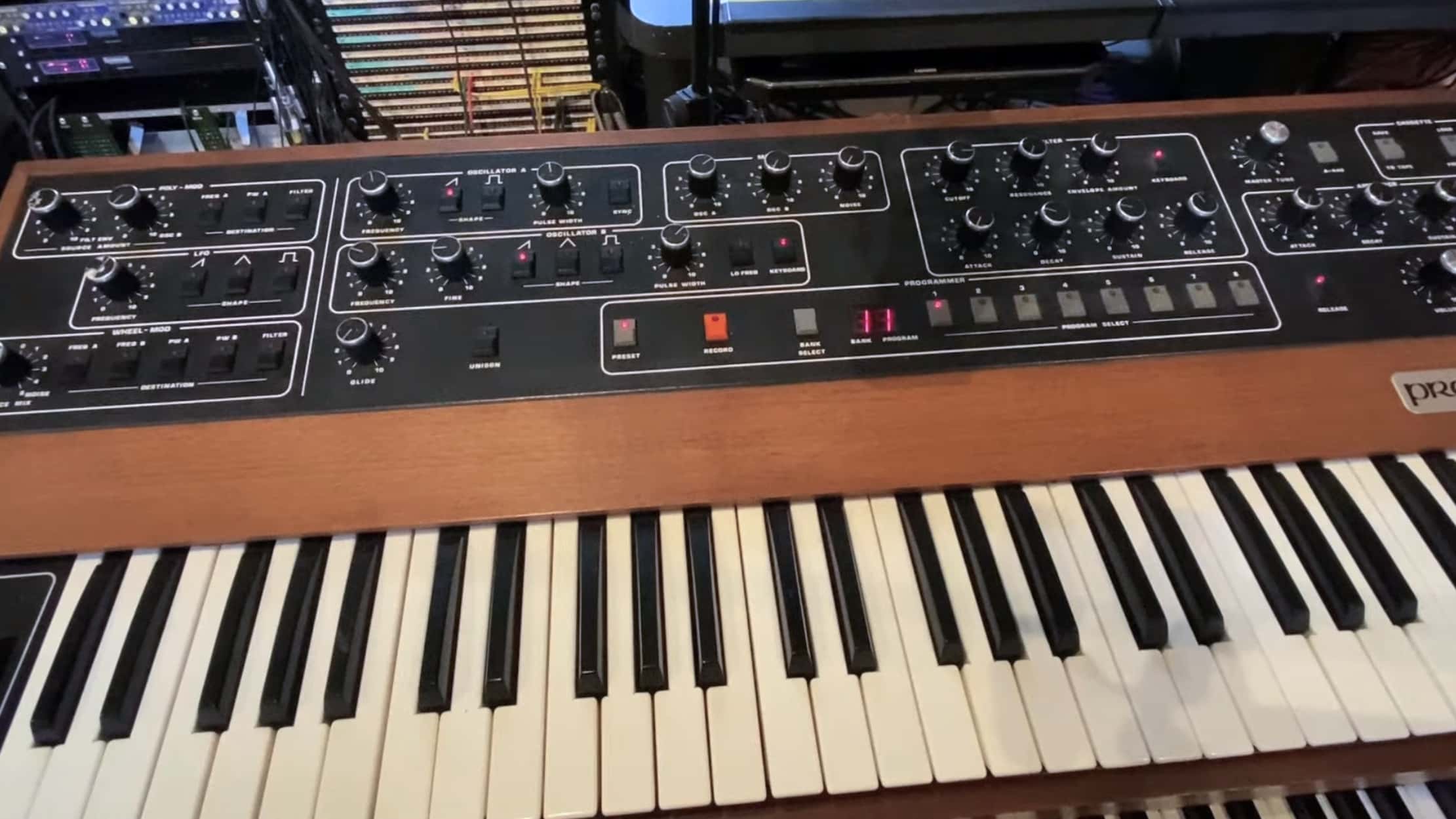
Getting your hands on a vintage synthesizer is one of the most rewarding moves you can make as a musician or sound designer, but the gap between "I bought a Juno-106" and "I have a fully functional, properly connected studio piece" is wider than most newcomers expect. Vintage gear comes with its own ecosystem of quirks: aging power supplies, proprietary connectors, temperamental tuning circuits, and a used market that can be generous or brutal depending on how prepared you are walking in. RetroTechLab's recently published complete beginner's guide cuts through that complexity with a practical, stage-by-stage walkthrough covering everything from the initial purchase to long-term maintenance.
Buying smart: what to look for before you spend
The used market for vintage synthesizers rewards patience and punishes impulse. Before committing to any purchase, you need to understand what condition the instrument is actually in, not just what the seller says about it. Keyboards from the late 1970s through the early 1990s are particularly prone to dead keys caused by worn rubber contacts or cracked key bushings, and those repairs range from a simple cleaning to a full key mechanism replacement depending on the model.
Rack synthesizers present a different set of concerns. Knobs and sliders on older units often have carbon track potentiometers that develop scratchy, inconsistent behavior over decades of use, and replacing them requires sourcing period-correct components that may be scarce. When evaluating any unit in person, run through every key, twist every knob through its full range, and test every patch or preset if the synth stores them. A unit that sounds wrong in one patch might have a corrupted memory battery rather than a deeper hardware fault, which is a cheap fix if you know it going in.
Price research matters as much as physical inspection. The vintage synth market has tightened considerably over the last decade, with instruments that once sat dusty in pawn shops now trading at multiples of their original retail price. Knowing current market values for a specific model protects you from overpaying and helps you recognize a genuine deal when one appears.
Power and safety: the part most beginners skip
Powering a vintage synthesizer correctly is not optional, and it's the step newcomers most often skip in their excitement to plug in and play. Many older instruments were designed for electrical standards that may not match your local mains voltage, and running a 100V or 117V Japanese domestic model on a 230V European outlet without a step-down transformer will cause immediate, expensive damage.
Even when voltage is correct, aging power supply capacitors inside the unit itself can fail under load, sometimes dramatically. A common best practice before powering up any vintage piece for the first time is to run it through a variac, a variable autotransformer that lets you bring the voltage up slowly and catch problems before they cascade. This process, sometimes called "reforming" the capacitors, allows old electrolytic capacitors to re-establish their dielectric layer gradually rather than being shocked back to life after years of storage.
Surge protectors are also essential. A dedicated power strip with surge protection and ideally an EMI filter on every outlet in your vintage gear chain is standard practice for anyone serious about keeping these instruments running.
Connecting your synthesizer: audio, MIDI, and CV
Vintage synthesizers broadly fall into two connectivity eras, and understanding which one you're dealing with shapes every other connection decision you make. Synthesizers built before roughly 1983 communicate via control voltage and gate signals, the CV/gate standard that predates MIDI entirely. Instruments from Moog, ARP, Roland, Korg, and Oberheim from this period use CV to control pitch and gate pulses to trigger notes, and the voltage standards aren't always compatible across brands. Moog used a 1 volt-per-octave standard; some Roland and Korg instruments from the same era used a Hz/volt standard instead, and mixing them without a converter will give you wildly inaccurate pitch tracking.

MIDI arrived in 1983 and standardized communication between instruments and computers, which is why post-1983 synthesizers are generally far easier to integrate into a modern setup. A standard 5-pin DIN MIDI cable running from your DAW's interface or a dedicated MIDI controller into the synthesizer's MIDI IN port is all you need for note and parameter control. USB-to-MIDI interfaces bridge the gap between modern computers and the 5-pin standard, and most run without drivers on current operating systems.
For audio, the output stage matters. Many vintage synthesizers output at levels and impedances designed for mixer inputs of their era, which may require a DI box or gain adjustment on your audio interface to avoid noise or level mismatch. Balanced connections are preferable wherever the instrument supports them.
Tuning and calibration: the living instrument problem
Vintage analog synthesizers are not set-and-forget instruments. Analog oscillators drift with temperature, and a synth that was perfectly in tune when you started a session may be noticeably sharp or flat two hours later as the room warms up. Allowing 20 to 30 minutes of warm-up time before critical recording or performance is standard practice across the community.
Many instruments from the late 1970s and 1980s have internal calibration trimmers for oscillator tracking, filter cutoff points, and voice-to-voice consistency on polyphonic models. These should only be adjusted if you know what you're doing or are following a service manual specific to your model. Service manuals for most major vintage synthesizers are available through dedicated archival communities online, and they're an essential resource for any owner doing more than surface-level maintenance.
Maintenance: keeping the signal clean
Routine maintenance on a vintage synthesizer is mostly about cleanliness and contact quality. DeoxIT D5 or a similar contact cleaner applied sparingly to potentiometers and switches eliminates the scratching and dropout that develops from oxidized contacts, and it's one of the most cost-effective preventative measures available. Key contacts on keyboards, particularly the carbon contact strips found in many 1980s instruments, can be cleaned with isopropyl alcohol and a cotton swab.
Battery replacement is another maintenance item that many owners defer until it becomes an emergency. The CMOS battery or lithium cell that holds patch memory in instruments like the Oberheim Matrix-12, the Sequential Prophet-5, and dozens of others will eventually die, taking stored patches with it if not replaced proactively. Replacement cells are typically standard sizes available at any electronics supplier, and swapping them is a straightforward procedure with the service manual in hand.
Caps kits, full recapping of the power supply and audio boards using modern replacement capacitors, represent a more significant investment but substantially extend the usable life of any instrument past a certain age. For synthesizers approaching or past 40 years old, a full recap from a qualified technician is worth considering as preventative work rather than waiting for a failure.
The combination of informed buying, correct power handling, appropriate connectivity, routine calibration, and proactive maintenance is what separates a working vintage rig from a shelf display. Classic gear rewards owners who treat it as a living instrument rather than a static object, and the payoff in tone, character, and playing experience is exactly why this community keeps coming back to it.
Know something we missed? Have a correction or additional information?
Submit a Tip