10 things that got better for Drukhari in 11th edition
11th edition finally gives Drukhari the tools their speed game needs: real detachment choices, a smarter Power from Pain, and cleaner list-building.
The sneakiest change for Drukhari is not a new profile or a flashy gun. It is that 11th edition finally lines up the army’s rules with the way the faction actually wins games: fast trades, ruthless pressure, and mission play that punishes hesitation. Tabletop Battles’ launch-week look with Lowest of Men lands in exactly that space, because the real question is not whether Drukhari can hit hard, but whether the edition lets them keep doing it long enough to matter.
Power from Pain finally rewards the right choices
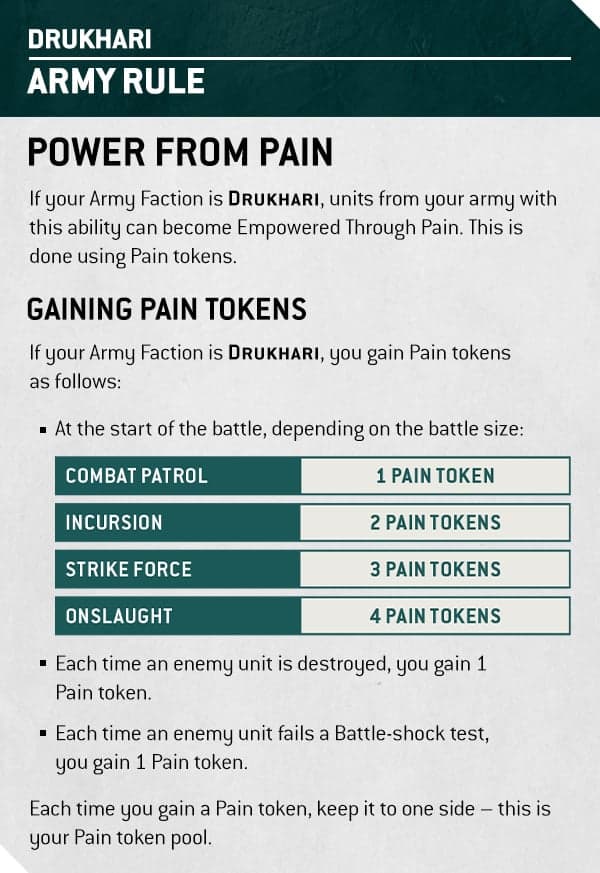
The biggest practical upgrade is the revamped Power from Pain army rule. Instead of sitting there as background seasoning, it now spends points to activate unique Pain abilities on datasheets, which turns the army rule into a resource you actually manage. That matters for Drukhari because their best turns have always been about choosing the exact moment to spike, trade, or flip an objective. A faction that lives on timing benefits more from a bankable resource than from a passive bonus.
Three detachments give the army real forks
Games Workshop’s official Faction Focus already framed Drukhari around three detachments, and that alone is a meaningful change for list builders. A faction like this does not want a single correct shell forced onto every table, because the whole point is flexibility, speed, and punishing the opponent’s mistakes. Three distinct build paths mean you can lean harder into pressure, utility, or a more resilient support package without pretending all Drukhari lists should look the same.
Faction packs cut down the pre-game clutter
The downloadable faction packs are one of those unglamorous improvements that changes the actual experience of playing. Games Workshop bundled detachment rules, datasheets, FAQs, and errata into one place, which means fewer pre-game tab hunts and fewer arguments about which PDF is current. For an army with lots of small units and lots of moving parts, cleaner reference material is not a luxury, it is part of playing the army well.
Points updates are easier to track
The points system is now split out into the Munitorum Field Manual, with live updates in the Warhammer 40,000 app. That is a real gain for Drukhari because their list construction lives and dies on tight efficiency, and even modest point shifts can decide whether you squeeze in one more trading unit or one more support piece. When an army is built from multiple fragile parts rather than a few expensive bricks, live points updates are not just convenient, they shape the list you actually bring.
The new Combat Patrol points to the right core
The new Combat Patrol is also telling: a Haemonculus, 10 Wracks, a Talos, and a Cronos. That is not a random starter box, it is a compact snapshot of the faction’s pain-engine side and a clear hint about what Games Workshop thinks the army should be doing on the table. If you were waiting for a boxed entry point that feels like Drukhari rather than just any xenos starter, this one is aimed at the right tools.
The army’s tempo game matches the edition better
Drukhari are raiders from Commorragh who strike from the webway and prey on realspace worlds, and 11th edition looks more willing to reward that kind of play. The practical gain here is not just raw speed, it is the value of speed in a game that may care more about seizing space, forcing awkward trades, and flipping objectives at the right moment. That is where Drukhari have always wanted to live, and it is why a better edition fit matters more than a simple stat bump.
Opponents have to screen with more respect
A better Drukhari rules set changes the burden on the other side of the table. Armies that used to ignore them now have to think harder about screening, counterpunching, and how much of an objective they leave exposed, because Drukhari punish sloppy spacing faster than most factions. That is a competitive gain even before dice are rolled, since an opponent playing defensively to avoid your reach is already playing inside your threat range.
Old collections suddenly look less dusty
There is also a hobby side to the improvement story that matters in practice. A faction-specific upgrade list is the kind of signal that makes players pull old Kabal, Wych Cult, and Coven models back out of storage, or decide whether to start fresh while the edition is still settling. The smarter move is not to buy blindly, but to see which units still fit the new detachment structure and which ones only looked good in the old game.
Drukhari become an early test case for the meta
If a launch-week article can credibly point to ten separate upgrades, the faction is no longer being treated like a punchline. That is what makes Drukhari an interesting early-edition test case, because the army is demanding enough to show whether the new rules really support speed, aggression, and opportunistic scoring. In other words, this is not just about whether Drukhari are playable, it is about whether the edition finally respects the kind of pressure they put on the table.
The optimism still has to survive real games
The useful part of the Tabletop Battles read is that it tests the hype instead of repeating it. The real gains are structural, a better army rule, three detachments, cleaner rules delivery, live points, and a Combat Patrol that points toward the right core units. What is not guaranteed is automatic dominance, and that is the line to keep in mind when deciding whether to rebuild a list now or wait for the meta to sort itself out.
That is the real Drukhari check in 11th edition: the army does not need a new identity, it needs the game to stop fighting its old one. If your plan has always been to move first, trade up, and make the board feel too small for the other player, this is the cleanest the faction has looked in years.
This article was produced by Prism’s automated news system from verified source data, official records, and press releases, then run through automated quality and moderation checks before publishing. The system is built and supervised by the people who set the standards it runs under. Read our full AI policy.
Did this article answer your question?