Ben Jurek reflects on chaos knights, rankings, and next season prep
Ben Jurek’s latest Road to LVO entry turns one strong season into a playbook: faction swaps, scrimmage reps, and a four-month clock toward Las Vegas.
A season built for the next one
Ben Jurek is already playing the long game. With about four months left before the Las Vegas Open, he is using his Road to LVO kickoff to map out how serious 40k players should think about the next competitive cycle: not as a reset, but as a continuation of everything learned in the last run.
That is the useful part of this piece. It is not just a recap of results. It is a snapshot of how a top player turns one season into a preparation plan for the next, with faction choice, practice structure, and event pacing all treated as tools rather than one-off decisions.
What the last run says about the level you need
Ben’s previous LVO run set the tone. He went 6-0 to reach the top cut, then kept advancing with wins over Kyle Grundy’s T’au in a shadow round and Matthew Geyer’s Adeptus Mechanicus before falling in the top four to Deathwatch. That sequence matters because it shows the kind of margin you need at the sharp end of a major event: clean early rounds, the ability to solve very different matchups, and the resilience to keep converting pressure into wins once the bracket starts tightening.
He also closed out the World Championships of Warhammer with a 5-3 record using Chaos Knights, then finished the ITC season ranked ninth globally. That combination tells you he is not floating on reputation. He is still translating list choices into live results at the highest level, which is exactly the standard tournament players should look at when they are trying to judge whether a faction, build, or game plan is worth investing in.
Faction swapping as a competitive skill
One of the strongest signals in Ben’s write-up is how often he changed armies across the season. He moved from Chaos Knights to Astra Militarum after Grizzled Company dropped, then used Necrons for Asia Teams in Thailand because the squad needed a dedicated Necron pilot. Later, he picked up Chaos Space Marines for Rocky Mountain Open and Warhammer Open Dallas.
That kind of movement is more than trivia. In the current competitive environment, it is a practical lesson in adaptability. If you are aiming at a major 2026 event, you cannot assume one list will stay solved for long enough to carry you through an entire season. Ben’s results show the value of being able to step into multiple factions, understand their pressure points quickly, and make each one work in a tournament setting.
His placements back that up. He finished fourth at the Nov. 2025 California Cup with Chaos Knights, first at the Jan. 2026 Las Vegas Team Tournament with Astra Militarum, fifth at Warhammer Open Palm Springs with Astra Militarum, second at Jan. 2026 Asia Teams Warhammer GT with Necrons, first at Scorched Earth Open with Necrons, fifth at the March 2026 California Team Championship with Necrons, fifth at Rocky Mountain Open with Chaos Space Marines, and second at Warhammer Open Dallas with Chaos Space Marines. That is a season built around testing, not stubbornness.
How top players actually sharpen reps
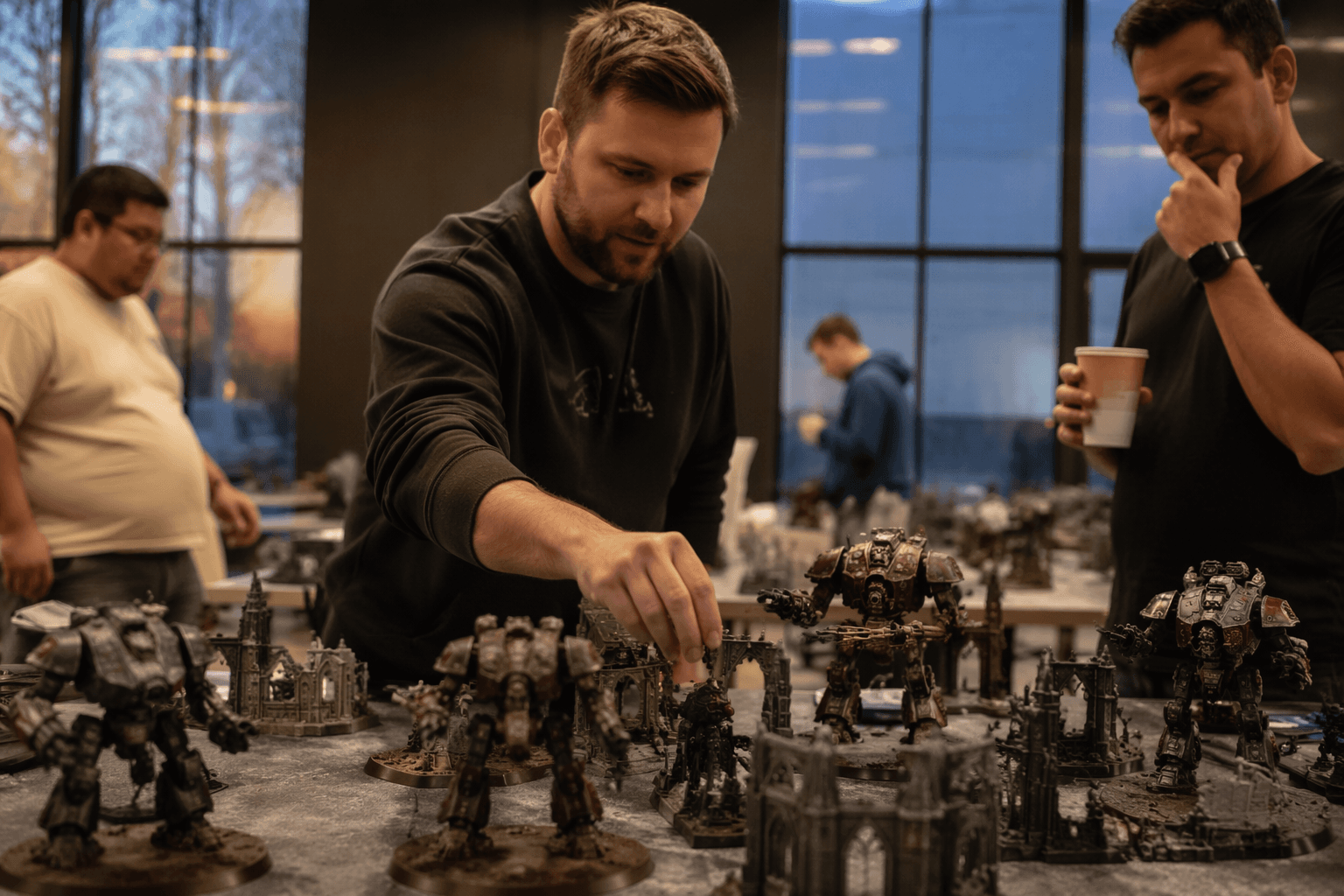
Ben also mentions the Team USA Academy process, which involved practice and scrimmages. That detail gives the clearest roadmap for ordinary tournament players who want to level up: serious preparation happens before the event, in structured games that force you to explain your decisions and expose weak spots early.
He was candid that he did not make the starting Team USA roster, but the way he frames that matters just as much as the result. He treats it as part of the process, not as a verdict on his ability. That mindset is worth copying. If every roster cut or loss becomes a final judgment, you stop learning. If you treat it as data, you get better at list evaluation, matchup planning, and emotional control, which are the things that hold up deep in a GT bracket.
For players planning around a major 2026 event, the takeaway is simple:
- Build practice around real matchups, not goldfishing.
- Rotate factions only when the reps can still be converted into event-ready decisions.
- Review losses for list problems, not just pilot errors.
- Use scrimmages to stress-test your plan against other strong players, not to confirm what you already believe.
The World Championships matter beyond the trophy case
Ben’s World Championships result lands harder because of what that event represents. Warhammer Community describes the World Championships of Warhammer as a season-ending international event that brings together players and hobbyists from around the world. The 2025 edition drew more than 700 players from 48 countries to Atlanta for four days of competition.
That scale is why the result carries weight in competitive conversation. A strong finish there is not local bragging rights or a one-off spike. It is proof that a player can operate in a field built from different metas, different travel schedules, and different preparation styles. When Ben points to that 5-3 run with Chaos Knights, it fits the wider picture of a player who is already stress-testing his game against the same kind of international pressure that defines the biggest events on the calendar.
The real Road to LVO lesson
Frontline Gaming’s sponsorship and the venue changes introduced last year also sit in the background here, and Ben clearly views those changes positively. That matters because the Las Vegas Open is not just a weekend event, it is part of a broader organized-play ecosystem that keeps evolving around player experience, venue structure, and the demands of the circuit.
Put all of that together and Ben’s Road to LVO does not read like a private log. It reads like an early-season blueprint. The list swaps, the Academy scrimmages, the global ranking, the World Championships finish, and the LVO bracket run all point to the same conclusion: the players who matter most are already preparing for the next stage before the current one feels fully over.
That is the real signal for anyone chasing a major 2026 result. The work starts with momentum, but it is built on flexibility, honest self-review, and enough reps to make every faction choice feel intentional when the next cut line arrives.
This article was produced by Prism’s automated news system from verified source data, official records, and press releases, then run through automated quality and moderation checks before publishing. The system is built and supervised by the people who set the standards it runs under. Read our full AI policy.
Know something we missed? Have a correction or additional information?
Submit a Tip