Chaos Knights secrets from a top competitor, Björn Eriksson
Björn Eriksson went undefeated as Team Sweden’s first defender at the 2025 WTC, and his Chaos Knights game plan is all about pace control, brutal trades, and early pressure.
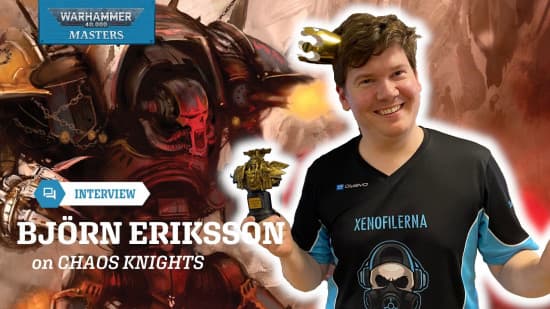
Björn Eriksson has played Chaos Knights since early eighth edition, moved from an Ork side project built around looted Knights into serious competitive play after the 10th-edition codex, and went undefeated at the 2025 World Team Championships while handling Team Sweden’s first defender slot, the one most likely to absorb the worst pairings.
What Chaos Knights are really built to do
Eriksson’s core read on the army is simple: Chaos Knights are a small number of hard pieces that hit brutally in both shooting and melee, with enough early pressure to break an opponent before retaliation starts. He frames them as a faction that can win by force, but not only by force, because their game is also about controlling when the fight becomes unwinnable for the other side. That lines up with the broader Knights split in the current edition, where Imperial and Chaos Knights have diverged into distinct factions with very different rules and play styles.
Build the list to control the pace
The mistake most players make is treating Chaos Knights like a pure rush army. Eriksson’s better version can play a slower game, especially when allied support lets you dictate tempo, force bad trades, and commit your real push later once the opponent has already overextended. In practice, that means list construction should not just chase raw damage. It should include the pieces that buy time, create awkward decisions, and make the enemy pay more than they expected for every move.
That is why he singles out Chaos Daemon allies as more than a garnish. Beasts of Nurgle are a standout because they are tough enough to demand a far larger commitment than their points suggest, while Nurglings do the quieter but vital work of screening and slowing enemy movement. The current Chaos Knights faction pack, legal for matched play from 20 June 2026, also updates points values in the Warhammer 40,000 app.
Deployment is where the army wins or loses its edge
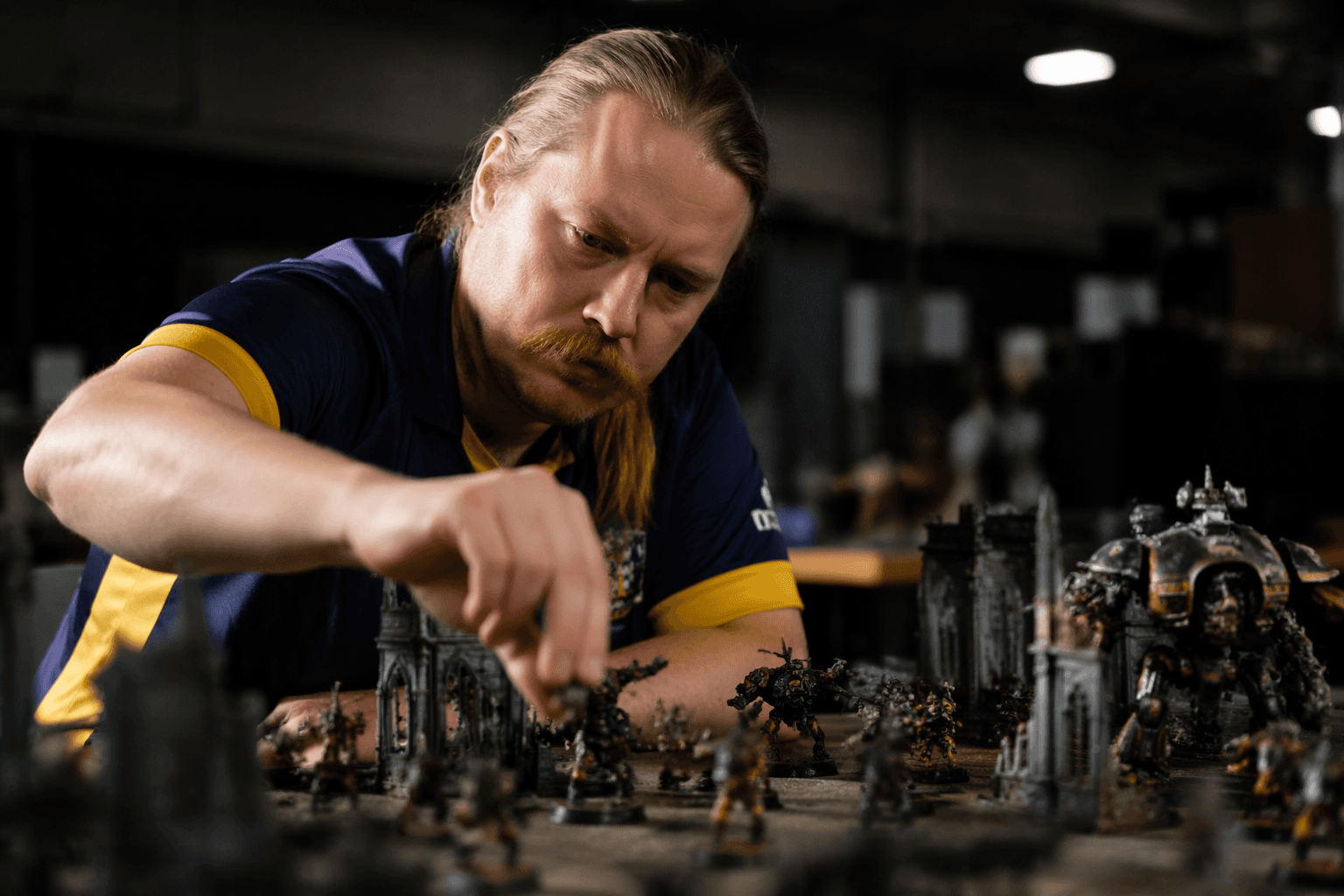
Chaos Knights do not have many units, and that is exactly why deployment matters so much. Every model has to go somewhere with a purpose, whether that is creating a screen, threatening a lane, or forcing the opponent to commit into a bad trade. On clock management, the army’s low model count should give you time to think, not push you into rushed decisions.
A strong Chaos Knights deployment usually follows a few priorities:
- Put screens where they can delay the enemy’s cleanest angles. Nurglings are ideal when you need cheap bodies to buy a turn.
- Keep your real pressure pieces hidden long enough to make the opponent choose first. Eriksson’s whole plan is to let the other side spend resources before the Knights commit.
- Use the board to stage the later push. Chaos Knights can absolutely sprint, but Eriksson’s better version often waits for the moment when a smaller, safer move becomes a much worse one for the opponent.
In-game priorities separate a good pilot from a great one
Eriksson’s biggest practical edge is resource exchange. When Chaos Knights clap back properly, they do not just remove enemy units, they drain enough tools, screening, and positioning resources that the opponent can no longer answer a Despoiler cleanly. That is why target priority is less about chasing the nearest visible enemy and more about identifying which unit removes your control, which unit forces the biggest overcommit, and which unit can be allowed to die because the trade still favors you.
In expert hands, one bad commitment can become a chain reaction. For non-Chaos players, the scouting lesson is straightforward: watch for the Nurgle screens, watch for the delayed push, and do not assume the army wants to race straight at you.
Why 11th edition makes this even more relevant
The Chaos Knights faction pack is already in matched play circulation, and the broader Knights update has expanded the faction’s options again. Early list decisions, ally choices, and deployment habits are already being stress-tested immediately.
This article was produced by Prism’s automated news system from verified source data, official records, and press releases, then run through automated quality and moderation checks before publishing. The system is built and supervised by the people who set the standards it runs under. Read our full AI policy.
Did this article answer your question?