Denny Flowers discusses writing Black Library stories and Warhammer TV growth
Denny Flowers' interview shows how Black Library gives Orks their chaos, Imperial pilots their swagger, and Warhammer TV another reason fans keep watching.

Warhammer’s Denny Flowers feature is really a lesson in how 40k keeps its factions sounding like themselves. By putting the author of Grotsnik: Da Mad Dok and Above and Beyond beside the third Aeronautica Imperialis installment, Warhammer TV turns lore into a living part of the hobby, not just background noise.
Why this interview lands now
Warhammer Community published the feature on June 23, 2026, and it arrives with a very clear message for readers who follow the setting as closely as the tabletop: Black Library is one of the engines that keeps Warhammer feeling distinct. Flowers is presented not just as another name on a book spine, but as a writer whose stories help define how Orks, Imperial heroes, and the wider grimdark future sound on the page.
The timing matters because Warhammer TV is not treating this as a standalone profile. The first two episodes of Aeronautica Imperialis were already live, and the third and final installment was set to land on Friday, June 26, 2026, with a new trailer teasing that last trip into the cockpit. That gives the interview extra momentum, because it sits inside a broader push to keep fiction, animation, and behind-the-scenes commentary moving together.
How Flowers writes faction identity into the setting
Flowers’ recent Black Library work shows why these stories matter to 40k fans who care about tone as much as plot. In Grotsnik: Da Mad Dok, Black Library frames the story around a series of increasingly unlikely accidents before revealing that Mad Dok Grotsnik is working deep inside his colossal Painwagon on something huge, something that could change the fate of ork-kind forever. That setup does more than signal comedy and carnage. It captures the Ork fantasy in one place: mad science, brutal momentum, and the sense that even total chaos can still point toward a terrible kind of genius.
The audiobook runtime backs that up too. Black Library lists Grotsnik: Da Mad Dok at approximately 6 hours and 56 minutes, which tells you this is not a throwaway skit, but a full-length Ork story built to carry its own weight. For readers who collect Ork lore as much as Ork models, that matters because the fiction is doing the work of making the faction feel coherent across novels, audiobooks, and screen content.
Above and Beyond plays a very different note. Warhammer Community’s earlier preview places Lucille von Shard under the patronage of the von Shard family and sends Simlex to Deighton, an Imperial world in open rebellion from the Imperium. Black Library describes the story as a fight against a near-invincible xenos mercenary, while Warhammer Community frames Lucille as broken by war and watching her reputation crumble as the pressure builds. That is classic Imperial aviation heroics: discipline, desperation, and a pilot who has to keep flying when the odds look absurd.
The audiobook runtime reinforces the scale again. Black Library lists Above and Beyond at approximately 12 hours and 53 minutes, more than enough room for a long, attritional struggle rather than a quick pulp sprint. If Grotsnik: Da Mad Dok sells the Ork side of the setting through reckless invention and monstrous comedy, Above and Beyond sells the Imperial side through endurance, duty, and a hero trying to survive impossible odds.
What the Aeronautica Imperialis rollout adds
The Aeronautica Imperialis content gives the interview a second layer. Warhammer Community had already put the first two episodes on Warhammer TV, then followed with a trailer for the final chapter and a promise that the third installment would arrive that Friday, June 26. That is a smart bit of programming, because it turns a single feature into part of a serial rhythm that keeps viewers checking back.
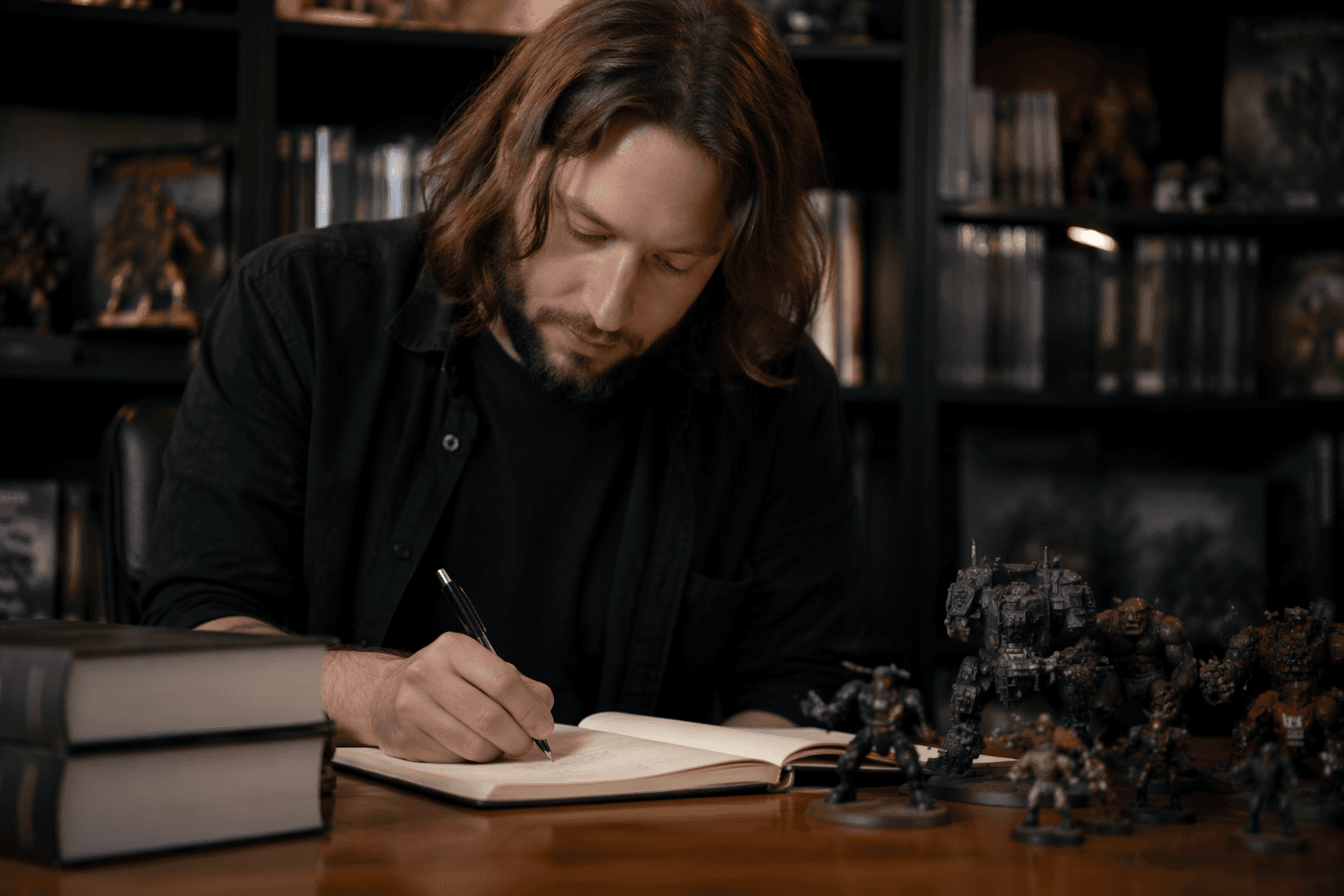
For 40k fans, that matters because Warhammer TV is not just a place to park animation. It is becoming another way to experience faction identity in motion, and Aeronautica Imperialis is especially well suited to that. Aircraft, ace pilots, and Imperial hardware naturally lean into the same battlefield fantasy that Above and Beyond is already working on the page.
How Black Library still functions as a talent pipeline
The other reason this interview matters is that it points toward how writers actually get into Black Library. Warhammer Community’s 2025 Open Submissions call explicitly invited aspiring authors to send in pitches, and it paired that invitation with advice from writers who came through the program. That turns the whole conversation around Flowers into something more practical than a simple career profile.
It shows that Black Library is not just a publishing imprint at the far edge of the hobby. It is a working pipeline, one that keeps bringing in new voices who understand how to write a character like Lucille von Shard without losing the weight of the setting, or how to make a figure like Mad Dok Grotsnik feel both ridiculous and terrifying at once. For fans, that is why the interview reaches beyond writerly inspiration and into lore appreciation. The authors are helping decide how each faction sounds when the universe needs it to sound unmistakably like itself.
What to take from it if you follow 40k fiction
- If you want Ork flavor, Grotsnik: Da Mad Dok is the cleanest signpost here. It centers on the Mad Dok’s colossal Painwagon, a fate-changing project for ork-kind, and it runs for about 6 hours and 56 minutes in audiobook form.
- If you want Imperial ace-pilot energy, Above and Beyond is built for that lane. It drops Simlex and Lucille von Shard onto Deighton, where rebellion, patronage, and a near-invincible xenos mercenary drive the conflict, and the audiobook runs about 12 hours and 53 minutes.
- If you want the moving-picture side of the same ecosystem, Aeronautica Imperialis is already underway on Warhammer TV, with the first two episodes live and the third set to close out the run on June 26.
That is the real thread running through the feature: Flowers is not just another Black Library author, he is part of the machinery that keeps Warhammer’s factions legible, memorable, and unmistakably their own, whether the story is rolling on a Painwagon or climbing into the sky.
This article was produced by Prism’s automated news system from verified source data, official records, and press releases, then run through automated quality and moderation checks before publishing. The system is built and supervised by the people who set the standards it runs under. Read our full AI policy.
Did this article answer your question?