Goonhammer maps Warhammer 40k 11th Edition’s rules, missions, and launch sets
11th Edition is a full system reset, with missions, list building, and the new app all tied to Armageddon’s launch box.
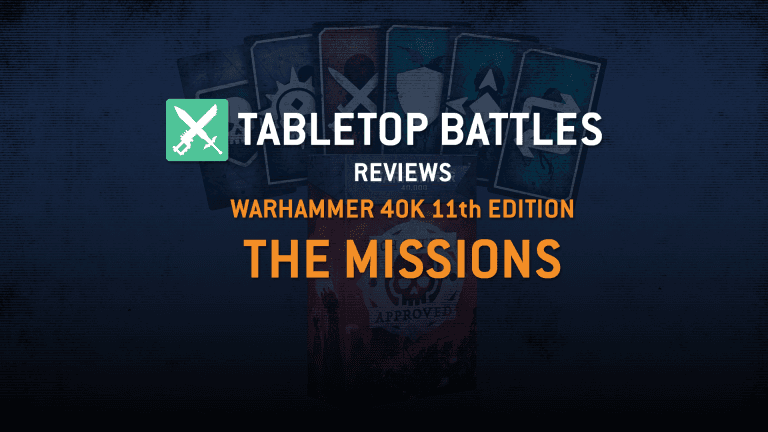
The fastest way to get oriented is to treat 11th Edition as a rules ecosystem, not just a new starter set. Goonhammer’s launch hub pulls the main review, mission write-ups, phase deep dives, and box-and-product coverage into one place because this edition is being built to be read in layers, not skimmed in one pass. That matters whether you are opening 40k for the first time, coming back after a break, or trying to figure out what changes for a current 10th Edition army.
The big signal is trust. Goonhammer says it used practice games and review copies supplied by Games Workshop to shape its coverage, including the extended digital rules that will live in the Warhammer 40,000 app. So this is not rumor-chasing or vibe-checking; it is a guided look at how the new launch actually plays on the table. For readers trying to decide what to buy first tonight, that makes the hub useful in the most practical sense: it points straight to the parts of the edition that will affect your next game.
What 11th Edition is changing first
The central change is not just new datasheets or a fresh box. Games Workshop has framed 11th Edition around a mission system built on Force Dispositions, and those are tied directly to Detachments and army construction. In practice, that means your list and your mission plan are now linked more tightly than before. You are not only asking, “What does my army do?” You are also asking, “What kind of game is this army meant to play?”
Games Workshop has listed five Force Dispositions in total: Take and Hold, Purge the Foe, Disruption, Reconnaissance, and Priority Assets. Each Detachment gives you one or more of them, and you choose one per battle. The publisher says this setup is designed to be asymmetrical but still balanced, which is a fancy way of saying that games should feel different from one another without turning into chaos.
That shift is the part current players should pay closest attention to. If you have spent years thinking about 40k through the lens of points efficiency and unit synergies, 11th Edition wants you to think one layer wider. The mission, the Detachment, and the army plan now sit on the same board.
Armageddon is the launch point, not a side product
Games Workshop officially revealed the new edition at AdeptiCon Preview 2026 on March 26, 2026, and the headline release is Warhammer 40,000: Armageddon. The box goes up for pre-order on Saturday, June 6, 2026, and hits stores on Saturday, June 20, 2026. For anyone tracking the rollout like a hobby calendar, that is the clearest answer to the question of when the edition really starts becoming real on shelves.
Armageddon is being sold as more than a starter box, too. Games Workshop has said the Core Rulebook, Chapter Approved Mission Deck, and Dominatus Deck from the box will also get standalone releases, which tells you the company is planning a wider product ecosystem around the launch. In other words, the box is the entry point, but not the only doorway.
The story attached to the launch also matters. Games Workshop tied the edition to a new Armageddon boxed set with Space Marines and Orks in the lead, and Blood Angels among the named Chapters in the counterattack narrative. That gives the edition a recognizable hook for lore readers without burying the release in nostalgia. The pitch is simple: this is a fresh rules cycle wrapped around one of the setting’s most famous war zones.
What the new mission structure means in actual play
If you are a beginner, the mission system is the part that can make 40k feel less mysterious. Instead of treating games as a vague battle for victory points, 11th Edition gives you a named mission identity through the Force Disposition system. That can make your first games easier to orient around, because the mission tells you what kind of fight you are meant to be playing.
If you are a lapsed player, the key change is that the mission layer is now much more integrated with list building. You can no longer assume your old comfort picks will fit every battle plan in the same way. Games Workshop’s framing suggests that the game is leaning harder into thematic, asymmetrical missions while still keeping competitive balance intact, which is exactly the kind of design shift that can make an old army feel surprisingly new.
For current 10th Edition players deciding whether to switch, this is the part that will shape list crafting the most. Five Force Dispositions, one chosen per battle, and Detachments that unlock them means the edition is telling you to think about your army as a package of options, not just a pile of units. The practical stakes are immediate: the same collection may play very differently depending on which Detachment and mission identity you build around.
The app is part of the edition, not an add-on
Games Workshop is also treating the new Warhammer 40,000 app as part of the launch architecture. The app is designed to work hand-in-hand with the new edition, with Battle Forge for building armies, updated datasheets, list export, free access to the core rules, and free Combat Patrol datasheets. Some later features will eventually be paid, but the launch pitch is clearly about making onboarding easier.
That matters because 11th Edition is not being sold as a purely physical refresh. Between the box, the standalone releases, the free core rules, and the app support, the rollout is built for a player who wants to move quickly from “What is this?” to “What do I need to play tonight?” If you are returning after a break, that lowers the friction. If you are brand new, it means there is a cleaner path from curiosity to first game.
Crusade and narrative play still have room to breathe
Goonhammer also points to Crusade and narrative play, and the signal there is encouraging even if the dedicated support is still being sorted out. The old Crusade framework appears broadly workable, while the Armageddon box itself includes a smaller narrative mode. That is useful for players who care less about matched play optimization and more about building campaigns, telling stories, and getting a few linked games off the table.
For the hobby as a whole, that combination is the strongest sign of where 11th Edition is heading. The launch is not trying to isolate competitive players from narrative ones. It is trying to give both a common foundation, then let them branch into the kind of play they already love.
The takeaway tonight
If you want the shortest possible read on 11th Edition, this is it: the edition’s identity lives in how missions, Detachments, the app, and the Armageddon launch box all lock together. Goonhammer’s hub is useful because it mirrors that structure, giving you the overview first and then the deeper breakdowns where the details actually matter. The first thing to understand is not just that 40k has a new edition, but that this one wants you to build, plan, and play as if the mission is part of your army list from the start.
This article was produced by Prism’s automated news system from verified source data, official records, and press releases, then run through automated quality and moderation checks before publishing. The system is built and supervised by the people who set the standards it runs under. Read our full AI policy.
Did this article answer your question?