Goonhammer reviews 10th edition’s uneven run for the Imperium
The Imperium’s 10th-edition story is a study in sharp peaks, fast nerfs, and uneven expectations. Sisters of Battle show how a flashy launch can still hide a fragile core.
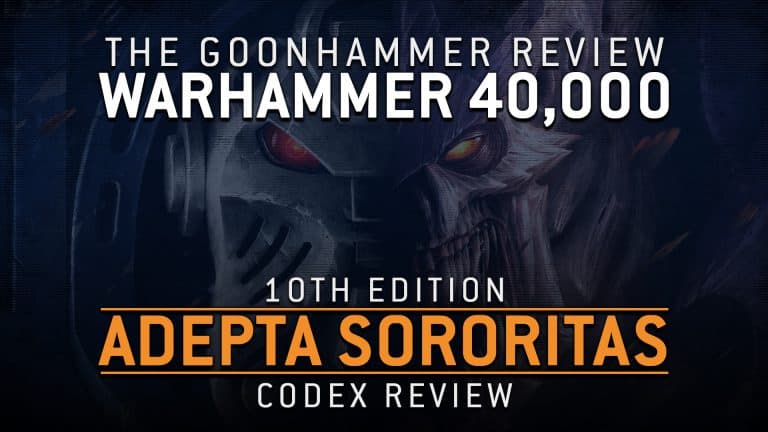
The Imperium’s 10th edition never moved as one bloc
Goonhammer’s Imperium retrospective lands on the clearest lesson of the edition: the Imperium was never really a single success or failure story. It was a bundle of very different design problems, with some books thriving on real table strength and others looking healthier on paper than they felt in play. That matters for collectors because it changes how you read a codex launch, a hot detachment, or a sudden points tweak: the headline power can be real, but it can also be narrow, fragile, and temporary.

The method behind the piece is part of why that conclusion sticks. Instead of treating raw win rates as the only score that matters, the retrospective looks at codexes and detachments, then compares those results with how each army actually felt over time. That gives the Imperium a more honest shape. A faction can post a strong result for a moment and still leave players dealing with a punishing model count, awkward release timing, or a rules package that collapses the second balance pressure arrives.
Sisters of Battle are the clearest example of the edition’s whiplash
If there is one Imperium army that captures 10th edition’s unevenness, it is Adepta Sororitas. Their performance swung hard depending on whether the army rule and detachments gave them enough leverage to overcome the faction’s natural fragility and low model count. When the parts lined up, Miracle Dice and sharp detachment design produced real peaks. When they did not, the army could feel like it was fighting uphill with every casualty.
That tension starts with how the faction is built. Sisters ask a lot from the player: timing, sacrifice, and careful use of high-value units all matter, and the army’s rule rewards that exact kind of precision. Goonhammer’s index review described the 10th-edition Sororitas army rule as generating Miracle Dice at the start of every turn and when units died, which means the faction’s power is tied to resource management from the very beginning. That kind of mechanic can look modest on paper and still become explosive when a detachment amplifies it.
The codex launch gave Sisters a spike, then the balance team hit the brakes
Games Workshop positioned Codex: Adepta Sororitas as a major release for the faction. The book was set to arrive with four Detachments, revised Crusade rules, updated datasheets, and a new Jump Pack Canoness, and it was up for pre-order in June 2024. That launch framing matters, because it helps explain why the army’s competitive life in the edition was so volatile. The codex did not just give Sisters new toys, it handed them multiple new ways to express the same high-pressure identity.
The problem was that the strength came on fast. Warhammer Community later said the faction’s points were increased after release because the datasheets were performing better in the meta than expected. That is the first clear sign that the launch spike was not just a flavor win or a local meta quirk. The army was strong enough, and visible enough, that the studio had to react quickly.
From there, the story turned into a classic live-balance spiral. Later updates adjusted Miracle Dice generation to make them a more precious resource, and Bringers of Flame was specifically brought back into line with the other codex detachments. By December 2024, Games Workshop had gone further, changing Acts of Faith so players gained one Miracle dice when a unit was destroyed. That sequence is exactly why the retrospective can call the run a roller coaster rather than a steady climb. The army moved from launch excitement to repeated correction in a very short span.
A strong detachment can make an army look healthier than it really is
This is the part Imperium collectors should keep in mind when reading any edition retrospective. A faction can appear strong because one detachment is pulling the whole book upward, not because the book has a stable foundation. The Sororitas codex is the clearest warning sign. It had multiple themes, multiple build paths, and enough early power to dominate attention, but the balance team kept narrowing the lane until the army rule itself had to be adjusted and then reworked again when the first fix did not produce the desired results.
That is where the “looked healthy on paper” problem becomes important. The number of detachments, the promise of a fresh codex, and the excitement around a new build path can all suggest breadth. In practice, though, the faction may still be leaning on one especially efficient package. When that package gets clipped, the rest of the book has to stand on its own. For Sisters, the answer repeatedly seemed to be no, at least not without further changes.
What this says about Games Workshop’s design approach to the Imperium
The broader takeaway is bigger than one codex. The Imperium is Games Workshop’s largest and most varied alliance bloc, so it naturally produces the widest spread of results. Some books overperform, some drift in the middle, and some get hauled back into line more than once. That is not just a balance issue. It reflects the reality that the Imperium contains armies with wildly different model counts, unit roles, and play patterns, so one adjustment rarely lands evenly across the whole family.
It also shows how Games Workshop has been managing 10th edition as a live system. The company’s download pages explicitly fold in feedback from the community, playtesters, and the studio design team, which means rules changes are meant to respond quickly to what the game becomes in practice. For the Imperium, that live correction cycle could be especially sharp. A faction with a fragile body count and a resource mechanic like Sisters can spike hard, get corrected hard, and then be corrected again when the first correction misses the mark.
The lesson for collectors is simple: read the curve, not just the peak
The Imperium’s 10th-edition run was uneven because its success was unevenly distributed. Sisters of Battle had real highs, but those highs were tied to a narrow window of launch power, detachment tuning, and Miracle Dice efficiency that did not stay stable for long. That is why the retrospective feels less like a victory lap and more like a postmortem on how one of the game’s biggest factions can be powerful, popular, and still deeply unstable at the same time.
For anyone building or collecting Imperium armies, that is the real headline. A strong codex launch can be meaningful, but it is not the same thing as lasting health. The edition’s story, at least for Sisters, is that the flashiest faith can still burn out fast when the balance team decides the miracle economy has gone too far.
This article was produced by Prism’s automated news system from verified source data, official records, and press releases, then run through automated quality and moderation checks before publishing. The system is built and supervised by the people who set the standards it runs under. Read our full AI policy.
Did this article answer your question?