Goonhammer reviews Warhammer 40k terrain set for 11th edition rules
Goonhammer says the new terrain set fixes a real 11th edition problem: how to build proper tables fast, with no guesswork or pieced-together layouts.
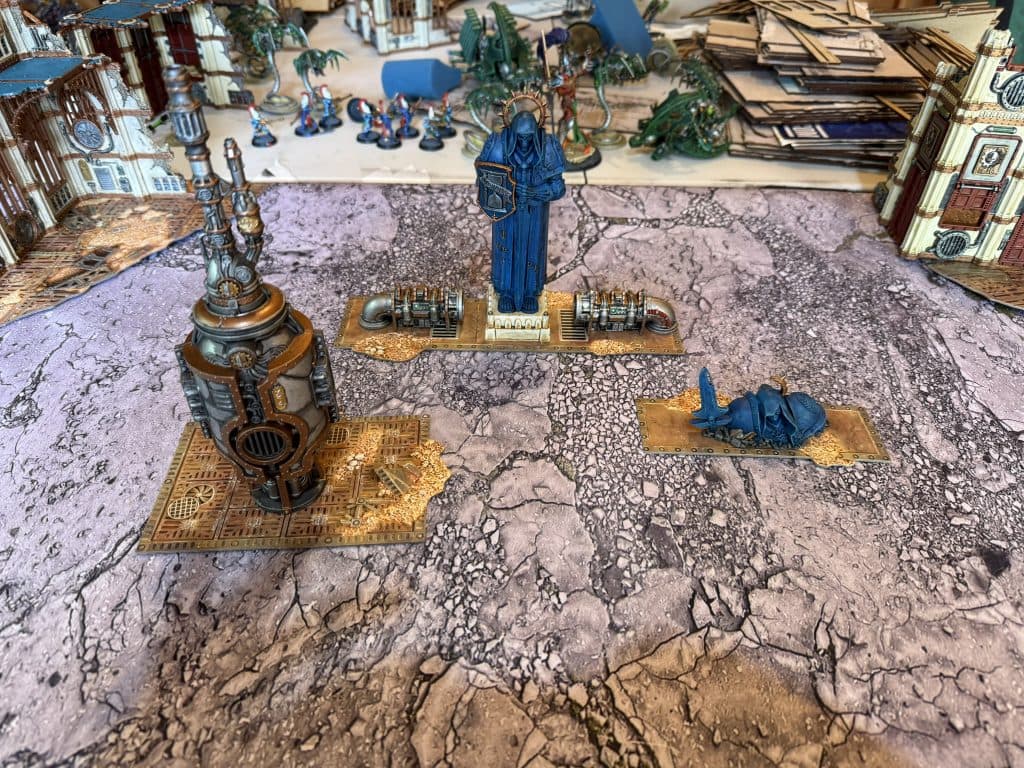
The kit fills the gap 40k players have lived with for years
Warhammer 40,000’s new Terrain Area Set is not trying to be the flashiest launch item for 11th Edition. It is trying to solve a problem almost every regular player has run into: how do you get a table that actually matches the rules without turning setup into a project?
That is why Goonhammer’s review lands with such force. The set gives ordinary club and kitchen-table players something tournament organizers have wanted all along, an official way to mark out battlefield terrain areas instead of improvising with whatever is on hand. It is a practical release, but in 40k that kind of practicality has real gameplay weight.
What is in the box, and why the footprint matters
Games Workshop says the Terrain Area Set includes 16 double-sided card templates that recreate all of the official terrain maps for the new edition. Those templates come in 5 different sizes and shapes, and they are designed to layer with terrain features players already own.
Goonhammer breaks the contents down more specifically: 4 large rectangles, 4 small rectangles, 2 large corners, 2 large strips, and 4 small strips. That gives the set a substantial footprint, covering roughly 40 percent of a 40K battlefield. In other words, this is not a token accessory or a few decorative mats. It is enough material to define a full playing space in a way that immediately resembles the layouts players see in official play.
The physical quality also matters for the buyer-value question. Goonhammer describes the pieces as sturdy and visually sensible without being intrusive, while Games Workshop frames them as easy to transport and simple to set up. That combination is exactly what a lot of players want from an opening-edition product: something durable enough for repeated use, but not so elaborate that it becomes another hobby chore.
How 11th Edition terrain works now
The reason this product matters is that 11th Edition terrain is no longer just “put some ruins on the table and see what happens.” Warhammer Community’s terrain rules article lays out a stricter structure built from two components: terrain features and terrain areas. The new Terrain Area Set is aimed squarely at the second half of that system.
The Hidden rule is the key detail. Infantry, Beast, and Swarm models inside a terrain area can be Hidden if they did not shoot in the current or preceding player turn. Visibility is usually limited to a 15-inch detection range, which makes footprint discipline matter much more than it did in many casual setups. If your table is too open, too cramped, or built without the right areas marked out, the whole feel of the game changes.
That is why the set is more than a convenience product. It helps ordinary players reproduce the assumptions the rules are built around. If the battlefield is supposed to support covered movement, line-of-sight play, and mission-specific layouts, then having the right terrain areas on hand is what keeps those mechanics from falling apart before the first turn is rolled.
Who actually needs this set
The clearest audience is not the player who already owns multiple matched-play boards and can build a tournament table from memory. It is the player who wants 11th Edition to work properly without spending an evening measuring, debating, and adjusting terrain by feel.
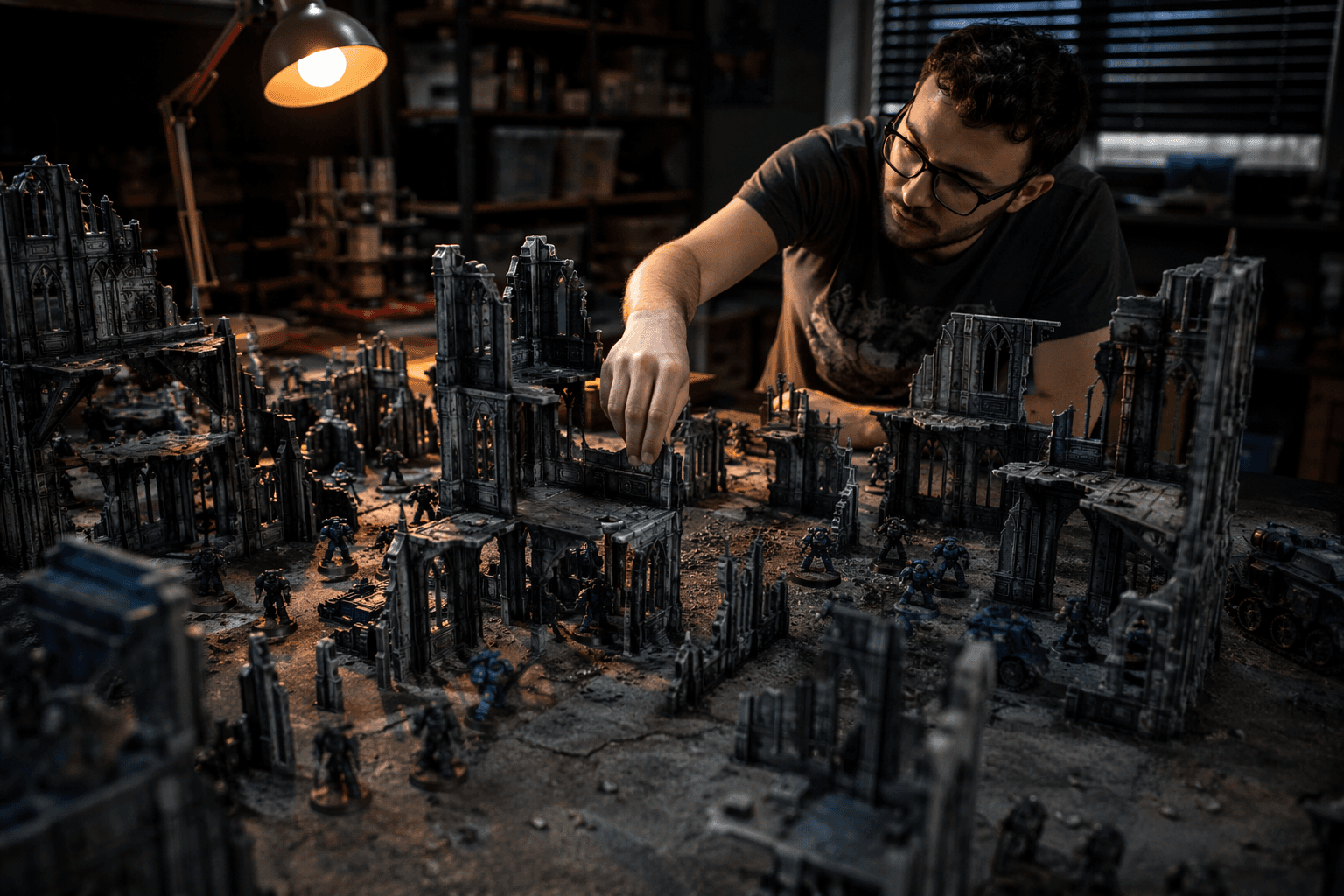
For clubs, this should be close to a no-brainer. Shared terrain pools often mix official kits, homemade ruins, older scatter terrain, and whatever people have managed to bring along. The Terrain Area Set helps unify all that into something that looks and plays like a real 40k board. For kitchen-table games, it lowers the friction even more, because it gives casual players a ready-made baseline instead of asking them to reverse-engineer a tournament map from scratch.
The compatibility angle is also important. The pieces appear sized to work with Games Workshop’s recent ruin kits and other signature terrain ranges, and the smaller templates give older scatter or decorative pieces a purpose again. That means the set is not replacing a player’s existing collection. It is making that collection easier to use in a rules-accurate way.
Why it feels different from older terrain systems
This is a meaningful shift from how Games Workshop handled terrain before. In 2020, the Chapter Approved Tactical Deployment Mission Pack used terrain points and terrain datasheets, which pushed players toward selecting terrain in a more bespoke, player-managed way. Footprints and function were defined, but the table still felt like something you assembled through a budget and a pile of options.
11th Edition looks more standardized. The recommended layouts are mission-specific, and the game is being pushed toward defined battlefield templates rather than improvised terrain budgets. That is a big reason the Terrain Area Set stands out. It formalizes a thing tournament players were already doing informally, and it does so in a way that ordinary players can copy at home.
Games Workshop’s current competitive support reinforces that direction. The newer Chapter Approved Tournament Companion is pitched as guidance for event organisers and players, and it refreshes terrain layouts 7 and 8. The message is clear: terrain is not a side issue. It is part of the competitive structure, and it is being actively maintained alongside the mission rules themselves.
How it fits into the broader 11th Edition launch
The Terrain Area Set is arriving as part of a much larger 11th Edition rollout tied to Warhammer 40,000: Armageddon. Games Workshop positions the Armageddon box as the headline launch product, with the Terrain Area Set, updated Core Rulebook, Chapter Approved Mission Deck, and Dominatus Deck also getting standalone releases.
That matters because it shows the terrain kit is not an isolated hobby accessory. It is part of the edition’s launch infrastructure, alongside the rules and mission products that define how games are actually played. The terrain set is, in effect, a piece of the rules system made physical.
The bottom line for regular players
If you already know how to build 40k tables, the Terrain Area Set may feel like a luxury. If you are trying to get 11th Edition running correctly at a club or kitchen table, it looks much closer to the easiest path. It does not add spectacle, but it does remove friction, and in a game where terrain shapes movement, visibility, and mission flow, that is a serious upgrade.
That is the real story here: the box is not selling a fantasy of better terrain. It is giving players a faster way to make the table function the way 11th Edition expects, which is exactly the sort of practical release that tends to matter most once the first games start.
This article was produced by Prism’s automated news system from verified source data, official records, and press releases, then run through automated quality and moderation checks before publishing. The system is built and supervised by the people who set the standards it runs under. Read our full AI policy.
Did this article answer your question?