Goonhammer's Infiltration 101 Guide Breaks Down Playing Kommandos
Goonhammer's Infiltration 101 series turns its lens on Kommandos, breaking down how to actually field and play one of the Orks' sneakiest units.
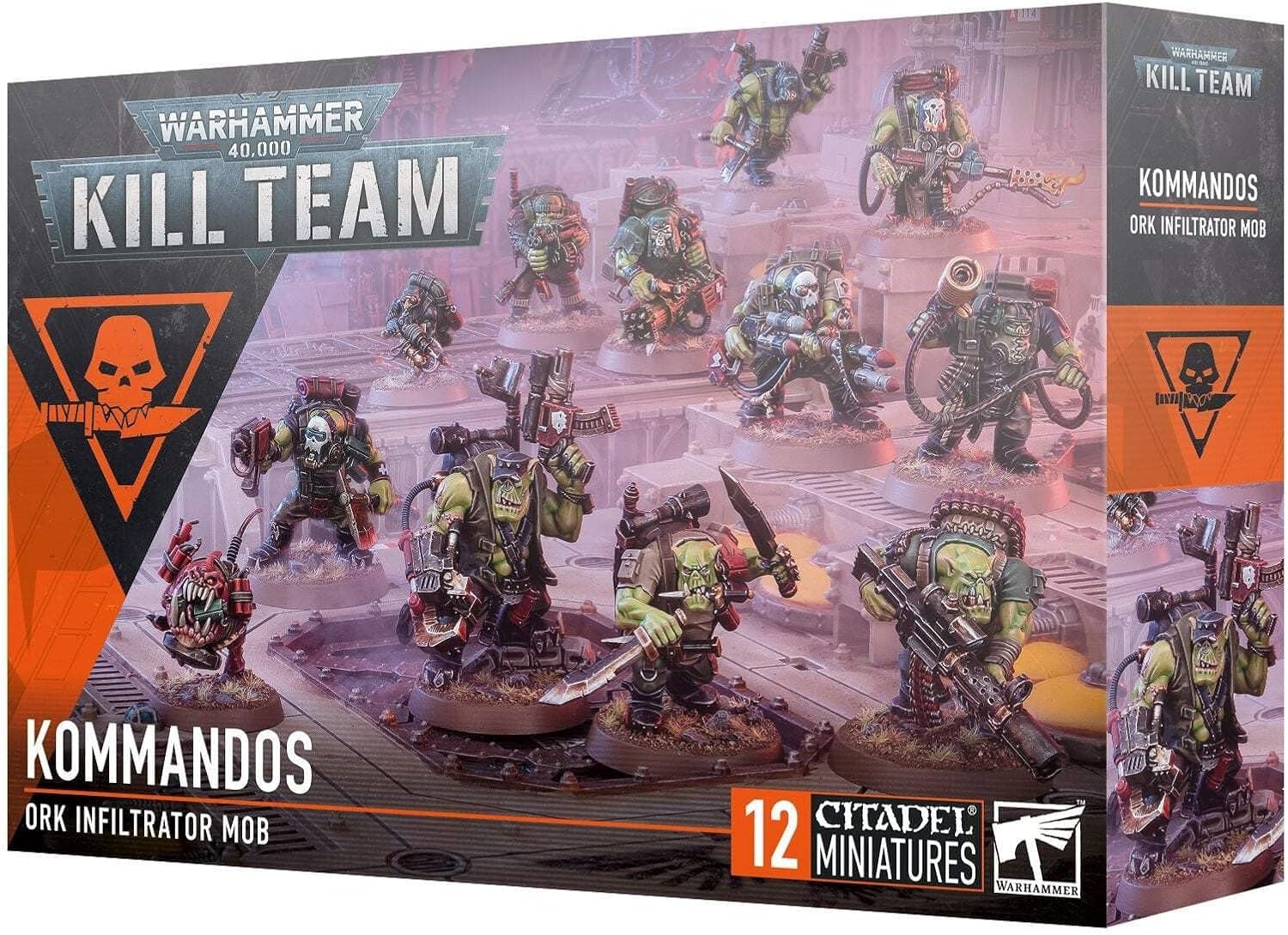
Kommandos occupy a specific and demanding niche in the Orks roster. They're not your standard green tide fodder hurled across the table in a wave of bodies. They're specialists, and playing them well means understanding exactly what that specialization asks of you. Goonhammer's Infiltration 101 series exists precisely for this kind of deep-dive, and its entry on Kommandos is a practical breakdown of how to get real mileage out of a unit that rewards tactical thinking over brute-force application.
The Infiltration 101 series is Goonhammer's dedicated space for examining units that operate outside the normal deployment and movement framework of Warhammer 40k. Infiltrating units come with built-in advantages that can completely reshape how your opponent has to position and react from turn one, but those advantages come with strings attached. Misread the situation and your infiltrators become an expensive distraction. Read it right and you're dictating the pace of the entire game from the opening bell. Kommandos sit squarely in this category, and understanding the mechanics and mindset behind them is what separates a frustrating experience from a genuinely effective one.
What Kommandos Actually Bring to the Table
Kommandos are the Orks' dedicated close-quarters infiltration unit, and their rules reflect that identity. Where most Ork units are designed to close distance fast and hit hard in a relatively straightforward way, Kommandos are built to already be close. Their Infiltrate ability means they deploy after both armies are set up, placed anywhere on the battlefield more than nine inches from enemy models. That's not just a positioning trick; it's a psychological weapon. Your opponent has to account for a threat that hasn't revealed its exact location yet, which means they're either overcommitting defensive resources or leaving gaps you can exploit.
The unit's loadout options allow for some flexibility depending on what you need them to do. Whether you're running them as objective grabbers, backline harassers, or character hunters, the answer to "what do I want this unit to accomplish on turn one" should be decided before you ever put them on the table.
Deployment and Threat Projection
The nine-inch bubble is the fundamental constraint every Kommandos player works within. Your deployment position sets up everything that follows. Placing them in cover near a mid-board objective is often more valuable than chasing a dramatic assassination angle, because the former gives you options while the latter commits you to one outcome that your opponent can potentially deny.
Threat projection matters as much as the actual position. If your opponent sees Kommandos and has to choose between protecting their backfield objective holder or keeping their flank screened, you've already achieved something before rolling a single die. The Goonhammer Infiltration 101 framework consistently emphasizes this kind of board-state leverage, and with Kommandos it's especially relevant because the unit's combat output, while real, isn't going to win games by itself.
Getting Into Combat
Closing the remaining distance after deployment is where Kommandos can get punished if you're not careful. Nine inches is a lot to cross without a charge, and a failed charge after infiltrating forward is a painful outcome because it often leaves the unit exposed in the open with no real defensive value. There are a few ways to mitigate this:
- Use terrain aggressively. Placing Kommandos in area terrain gives them a defensible position even if the charge fails, and it keeps them relevant as an objective contester.
- Consider the Waaagh! timing. Ork army-wide buffs can dramatically change what Kommandos can accomplish in a given turn, and coordinating your Kommandos' threat window with broader army activation is worth planning around.
- Don't always charge turn one. Sometimes the correct move is to sit in a strong position, threaten multiple targets, and force your opponent to come to you or cede ground.
The temptation with any infiltrating unit is to make a big aggressive play immediately. Sometimes that's exactly right. Other times you're handing your opponent a free turn to eliminate the unit on their activation and remove the pressure entirely.
Running Multiple Units
One Kommandos unit creates a problem for your opponent. Two creates a dilemma. The Infiltration 101 philosophy, as Goonhammer applies it across the series, leans into this multiplier effect. When you have multiple infiltrating threats, your opponent cannot adequately screen against all of them without fundamentally compromising their own gameplan. That's the position you want to force.
With Kommandos specifically, doubling up also helps cover the unit's vulnerability window. If one unit draws defensive attention and gets neutralized, the second is often free to operate with far less resistance. The investment cost is real, so this approach works best in lists built around midfield pressure rather than lists where the Kommandos are a single auxiliary piece.
Common Mistakes
Even experienced players make predictable errors with Kommandos. The most common is deploying too aggressively in pursuit of a charge that isn't reliable. The second most common is the opposite: playing too conservatively with a unit that needs to apply pressure to justify its points cost. Finding the middle ground, close enough to threaten, positioned well enough to survive the counterplay, is genuinely difficult and comes from repetition.
Another frequent mistake is ignoring the Kommandos' role in shaping the early board state. Every activation your opponent spends reacting to your infiltrators is an activation they're not spending on their own gameplan. Track that value. It's real even when it's invisible on the score sheet.
Why the Infiltration 101 Framework Holds Up
Goonhammer's Infiltration 101 series earns its reputation because it doesn't treat infiltrating units as simple tricks. Every entry approaches the subject as a genuine tactical problem: here is what this unit can do, here is what it cannot do, here is how to maximize the former and avoid the latter. The Kommandos entry follows that structure, which makes it useful not just for players picking up the unit for the first time but for anyone trying to sharpen a list that already runs them.
Kommandos reward the player who thinks two activations ahead. Get the deployment right, manage the threat projection, and time the aggression correctly, and they punch well above what a quick points-cost glance might suggest.
This article was produced by Prism’s automated news system from verified source data, official records, and press releases, then run through automated quality and moderation checks before publishing. The system is built and supervised by the people who set the standards it runs under. Read our full AI policy.
Did this article answer your question?