Gregor Eisenhorn, Warhammer 40k’s most dangerous Imperial inquisitor
Gregor Eisenhorn is the purest 40k warning label: a righteous Inquisitor whose every necessary compromise pushes him closer to heresy.
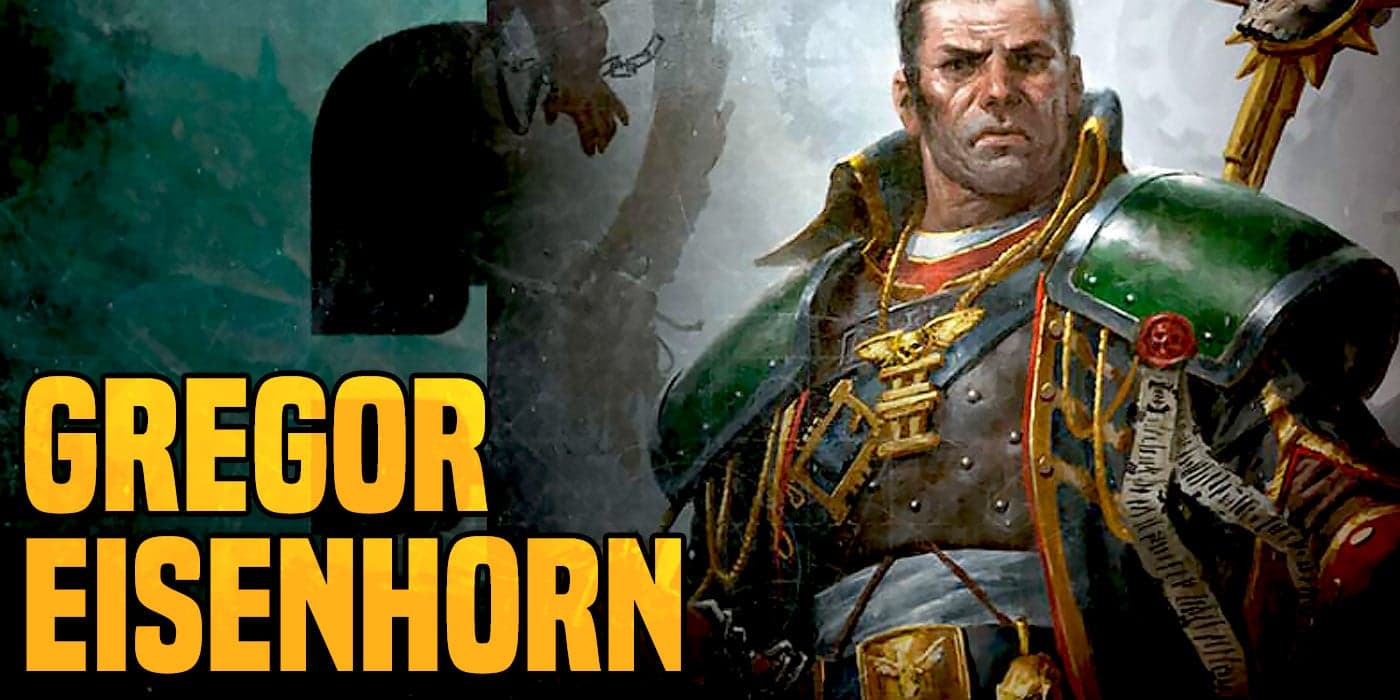
Gregor Eisenhorn and the moment Imperial duty starts to rot
Gregor Eisenhorn is dangerous because he never begins as a monster. He starts as an Ordo Xenos Inquisitor with a Puritan’s sense of purpose, then keeps making the kind of choices the Imperium rewards right up until those choices start looking a lot like corruption. That slow collapse is why he still stands as one of Warhammer 40,000’s most compelling protagonists, and why his story remains the clearest case study in how righteousness slides into radicalism.
What makes Eisenhorn so effective is the scale of the compromise. He is not a clean hero and he is not a simple villain. He is powerful, psychic, heavily augmented by an augmetic support rig, and smart enough to justify the next step every time the previous one becomes too dangerous to admit. That combination, especially in the hands of an Inquisitor of the Ordo Xenos, gives him the perfect profile for 40k’s favorite kind of tragedy: a man who keeps telling himself he is still defending the Imperium even as his methods make everyone around him recoil.
From Amalathian Puritan to Radical Xanthism
Eisenhorn’s ideology matters because it explains why his fall feels so gradual and so believable. He begins aligned with the Amalathian school of the Inquisition, a Puritan stance that fits a man who believes the Imperium can still be preserved by discipline, restraint, and obedience. Over time, though, he moves toward Radical Xanthism, and that shift is the turning point that makes even his allies start treating him with suspicion.
That change is the real engine of the character. Once Eisenhorn is willing to bend doctrine for survival, the line between enforcement and contamination becomes the story itself. The Inquisition has always lived in that moral gray zone, but Eisenhorn makes it visible step by step, turning every investigation into a test of how much Imperial truth can survive contact with reality.

The books that map the descent
If you want the cleanest route into Eisenhorn, the sequence is easy to track. Dan Abnett launched the story with *Xenos* in 2001, followed by *Malleus* in 2001 and *Hereticus* in 2002. That trilogy already gives you the full shape of the character arc, from capable agent of the Throne to a man increasingly defined by suspicion, secrecy, and the fear that he has crossed too many lines to ever come back.
*The Magos*, released in 2018, extends that trajectory and keeps the character alive as more than a nostalgia piece. Black Library now packages the core run as an omnibus that includes *Xenos*, *Malleus*, *Hereticus*, *The Magos*, and four short stories, which makes it the most straightforward way to read the whole arc in one place. For anyone trying to decide whether Eisenhorn is the right entry point, that structure matters: you get the full transformation without having to hunt through disconnected corners of the setting.
Why Eisenhorn still works as a gateway character
Eisenhorn endures because he sits at the intersection of detective fiction, gothic horror, and grimdark espionage. His stories do not just deliver battlefield spectacle, they drag you into the Imperium from the inside, where paranoia is policy and every clue can become a heresy charge. Black Library frames him as a figure operating on the very edge of Imperial doctrine while investigating conspiracies involving aliens, heretics, daemons, and even fellow Inquisitors, which is exactly why he feels so useful as a first serious 40k read.
That appeal gets sharper once the story turns on him. By *Hereticus*, Eisenhorn is hunted by former allies and branded a radical and an enemy of the Imperium, even as he continues trying to prove his loyalty. His greatest recurring enemy, the former Inquisitor Quixos, gives the conflict a personal edge that keeps the books from becoming abstract theological infighting. The point is not just that Eisenhorn fights monsters, but that the closer he gets to understanding the threat, the more he resembles it.
How Black Library and the wider fandom keep him central
Warhammer Community has repeatedly treated Eisenhorn as one of the setting’s defining anti-heroes, and it is not hard to see why. More than 20 years have passed since readers were first introduced to his adventures, and by the end of Dan Abnett’s trilogy he is no longer the straightforward hero he was in *Xenos*. That evolution gives him a rare status in 40k fiction: he is both a character study and a shorthand for the franchise’s larger obsession with moral compromise.
He also anchors a much bigger part of the Inquisition’s fiction web. Black Library’s later material places him alongside Ravenor and Alizebeth Bequin, reinforcing that Eisenhorn is not an isolated curiosity but part of a long-running narrative spine for the setting. Warhammer Community has also pointed out that Eisenhorn and Ravenor are among the most famous Inquisitors, even if the wider Imperium hides thousands more operating in the shadows. That matters for hobby readers because it shows where the real narrative pressure sits: not on rank-and-file Guardsmen, but on the people empowered to decide what counts as purity in the first place.
That is why Eisenhorn remains the go-to character if you want to understand why 40k heroes are so compellingly compromised. He starts as a Puritan, becomes a Radical, and keeps insisting the Imperium still needs him, even as the evidence piles up that the Imperium is changing him just as much as he is defending it. That is the sting in Eisenhorn’s story, and it is why the most dangerous Imperial inquisitor is still the one who looks, at first glance, like he is simply doing his duty.
This article was produced by Prism’s automated news system from verified source data, official records, and press releases, then run through automated quality and moderation checks before publishing. The system is built and supervised by the people who set the standards it runs under. Read our full AI policy.
Know something we missed? Have a correction or additional information?
Submit a Tip