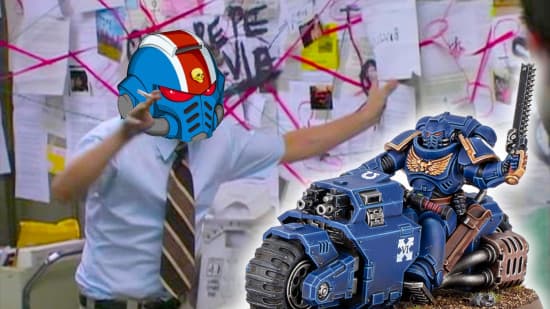
How to Fight Back When a Warhammer 40k Game Goes Bad
The best comeback in 40k is usually the boring one: stop bleeding points, read the mission, and play for the next two turns. Floof’s guide turns a bad start into a salvage plan.

When the game starts slipping, stop reaching for the miracle
The moment a Warhammer 40,000 game starts going sideways, the instinct is to force something dramatic. That is usually how a bad round turns into a disaster. Floof’s subscriber-only Goonhammer guide, *Playing From Behind: A Guide to Catching Up*, takes the smarter route: slow down, reassess what is still on the table, and decide whether the game can be recovered through scoring, board control, or a carefully chosen sacrifice.
That framing matters because 40k punishes panic. A failed charge, a bad primary turn, or one brutal early trade can leave even a strong list chasing the game. Floof’s central point is simple and useful: “I’m losing” is not a tactical plan. You need a decision tree, not a tantrum.
The first job is to stop the damage
When you are behind, the immediate goal is not to win the game in one turn. It is to prevent the gap from widening. That means looking hard at what objectives are still realistically contestable, what units are exposed, and whether your next move should stabilize the board instead of overextend into a losing trade.
This is where a lot of players go wrong. They see the score and start throwing units forward in search of a comeback charge, only to hand over even more primary, more secondary, and more tempo. A better response is often to make the least glamorous move available: screen, reposition, hide, or simply preserve the pieces that can still matter in turns three and four.
Score first, emotions second
Floof’s guide works because it translates the feeling of falling behind into practical priorities. The right question is not, “How do I table them?” It is, “What is still scoreable, and what can I deny?” That shift is everything in a game where control of objectives and timing often matters more than raw damage.
A sacrificial move can be correct, but only if it buys something measurable. Maybe it keeps an objective contested for a turn. Maybe it forces the opponent to waste movement or shooting. Maybe it preserves a key unit so you still have a late-game primary play. If the sacrifice does not buy a real score or a real tempo swing, it is just a bad trade dressed up as bravery.
Read the mission before you chase the matchup
The mission structure in 10th edition is a huge part of why recovery play matters. Warhammer Community has said the Leviathan Mission Deck has been used since the dawn of 10th edition, and the Pariah Nexus season took over as the next matched-play cycle in 2024. That means the shape of a comeback is never abstract. It is tied to the actual mission, the scoring windows, and the objectives on the table.
The Pariah Nexus Companion was described by Warhammer Studio as a free download with FAQs, errata, maps, tournament support, and more, and the Pariah Nexus Tournament Companion described the deck as having “unprecedented scope” for matched play with “thousands” of possible mission combinations. That matters because recovery play depends on reading the mission structure correctly. If the scoring geometry shifts from game to game, then the best comeback plan is always the one that matches the specific mission you are actually playing, not the one you hoped to draw.
Tempo is the hidden resource
When you are behind, tempo becomes as valuable as units on the table. Every turn you force your opponent to spend cleaning up your stall pieces instead of advancing their own plan is a turn you buy back. That is why a recovery game often looks conservative from the outside, even when it is technically aggressive in the score sheet.
Floof’s guide treats tempo as part of match management. If you cannot win the current exchange, you can still delay the opponent’s scoring engine, protect your own late-game pieces, and keep the game close enough to matter. In 40k, that is often the difference between a blowout and a respectable finish that still leaves you with a path to 10 or 12 points on the final turns.
The wider rules game keeps changing, so recovery skill matters more
This is not a static problem, and that is exactly why the guide lands now. Warhammer Community has kept the competitive environment moving with quarterly and periodic balance updates, including Balance Dataslates on March 12, 2025 and June 4, 2025, followed by a quarterly balance update in December 2025. In a season where points, mission pressure, and army performance can shift under you, resilience is not optional.
That instability raises the value of good mid-game judgment. If the rules environment is changing four times a year, and mission packs like Leviathan and Pariah Nexus keep redefining how games are scored, then the player who can recover from a bad start gains a real edge. The lists may change; the discipline of staying calm, judging the board honestly, and making one correct stabilizing move at a time does not.
The real takeaway for competitive players
Floof’s article is worth reading because it treats falling behind as normal, not fatal. That is a healthier, sharper way to play Warhammer 40,000, especially in a meta where a single mistake can snowball fast. Goonhammer’s competitive-play listing placed the piece alongside other late-April 2026 tactics and list-building coverage, which is exactly where this kind of advice belongs: not as theory, but as practical competitive coaching.
The best comeback lines in 40k are usually not flashy. They are disciplined. They ask you to stop chasing losses, identify what can still be scored, and make the one move that keeps the game alive long enough for the final turns to matter. That is how a bad start becomes a contest again.
This article was produced by Prism’s automated news system from verified source data, official records, and press releases, then run through automated quality and moderation checks before publishing. The system is built and supervised by the people who set the standards it runs under. Read our full AI policy.
Did this article answer your question?