How Warhammer 40,000 began with Rogue Trader in 1987
Rogue Trader made 40K feel like a grim sandbox, and second edition turned that experiment into the blueprint players still recognise today.
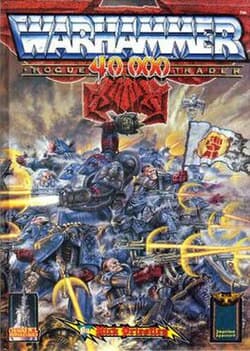
Warhammer 40,000 did not begin as the tightly packaged, tournament-ready machine many players know now. It began as Rogue Trader in 1987, a sprawling first look into the 41st Millennium built around a Gamesmaster, pages of tables, and battles that often used only five to 10 miniatures a side. That early shape still matters, because the game’s mix of narrative freedom, faction personality, and improvised chaos was there from the start.
Rogue Trader and the open-ended DNA of 40K
Rogue Trader ran from 1987 to 1993, and its original release wave was tiny by modern standards: just 14 Citadel miniatures. That scale tells you a lot about the hobby’s first foundation. Instead of a vast catalog of tightly defined armies, the setting arrived as an experimental war-game with room for invention, expansion, and a fair amount of referee judgement.
That rules philosophy left a mark that still shows up today. Even now, 40K tends to reward story-driven missions, dramatic hero moments, and armies that feel like collections of identities rather than interchangeable stat blocks. The original rulebook was not trying to behave like a perfectly sealed competitive system; it was inviting players into a living setting that could keep growing around the table.
RTB01 and the first real Space Marine aesthetic
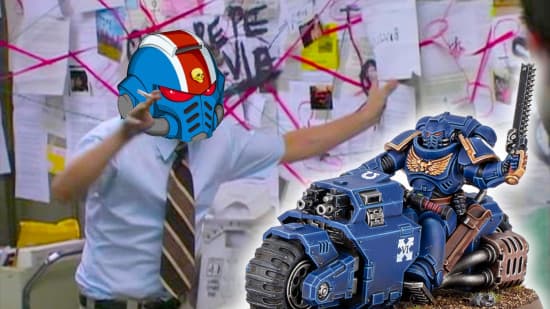
One of the clearest signs that this was becoming something bigger came in the first boxed release, RTB01, which stood for Rogue Trader Box One. The box contained 30 multipart plastic Space Marines and was released alongside the Rogue Trader rulebook, giving the Imperium an early visual identity that still echoes through the modern range. Warhammer Community later pointed to those first boxed Space Marines as the foundation for the Space Marine aesthetic players still recognise today.
RTB01 mattered because it joined flexibility with iconography. The multipart design gave hobbyists more options than a fixed, one-pose kit, while the armour style helped establish the “beakie” look that many long-time fans still associate with the earliest days of the chapter. It also foreshadowed a central truth of 40K collecting: the army is not just a unit roster, it is a visual project.
The same early wave also introduced one of the setting’s most enduring machines, the Land Raider. It was first mentioned in the Rogue Trader rulebook and then became one of the first plastic kits a year later, released in a box of two. That jump from a name in the lore to an actual kit is one of the clearest examples of how 40K has always fused background and tabletop product into one ecosystem.
Second edition is where 40K becomes recognisable
If Rogue Trader was the experiment, second edition was the bridge to the modern game. Released in 1993, it is the point Warhammer Community identifies as the moment Warhammer 40,000 became the game it is today. Games Workshop describes the era as one of brightly coloured armies, powerful heroes, and properly codified lore, and that description fits the change in both feel and structure.
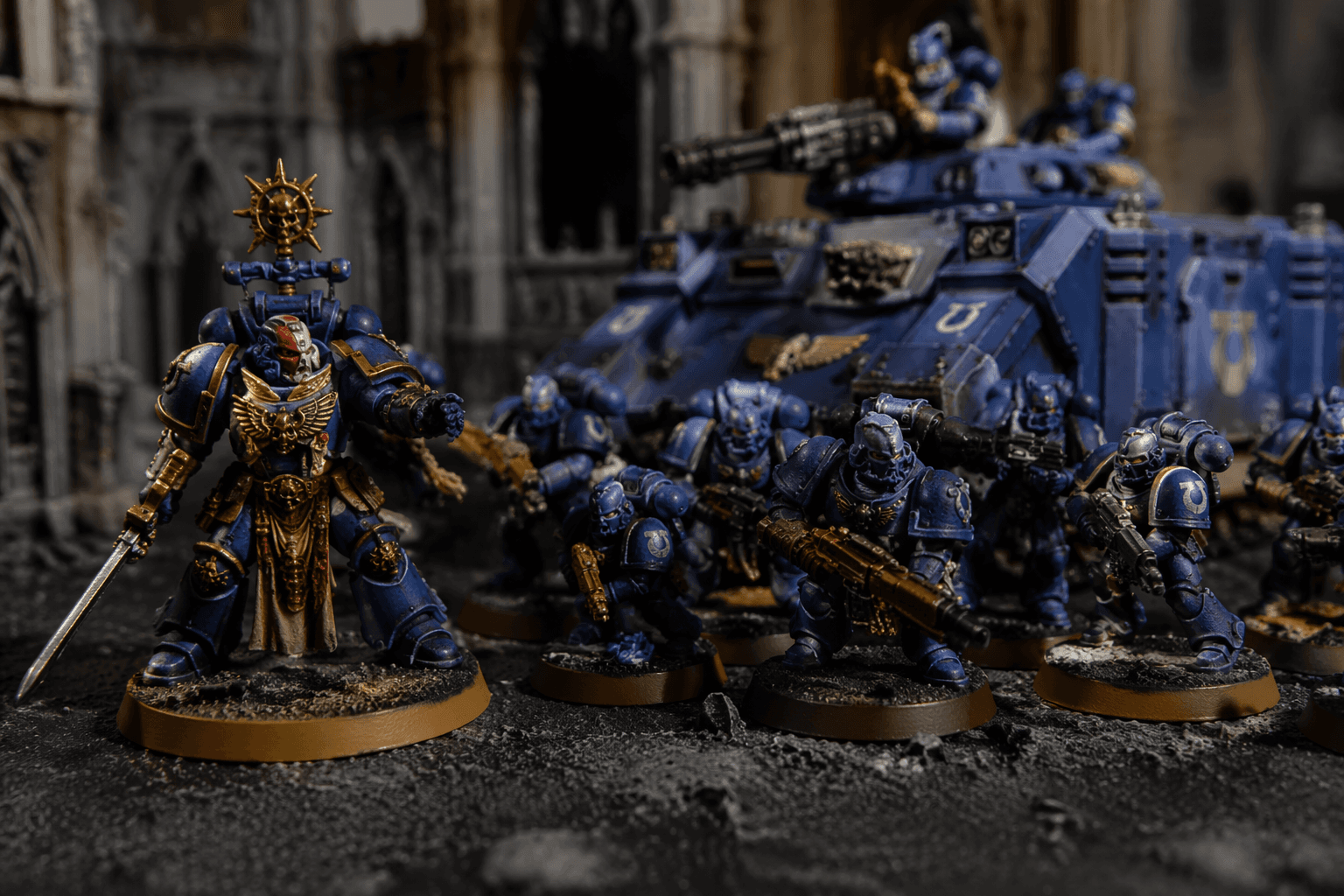
The boxed set itself made the shift impossible to miss. It included two full Tactical Squads of plastic Space Marines, 20 Ork Goffs, 40 Gretchin, and a cardboard Ork Dreadnought. That is not just a bundle of models, it is a declaration of army identity: Space Marines as the disciplined core, Orks as a riot of foot troops and brute machinery, and a clear visual split between the factions at the table.
Second edition also brought a more unified presentation of the setting. Its companion books, Codex Imperialis, Wargear, and Codex Army Lists, show how background, equipment, and list-building were being codified together instead of left as loose suggestions. The result was a game that could support bigger battles and a more consistent presentation across armies, while still keeping the dramatic personalities that made 40K stand out from other tabletop systems.
The art, the books, and the tone that stuck
The visual language of second edition mattered as much as the rules. Warhammer Community later highlighted the boxed set cover art painted by John Blanche as emblematic of the period, and that makes sense: his work captured the vivid but still grim tone that defined the era. The armies were brighter than the modern battlefield aesthetic in many players’ minds, but the mood was still unmistakably 40K.
That combination is one of the reasons the setting endured. The art did not flatten the universe into generic sci-fi, and the rules did not strip away personality in pursuit of neatness. Instead, second edition locked in a style where bold faction colour, oversized heroes, and dense lore could all sit beside one another without feeling out of place.
What modern players inherit from those early choices
The modern hobby still carries the habits formed in those first two eras. Rogue Trader’s Gamesmaster-driven structure helps explain why 40K has always been comfortable with narrative missions, campaigns, and scenarios that go beyond simple elimination. Its small model counts and loose framework created a culture where the story of an army matters almost as much as the stat line.
Second edition added the other half of the formula: recognisable army identities and a codified setting that could scale. The boxed set, the codex-style books, and the emphasis on distinctive forces turned 40K into a game you could learn through faction character, not just raw rules. That is still how the hobby works now, whether you are buying into a chapter, building an Ork mob, or trying to understand why one tank or one squad feels so central to the lore.
That is why modern 40K looks the way it does. The game still carries Rogue Trader’s open-ended, narrative-first energy, but second edition gave it the structure, iconography, and faction clarity that made it last. The universe grew enormous, yet the blueprint is still visible every time a player opens a codex, builds an army, or puts a classic Space Marine on the table.
This article was produced by Prism’s automated news system from verified source data, official records, and press releases, then run through automated quality and moderation checks before publishing. The system is built and supervised by the people who set the standards it runs under. Read our full AI policy.
Did this article answer your question?