Mechanicus II expands the story, but loses the original’s spark
Mechanicus II stretches the AdMech saga across a whole world, but the soundtrack and sharp identity that made the original sing are harder to pin down.
Mechanicus II trades the first game’s precision for scale
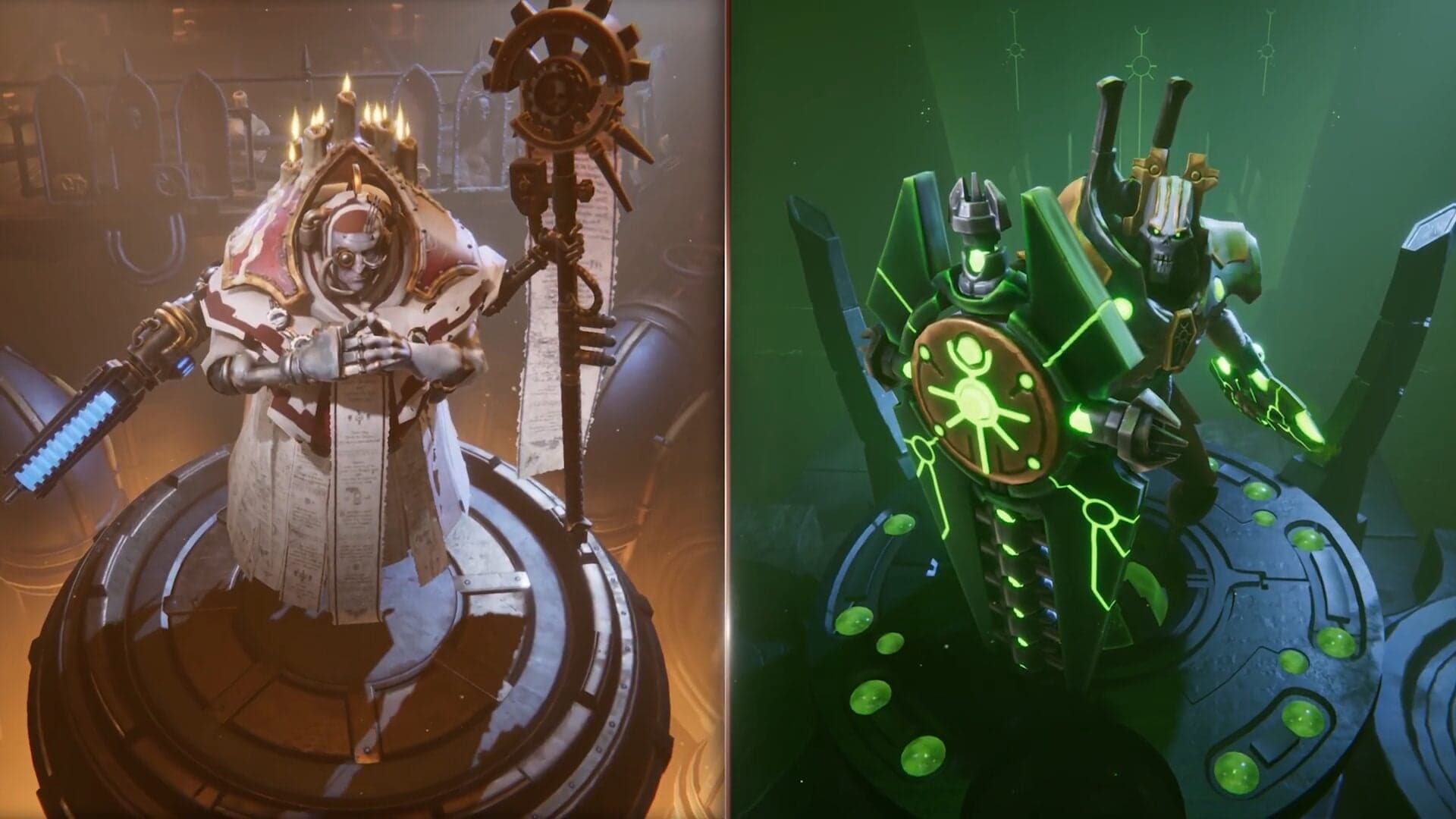
Warhammer 40,000: Mechanicus II makes its strongest pitch right away: this is not just another sequel, it is a larger war built around the same sacred machinery. Developed by Bulwark Studios and published by Kasedo Games, the turn-based tactical game launched on May 21, 2026 for Windows PC, PlayStation 5, and Xbox Series X|S, priced at $39.99, €39.99, and £34.99. The official framing is clear enough for any 40k player scanning for crossover value: two playable factions, two narrative campaigns, and a conflict that spreads across an entire world instead of a single contained battlefield.
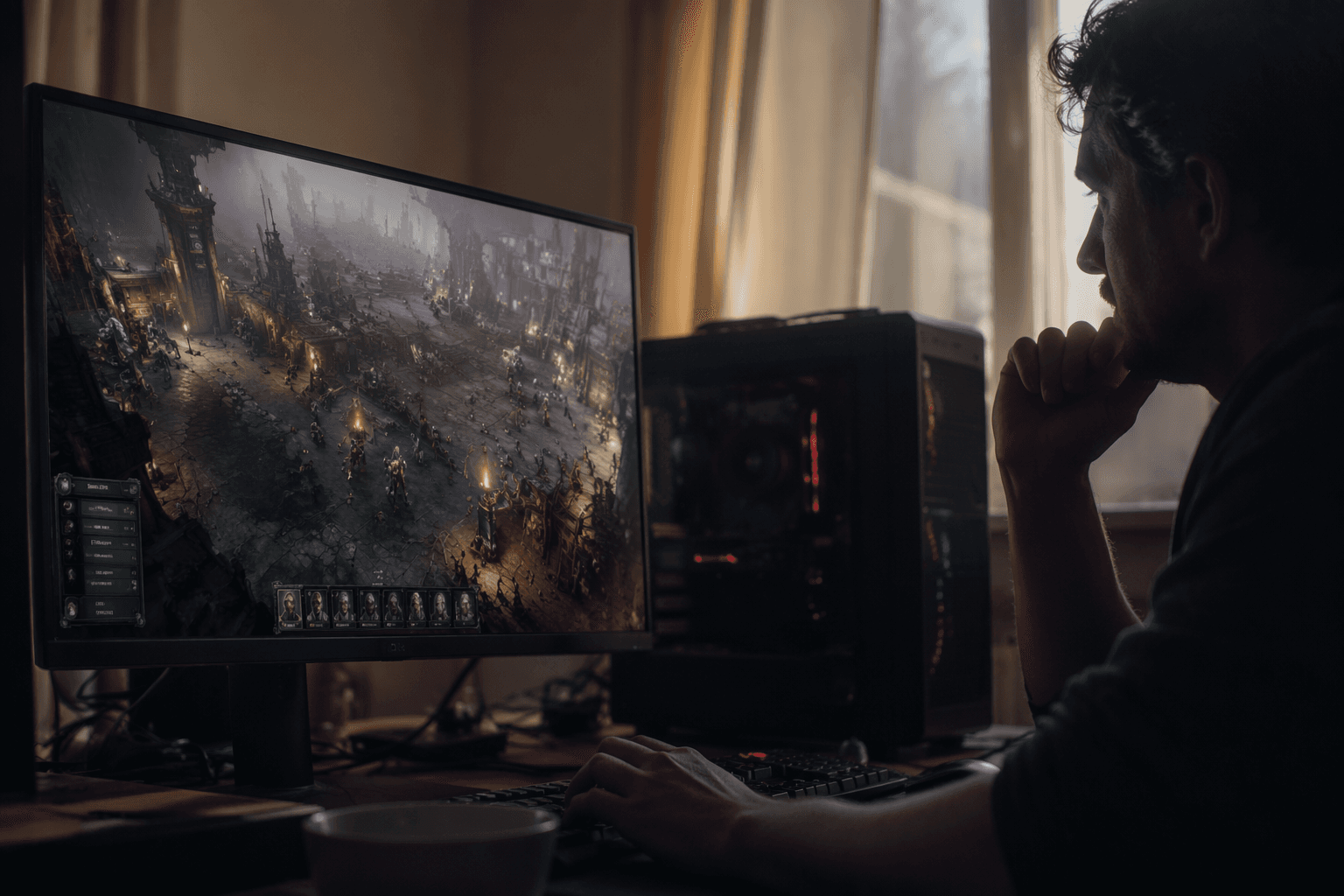
That change in scope is exactly what makes the game interesting for 40k fans and slightly risky as a sequel. The original Mechanicus earned its reputation by feeling disciplined, atmospheric, and unmistakably Adeptus Mechanicus. Goonhammer’s review captures that memory well, describing the first game as one of the most iconic Warhammer adaptations, especially because of its soundtrack, memorable writing, and the way it translated the Mechanicus as a factional mood rather than just a roster of units. Mechanicus II, by contrast, is presented as bigger in every direction. It expands the story, broadens the strategic layer, and adds customization, but the review argues that the result is more impressive on paper than it is always satisfying moment to moment.
The setting translation goes wider, and that helps a lot
For readers who care most about how a game feels as a piece of Warhammer 40,000 fiction, Mechanicus II has a lot going for it. The central conflict is built around Vargard Nefershah of the Necrons and Magos Dominus Faustinius of the Adeptus Mechanicus, which immediately gives the game a classic dynastic-meets-theological edge. That pairing is strong lore material on its own, and the fact that the sequel widens the battlefield to an entire world with multiple biomes and regional resource management makes it feel closer to a sector-scale campaign than a skirmish puzzle.
The presence of the Leagues of Votann is another major point of crossover value. Official materials describe them as a faction new to both the series and Warhammer 40,000 video games, which gives Mechanicus II an extra lure for lore readers who want to see how a newer tabletop faction is translated into a digital strategy space. Even if the game is still anchored by the Necron and Mechanicus conflict, the inclusion of Votann signals that the sequel is trying to serve the wider setting, not just repeat the first game’s premise with a fresh coat of brass and hexes.
That broader canvas also changes the battlefield feel. Pre-release material emphasizes capture and defense of regions, plus faction-specific environmental mechanics: the Mechanicus can take cover, while the Necrons can destroy terrain. That is the kind of detail 40k players notice immediately, because it speaks to identity on the tabletop level. The battlefields are not just backdrops. They are supposed to reflect how these armies wage war, with the Necrons as an inexorable force and the Mechanicus as a faction that leans into positioning, machinery, and technical control.
A stronger entry point for newcomers than a replacement for the first game
The review’s most generous reading is also the one likely to matter most to the broader Warhammer audience: Mechanicus II looks like a solid way in for people who are new to the setting. The presentation has been upgraded, the visuals are more ambitious, and the narrative is easier to sell as a grand 40k saga than the smaller, sharper identity of the first game. If the original Mechanicus was a cult favorite built on tone and concentration, the sequel feels designed to be more accessible, more expansive, and more obviously “big Warhammer” from the first hour.
That accessibility comes with trade-offs. Goonhammer’s review points out that the sequel resembles the first game more in name than in spirit, and that the added complexity can slow the experience down. The two factions are more technically involved, but that depth also creates friction in the loop. In other words, the sequel is trying to do more tactical work, more narrative work, and more management work all at once, and that can blunt the focused snap that made the first game so memorable.
There is also a clear audience split here. Players who loved the original for its tight structure, iconic atmosphere, and distinct voice are the ones most likely to notice what has been lost. Players who mainly want to spend more time inside a credible Adeptus Mechanicus versus Necron war may be more forgiving, especially if they value scope over elegance. Mechanicus II does not look like a betrayal of the setting, but it does look like a game that is more interested in being expansive than exact.
The soundtrack is where the old machine still hums, but differently
No part of that tension shows up more clearly than the music. Guillaume David returned as composer and sound designer, which should have been the safest possible signal for continuity. Instead, the review singles the soundtrack out as one of the sequel’s major disappointments, and that criticism lands because the first Mechanicus was so strongly associated with its sonic identity. Tracks like “Children of the Omnissiah” and “Noosphere” helped define how the original felt as a Warhammer game, not just how it played.
The sequel’s handling of that legacy is more complicated than simply “same composer, different result.” The Steam FAQ confirms that a legacy soundtrack DLC lets players use the original Mechanicus music exclusively or blend it with the new tracks, while separate soundtrack, artbook, and legacy soundtrack DLCs are available on Steam but not currently on consoles. That means the original musical identity is not absent, but it is split out of the base package. For fans who expected the new game to arrive with that same concentrated sound from the start, the arrangement can feel like an admission that the core presentation needed help.
Voice presentation also became part of that identity debate. Demo feedback during Steam Next Fest pushed the studio to give players the option to choose between full voice acting and the familiar techno babble style, a change that shows how sensitive 40k fans are to tonal fidelity. That matters more than it might in other strategy series. Mechanicus is not just a tactics brand for this audience. It is a particular flavor of Warhammer weirdness, and the moment-to-moment delivery has to sell the faction as much as the unit sheet does.
Who should play it, and who may miss the point
Mechanicus II feels most rewarding for three kinds of 40k fan. First, anyone who wants more Necron and Adeptus Mechanicus fiction, especially in a format that lets those factions breathe across a whole world. Second, players who care about setting translation and want to see how newer lore like the Leagues of Votann lands in a video game context. Third, newcomers who want a readable, substantial entry into the 40k universe without needing to already love the old game’s exact rhythm.
The fans most likely to be conflicted are the ones who treated the original Mechanicus as a near-perfect convergence of tone, music, and mission design. Goonhammer’s reviewer is telling on themselves in the most useful way possible, having 100 percented the first game and collected roughly 4,000 points of AdMech in plastic. That kind of attachment makes the criticism credible. Mechanicus II clearly has more world, more systems, and more ambition. What it cannot quite reproduce is the tight, singular spark that made the first game feel like the Adeptus Mechanicus had been translated into code without losing its soul.
That is the real verdict for 40k readers. Mechanicus II expands the story and strengthens the setting canvas, but the original’s sharpest magic still feels more concentrated, more memorable, and more unmistakably Mechanicus.
This article was produced by Prism’s automated news system from verified source data, official records, and press releases, then run through automated quality and moderation checks before publishing. The system is built and supervised by the people who set the standards it runs under. Read our full AI policy.
Know something we missed? Have a correction or additional information?
Submit a Tip