Space Marines painting guide teaches beginners brush control and color schemes
Space Marines are the easiest on-ramp to 40k painting, and this guide shows how to get them table-ready fast with simple tools, smart schemes, and Battle Ready basics.
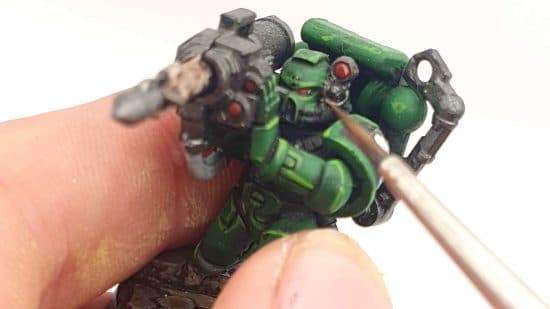
Space Marines are the rare 40k project that teach you the fundamentals without burying you in complexity. Their armor gives you large, readable panels for brush control, thinning, shading, and highlighting, while the iconic silhouette makes progress obvious even on your first squad. That is exactly why they remain the safest first army for new collectors who want results quickly, without getting trapped by perfectionism or chapter-choice paralysis.
Why Space Marines are such a strong first army
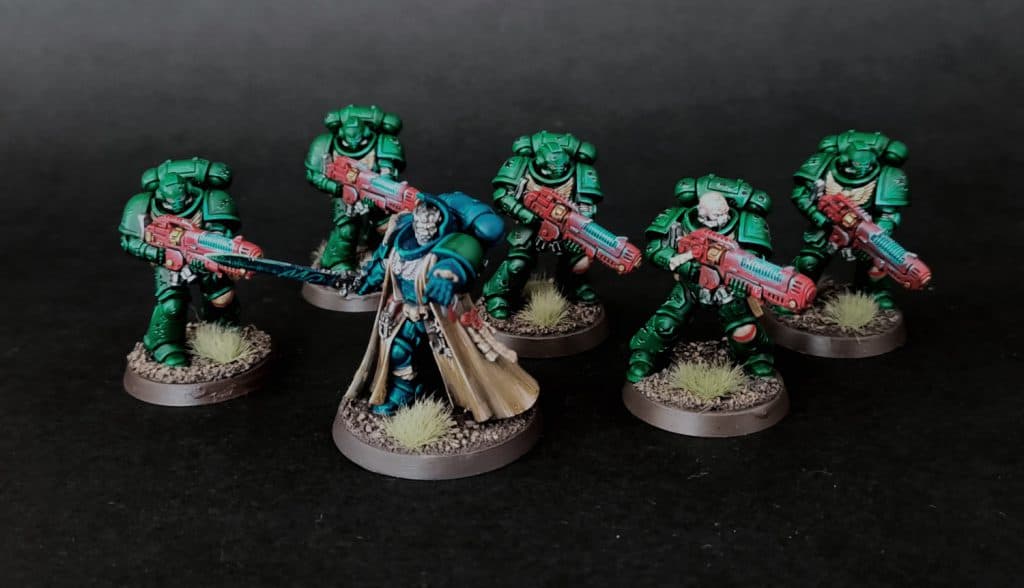
Warhammer Community calls Space Marines the undisputed poster boys of Warhammer 40,000, and they remain one of the game’s most popular factions for a reason. A chapter is a self-sufficient brotherhood of no more than 1,000 Marines, which is part of what makes chapter identity so visible on the tabletop: color schemes matter, and the army is built to be recognized at a glance. For a beginner, that is a gift. You are not painting dozens of tiny, identical details on fragile shapes, you are working on broad armor plates that reward steady hands and simple color blocking.
That beginner-friendly structure also explains why Space Marines keep showing up in official learning content. Warhammer Community has leaned into them repeatedly, including a 2024 video that teaches first-time hobbyists how to build and paint an Infernus Space Marine, plus another that paints a Raptors Space Marine in 1, 3, and 6 hours. The message is clear: Marines are not just the flagship faction, they are the training ground for the rest of the hobby.
The minimum toolkit that gets the job done
The most useful advice in the guide is also the least flashy: do not buy a mountain of brushes and gadgets. A larger base brush is enough to block in your main colors, a smaller layer brush handles details and cleanup, a drybrush helps with specific speed-painting jobs, and a detail brush is ideal for eyes and lenses. That small set covers almost everything a beginner needs on a Space Marine without turning the painting desk into a shopping exercise.
The other essentials matter just as much as the brushes. You want a palette for controlling paint consistency, clean water, tissues for wiping excess paint, and good lighting so you can actually see what you are doing. Those basics make thinning easier, help you avoid chalky layers, and keep your first models from looking rushed. The guide’s practical strength is that it treats those tools as part of the process, not as optional extras.
A simple paint path that avoids overwhelm
The fastest route to a good-looking Marine is a clean, repeatable sequence. Start with a sensible primer that suits your chapter scheme, then lay down your basecoat, shade the recesses, and bring back the raised areas with controlled highlights. After that, finish the lenses and metallics, because those small accents do a huge amount of work in making a model look complete.
1. Prime the model so the base colors grip properly.
2. Apply the main armor color in thin coats rather than trying to cover everything at once.
3. Add shade to the recesses to separate panels and deepen the silhouette.
4. Re-establish the edges and raised surfaces with highlights.
5. Paint lenses, metallics, and small details last so the model feels finished rather than overworked.
That sequence is beginner-friendly because it teaches brush control in stages. The broad armor panels let you practice keeping your layers smooth, while the smaller details give you obvious targets for precision later. It is a workflow designed for tabletop armies, not display cabinets.
Choosing a chapter without painting yourself into a corner
The guide’s smartest advice may be the simplest: do not try to invent a perfect custom chapter on your first attempt. Test colors on spare models or even paper, see how the scheme reads from a distance, and use contrast intelligently so the model remains readable on the tabletop. A color scheme that looks clever in your head can fail hard once it is reduced to small armor panels, so clarity matters more than novelty.
That is why neutral support colors are so useful. Black, white, silver, and brown can slot into almost any chapter scheme and make the army easier to finish without clashing with the main armor color. They give you reliable baselines for weapons, trim, pouches, and weathering, which is exactly the kind of flexibility you want when your real goal is a coherent squad on the table. Official chapter schemes also help remove uncertainty, and Warhammer Community has already published painting guides for Ultramarines, Storm Giants, Brazen Claws, Exorcists, and Mantis Warriors, proving that Marine variation is broad enough to suit different tastes without needing a custom invention.
Why sub-assemblies and Battle Ready matter
One of the most useful beginner shortcuts is painting in sub-assemblies when needed. If you fully build a Marine first, there are always awkward areas that become harder to reach cleanly, especially around backpacks, shoulder pads, and the inside edges of the arms. Keeping some parts separate until after the base colors are in place makes the process smoother and reduces the chance of messy fixes later.
That practical approach lines up neatly with Warhammer World’s Battle Ready standard. Battle Ready means the model’s main areas are coloured and the base has a simple finish, and it is the minimum painting standard required for events there. For anyone trying to get an army on the table fast, that matters as much as display quality. Games Workshop’s Citadel Colour line reinforces the same message, since it is marketed for everyone from first-time hobbyists to Golden Demon competitors. The range is built to support exactly this kind of progression, from first clean coat to more advanced finish.
The skills that give your models the biggest lift
If you want the biggest visual improvement for the least stress, lenses are one of the best places to focus. Warhammer Community’s 2024 lens-painting video shows three different ways to handle them, including an easy Contrast method and a Battle Ready technique. That makes lenses a perfect example of the whole Space Marine painting philosophy: start simple, get something striking on the model, and improve from there when you are ready.
The same logic applies to the rest of the model. A Marine does not need elaborate freehand or studio-level blending to look right. It needs neat armor, clean edges, readable colors, and a base that ties the figure together. Once those elements are in place, the model already works on the tabletop, which is the real goal for most new commanders.
Space Marines stay the best first project because they teach the hobby in the clearest possible way: one armor plate, one lens, one squad at a time. The guide’s real value is that it strips away the pressure to invent a masterpiece and replaces it with a faster, safer path from bare plastic to a force that looks ready for war.
This article was produced by Prism’s automated news system from verified source data, official records, and press releases, then run through automated quality and moderation checks before publishing. The system is built and supervised by the people who set the standards it runs under. Read our full AI policy.
Know something we missed? Have a correction or additional information?
Submit a Tip