Thousand Sons test 11th edition’s new Force Disposition rules
Thousand Sons are the early stress test for 11th edition’s Force Disposition rules, and Rob’s practice games show how fast launch-week assumptions are already shifting.
The new edition’s first real test bed is not a mirror match in a vacuum, it is Thousand Sons on the table, in practice games, with launch-week rules still settling around them. In part 25 of Robert "TheChirurgeon" Jones’s Road Through 2026 series, the point is not nostalgia or celebration. It is to find out what 11th edition actually asks of a faction that lives and dies by timing, resource use, and mission play.
Why Thousand Sons are the right stress test
Thousand Sons are built for this kind of early read because their game has always rewarded careful sequencing more than brute force. The faction’s sorcerers are the backbone of the army, and that means any edition change that touches how units are assigned battlefield roles or mission identities will show up quickly in real games. If the rules are pushing the game toward clearer detachment roles and sharper mission behavior, Thousand Sons are one of the first armies that will expose whether that feels natural or awkward.
That is what makes Rob’s launch-week practice list so useful. He is not waiting for a settled meta or a polished consensus list, he is putting a live army through the new framework while the rest of the launch material is still fresh. For a faction that often wins by making the right choice one phase early, that kind of testing is where the real lessons appear.
What changed in the launch-week rules environment
The wider backdrop matters here. Games Workshop opened the door on June 10, 2026 with new Chaos faction packs for the new edition, including Thousand Sons detachments and force dispositions. Then, on June 17, 2026, the refreshed Warhammer 40,000 app arrived with full unit points updates, Detachment Points, Force Dispositions, and a new interactive Munitorum Field Manual. That means the version of the game Rob is testing is not a theoretical snapshot, but the live launch environment players are actually building around.
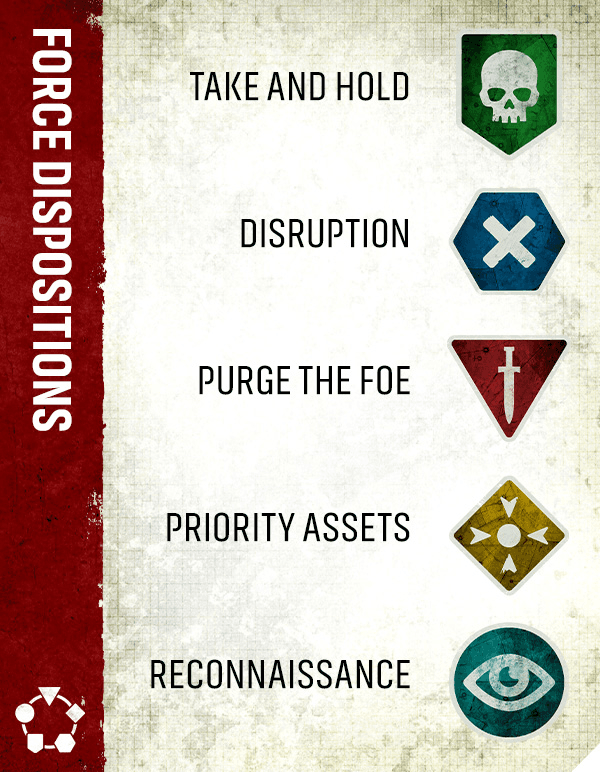
The key structural change is the Force Disposition system itself. In the new-edition explainer, each detachment gives one or more Force Dispositions, and those dispositions are tied to how that force performs in battle. That is a bigger shift than a simple points tweak, because it pushes list-building closer to mission identity. Instead of asking only what kills best, you now have to ask what your detachment is telling the army to do on the table.
For Thousand Sons, that matters immediately. Their game plan has always leaned on control, utility, and scoring as much as damage. A system that makes the army’s role more explicit can either amplify that identity or expose the places where old habits no longer line up with the new mission structure.
The Thousand Sons tools under test
Rob’s testing is grounded in the actual Thousand Sons faction materials, not rumor or guesswork. The faction pack includes the Hexwarp Thrallband detachment and the Warding Hex stratagem, which gives the list a concrete rules package to explore rather than an abstract theory exercise. That is important because it turns every practice game into a read on how the detachment wants to function, not just whether Thousand Sons still have good datasheets.
The other major piece is the Ritual of Regeneration detachment. Warhammer Community’s Thousand Sons Faction Focus framed the faction around its sorcerers and highlighted this detachment as part of the army’s psychic resource play, with Warp energy used to reknit damaged flesh, seal armor, and restore battered units. In practice, that points Thousand Sons toward a style of resilience and recovery that can keep key units on the board long enough to matter in the mission, not just in the damage race.
That combination is the real early-edition question. Hexwarp Thrallband and Ritual of Regeneration do not simply ask whether Thousand Sons can hit hard enough. They ask whether the army can now convert its signature arcane tools into a clearer battlefield identity under the new Force Disposition framework. That is a very different kind of pressure test, and one that launch-week play is finally making possible.
What to test first in your own games
The cleanest lesson from these early reps is that list-building needs to start with the detachment’s job, not just with favorite units. If your Thousand Sons list is built as though the old edition’s loose assumptions still apply, the new Force Disposition structure is likely to punish that complacency. The army wants a deliberate plan for how it will score, survive, and force trades, and the detachment choice is now doing more of that work up front.
A practical launch-week checklist looks like this:
- Re-read the detachment before each test game and identify what battlefield role it is pushing you toward.
- Verify points in the refreshed app and the Munitorum Field Manual, because the live package includes unit points and Detachment Points alongside the new disposition rules.
- Test how often Ritual of Regeneration actually keeps key units relevant long enough to affect the mission.
- Put Warding Hex and the Hexwarp Thrallband package through real game situations, not just goldfish turns, so you can see how the detachment behaves under pressure.
That is the kind of work Thousand Sons reward. They punish vague plans, but they also reward players who are willing to learn the new language of the edition quickly. Rob’s practice games are valuable because they show the army in motion while the rest of the launch-week ecosystem is still shifting around it.
The point of this first pass is not to declare the list solved. It is to show that 11th edition is already asking Thousand Sons players to think differently about what their army is for, and to prove that the fastest way to understand the new Force Disposition rules is to put sorcerers on the table and let the mission tell you the truth.
This article was produced by Prism’s automated news system from verified source data, official records, and press releases, then run through automated quality and moderation checks before publishing. The system is built and supervised by the people who set the standards it runs under. Read our full AI policy.
Did this article answer your question?