Warhammer 40,000 tactics, why movement decides games before shooting begins
Movement wins 40k before the first shot. Stephen Box’s advice is simple: stop moving pieces and start building score, cover, and bad angles for your opponent.
Move with a score in mind
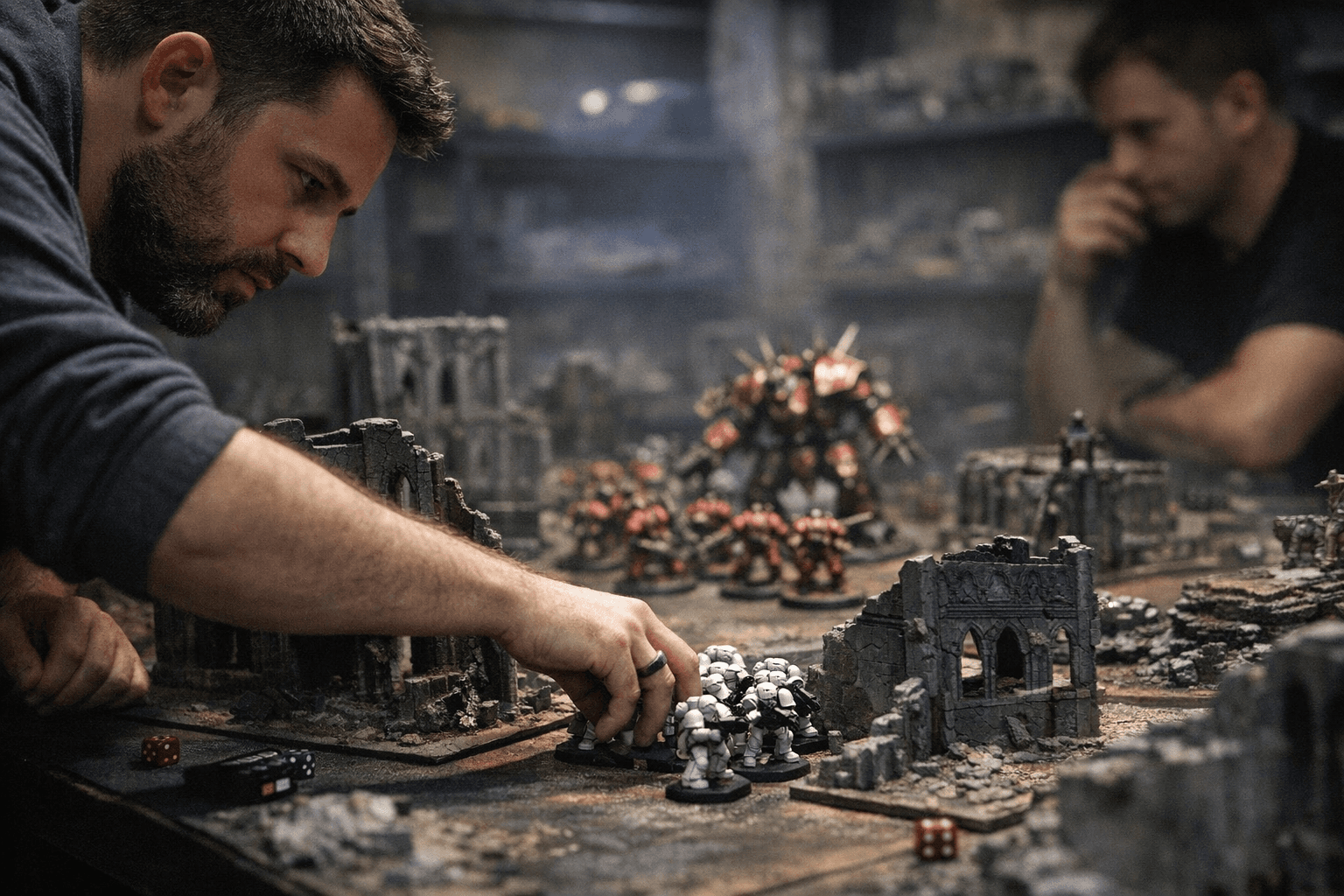
The cleanest lesson in the Movement phase is also the one players ignore most often: your army is not winning by looking active, it is winning by turning positioning into Victory points. Warhammer 40,000 battle rounds are split into phases, and the core rules make the order clear, you move, you shoot, you fight. If your movement does not improve one of those outcomes, it is usually wasted. That is why the old habit of “just getting forward” gets punished so hard in real games.
Stephen Box’s updated tactics essay from White Dwarf, republished by Warhammer Community on October 2, 2025, treats movement as the phase where you decide what each unit is for. That is the right lens. A unit moving toward an objective should not just arrive, it should arrive in a way that keeps scoring alive, denies easy retaliation, and sets up the next turn instead of begging for a remove-from-table response. When the mission is scored through objectives, every inch matters.
Mistake 1: advancing without asking what the unit is doing
The first movement mistake is the most common one: players push models forward because they can, not because the move does anything useful. Box’s approach is the opposite. Before you move, ask whether the unit is trying to score, screen, hide, pressure a lane, or threaten a charge. If you cannot name the job, the move is probably sloppy.
That mindset matters because Warhammer 40,000 is not won by raw aggression. It is won by scoring more Victory points than your opponent, and that means each unit has to contribute to the mission. A squad that walks out of position to do nothing but “be there” often gives up more than it gains, especially when the other player is happy to punish exposed models with shooting or counter-charge movement. Purposeful movement gives every later phase a better chance to work.
Mistake 2: parking on the objective and pretending you are safe
A lot of players treat an objective marker like a parking space. They move a unit onto it and stop thinking. That is usually how you hand away the next turn. In Chapter Approved tournament play, models cannot end a move on objective markers, so exact placement around the marker matters just as much as claiming it in the first place.
The better play is to stage around the objective so the unit either gains cover or at least denies clean visibility. The current core rules use true line of sight, so the angle your opponent has on the model actually matters. A squad that is technically “on the point” but fully open to every gun on the table is a liability. A squad tucked so that only part of it is visible, or that can claim cover while holding the ground, keeps the score alive without volunteering for a free trade.
Mistake 3: giving up the easy charge
Movement also decides close combat before the charge roll is even made. Box points out the value of placing models so enemy charges become longer or awkward, and this is one of the most practical skills in the game. If you leave neat, direct lanes into your fragile units, you are helping the other player spend fewer resources to get what they want.
This is where model placement pays off immediately. A few inches can turn a likely charge into a desperate one, especially when terrain, line of sight, and objective control are all interacting at once. You do not need to be a movement genius to feel the difference on the table. If the enemy has to move around a ruin, thread through a gap, or take a worse angle to connect, your unit has already bought time, and time is often the most valuable resource in 40k.
Mistake 4: forgetting that movement protects your shooting
Some players only think about movement in terms of melee threats, but the phase is just as important for your guns. A fragile unit that steps into view too early is often dead before it can cash in, even if the shot it was aiming for looked tempting. Box’s advice is to move models so they survive another turn, not just so they can be seen doing something flashy now.
That means using terrain, cover, and sight lines with intent. A unit that can claim cover or hide entirely from enemy shooting is often worth more than the extra half-inch of movement that would expose it. Because true line of sight is part of the core rules, tiny changes in posture, angle, and spacing can be the difference between a protected unit and one that evaporates. Good movement does not just advance your army, it keeps the right units alive long enough to matter.
The new terrain rules make this even more important
The April 8, 2026 Warhammer Community terrain preview makes the same point from a different angle. The new edition splits scenery into terrain features and terrain areas, and it introduces a Hidden rule for Infantry, Beast, and Swarm models inside terrain areas. Those hidden models are only visible within a typical 15-inch detection range, and infantry, beasts, and swarm units in terrain areas gain the benefit of cover.
That is a huge deal for movement planning. It means you are no longer just asking “can I get there?” You are asking whether the unit can arrive hidden, covered, and still connected to the mission. A player who understands that 15-inch visibility bubble can place units in ways that blunt enemy shooting and force awkward decisions. A player who ignores it hands over clean targets and loses tempo for nothing.
Mistake 5: treating movement as a separate phase instead of the start of a combo
The best players do not move units in isolation. They move to create shooting lanes, charge angles, and future objective plays. That is the real lesson running through Box’s updated archive piece: movement is where plan, foresight, and mission awareness become visible on the table. Every good move should make the next phase easier.
That is also why this kind of tactics writing keeps showing up across Warhammer Community’s phase-by-phase advice, from building a better army to analysing lists, and from shooting to fighting. The game rewards players who think in sequences. A unit that advances to screen an objective, hides from return fire, and forces a bad charge is doing three jobs before anyone rolls dice for damage. That is not flashy, but it wins games.
The simplest way to improve fast is to stop asking whether a move looks aggressive and start asking whether it creates a better board state. If a unit reaches cover, denies an angle, stretches a charge, or preserves an objective, that move has already done more work than most shooting phases ever will.
This article was produced by Prism’s automated news system from verified source data, official records, and press releases, then run through automated quality and moderation checks before publishing. The system is built and supervised by the people who set the standards it runs under. Read our full AI policy.
Did this article answer your question?