Warhammer 40k Orks get clearer ranks, bolder armor in Armageddon update
Armageddon’s Orks are being rebuilt as a clearer fighting culture, with ranks, armor, and poses doing the storytelling. The new Boyz, Nobz, and Gretchin all point to a more readable range.
The Orks are getting a visual language, not just a refresh
The second Armageddon round-table turns the spotlight on the Orks, and the big idea is surprisingly elegant: make the army read like a society before it reads like a pile of scrap. In the discussion between Adam, Eddie, Matt, and Seb, the design team puts hierarchy front and center, using shoulder pads, weapon quality, and ever-more-excessive armor to separate Boyz from Nobz and Warbosses. That matters because Orks work best when every model feels like it belongs to a functioning warband, not just a random collection of gags bolted together.
That framing also ties directly into the wider Armageddon launch. Warhammer Community revealed Warhammer 40,000: Armageddon on 1 May 2026 and described it as the biggest Warhammer 40,000 launch set yet. The box brings 23 brand new push-fit Space Marines and 38 brand new push-fit Orks, with Core Rules, lore, mission content, a narrative campaign, datasheet cards, and transfer sheets. In other words, the new Ork models are not arriving in a vacuum. They are part of a headline release built to define how the faction looks, feels, and plays on the table.
Ranks, silhouettes, and why Ork armor needs big flat plates
The clearest thread running through the round-table is that Ork identity depends on being instantly readable. The designers talk about big flat armor plates, the sort of surfaces that can be covered in glyphs, dents, and crude additions, because that style gives the faction room for storytelling at a glance. A slab of armor on an Ork is never just armor. It is rank, history, violence, and personality all crowded onto one shape.
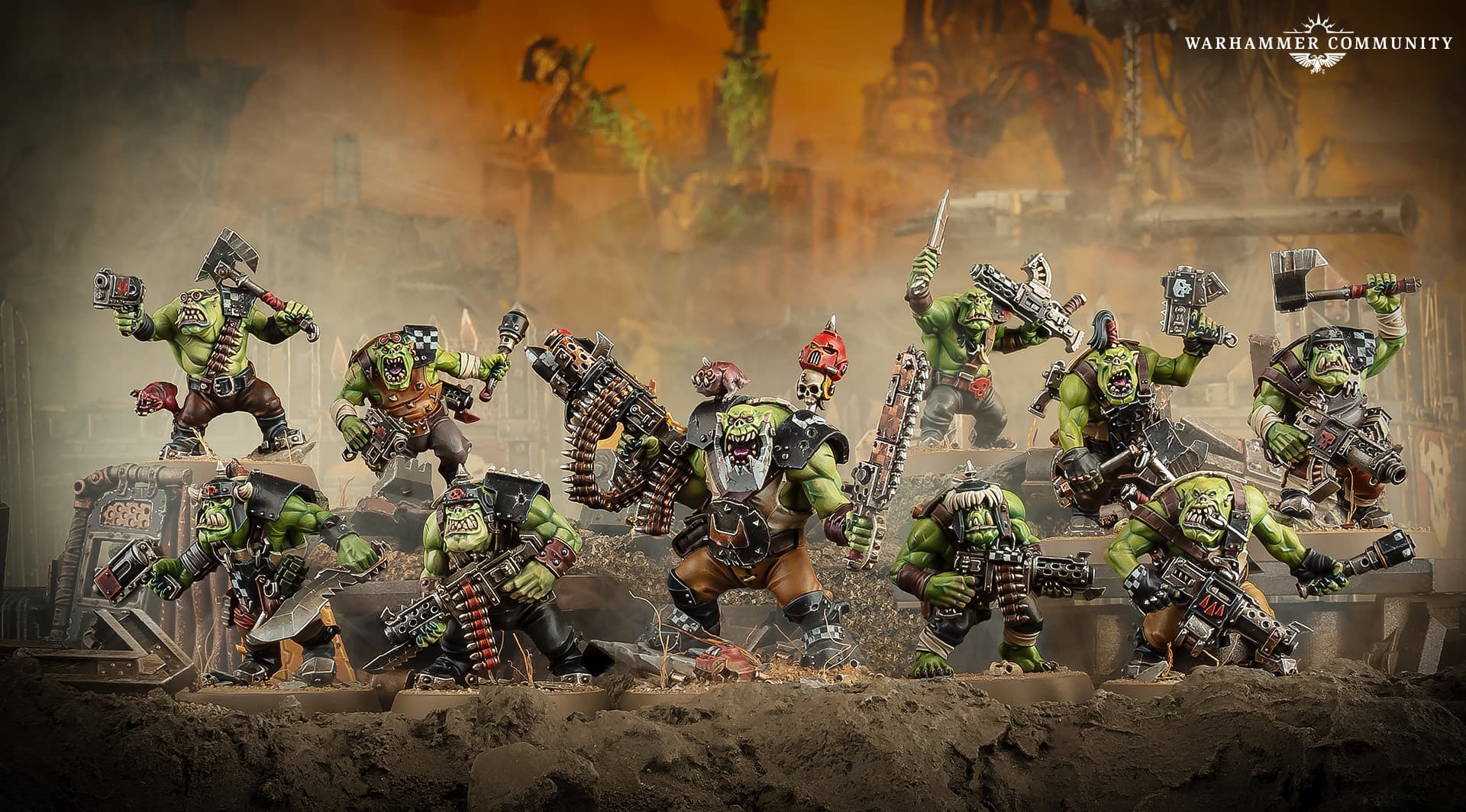
That visual shorthand is especially important for the new hierarchy. Boyz are supposed to look crude and basic, with choppas and simpler wargear doing the talking. Nobz and Warbosses climb the ladder through flashier gear, denser armor, and more decorative excess, so the eye can tell who matters before the dice ever hit the table. The result is an army that looks organized in its own chaotic way, which is exactly the sweet spot Orks need to hit.
The new Boyz are smaller in the right places, bigger where it counts
The kit-focus material on Da Boyz of Armageddon makes the practical side of that philosophy clearer. The new Ork Boyz kit is built around 20 Boyz split across two identical sprues of 10, but Games Workshop says those parts can still produce 20 unique miniatures through cross-compatibility. That means the kit is designed to give you variety without abandoning the compact logic of the range, and that is a big deal for collectors who want mobs that look diverse instead of duplicated.
The other important change is proportion. The new Boyz are not just old sculpts resized for modern standards. They are re-proportioned to feel more in line with the current miniature range and the tone of the army overall. Their guns may be smaller relative to the body than older kits suggest, but they are still enormous compared with human-scale weapons, which preserves the Ork mix of menace and comedy. That balance is doing a lot of work here: the models need to look dangerous, but they also need to keep that comic overkill that makes Orks feel unmistakably Orky.
Warhammer Community also says the new Boyz are more brutish, carry more gear, and stay close-combat focused. That combination tells you what the range designers are prioritizing. These are not just generic fantasy brutes in sci-fi armor. They are melee-first raiders whose kit language should make every mob look ready to surge forward, hit hard, and enjoy the process.
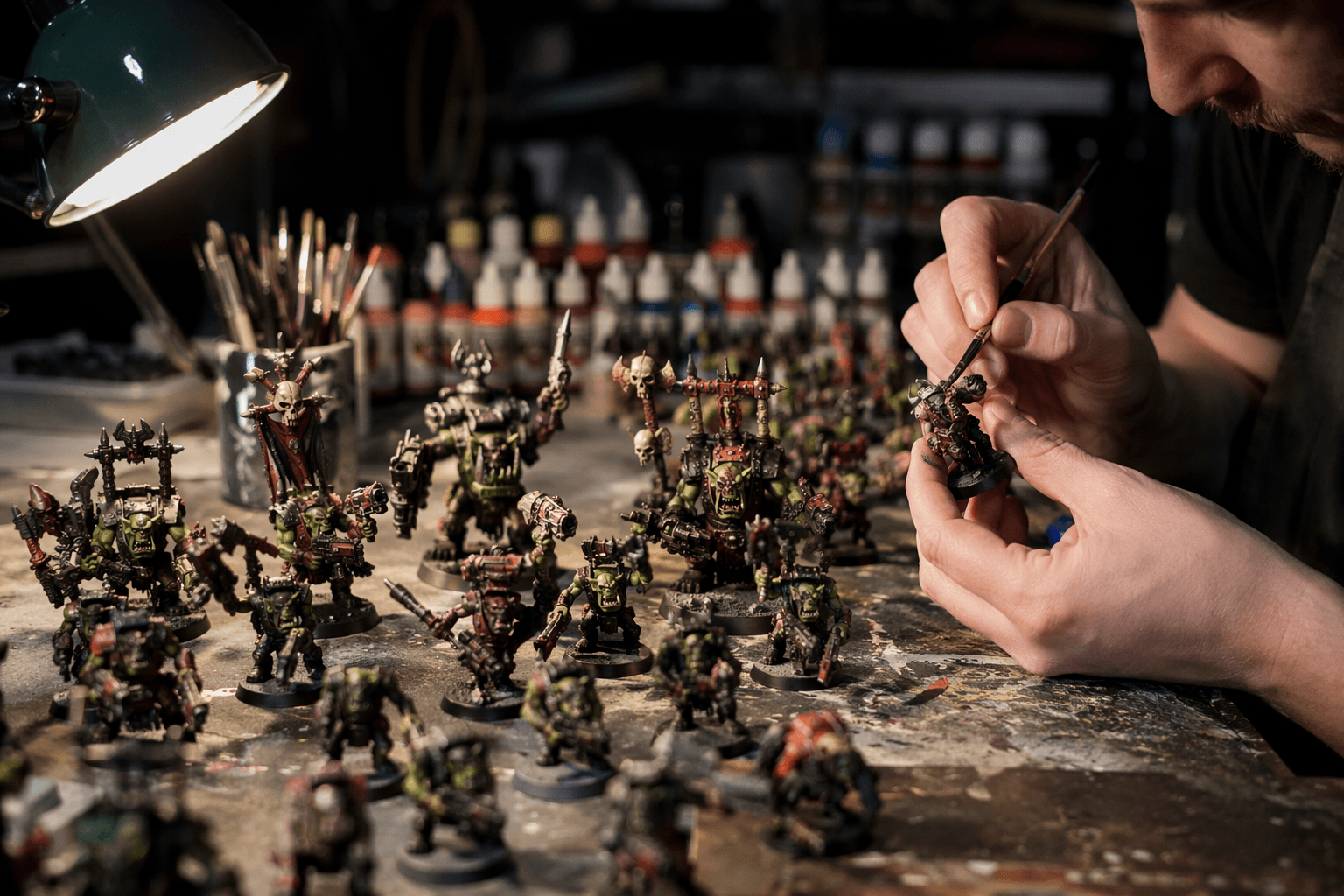
Grots, banners, and the little details that make a warband feel real
The hierarchy does not stop with Boyz and Nobz. Gretchin get their own spotlight too, and that is where the faction’s social structure starts to feel especially vivid. Warhammer Community describes Grots as small but dangerous in numbers, while older background material frames them as helpers who handle the jobs larger Orks do not want, including holding banners and manning field artillery. That makes them more than comic relief. They become the support tissue of the Ork machine.
The new Bannernob fits neatly into that logic. He is an Ork Nob carrying the tribe’s sacred Waaagh! banner, and that role turns iconography into battlefield identity. A banner in an Ork mob is not a decoration. It is a declaration of status, purpose, and momentum, the kind of thing that lets the whole unit feel like a tribe with a shared cause rather than a loose crowd of fighters.
Those militaristic touches, including the little army boots on the Grots, are doing the same job at a smaller scale. They make the Ork force feel coherent. The joke is still there, but the joke now lives inside a believable war culture.
What collectors should watch for next
If this Armageddon rollout is a template, the most important thing to watch in future Ork kits is pose language. The new range is clearly trying to sort bodies by role, and that means stance, weapon handling, and armor density will probably keep doing the storytelling for the army. The more the kit line leans into that, the easier it becomes to build mobs, character models, and support units that feel like parts of one visual system.
A few signals stand out:
- Boyz are being pushed toward a brutish, melee-heavy identity, so future troop kits are likely to keep favoring aggression over polish.
- Nobz and Warbosses are being marked out through flashier kit choices, so expect more layered armor, iconography, and status clutter.
- Grots are being framed as organized support pieces, which suggests more attention to how lesser Orks fit into the faction’s hierarchy.
- Big flat armor plates, dents, glyphs, and crude additions are becoming central design cues, not afterthoughts.
- The whole range appears to be moving toward a cleaner visual map of Ork society, not a random pile of variants.
That is the deeper story of the Armageddon update. Ghazghkull Thraka’s return has swollen the Ork horde, the Space Marines have launched Operation Imperator to stop the invasion, and the box set around them is being sold as the biggest launch Warhammer 40,000 has seen. But the design conversation is just as important as the battlefield setup. These new Orks are being built to show rank, function, and faction identity in every plate, boot, banner, and choppa, and that is the kind of change collectors will feel every time they open the sprue.
This article was produced by Prism’s automated news system from verified source data, official records, and press releases, then run through automated quality and moderation checks before publishing. The system is built and supervised by the people who set the standards it runs under. Read our full AI policy.
Know something we missed? Have a correction or additional information?
Submit a Tip