Warhammer 40k’s 11th edition makes army disposition a mission choice
11th edition turns disposition into the first list-building choice: pick your mission plan, lock it in for the event, and the matchup matrix starts before deployment.
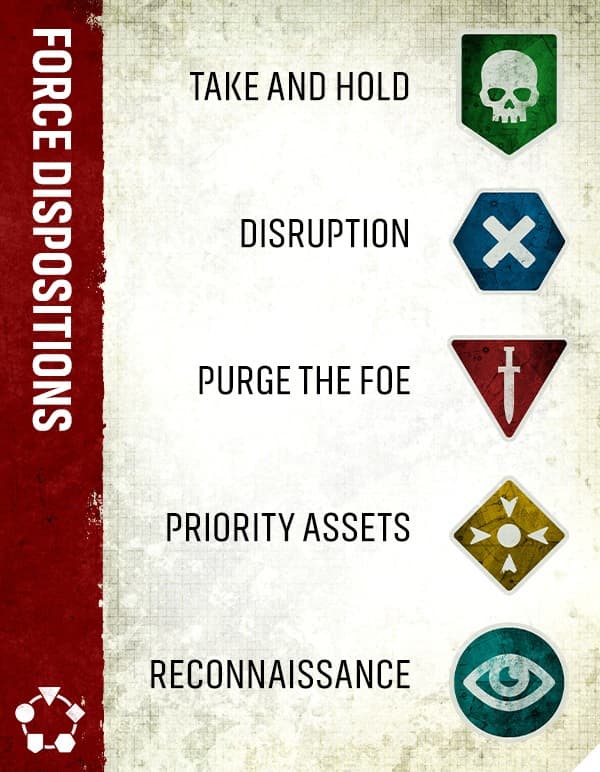
Warhammer 40k’s new edition does something competitive players have wanted for years: it moves a major chunk of strategy out of the table and into list submission. Force Dispositions are now the hidden architecture of army building, and the biggest shift is that you are no longer just asking which units are efficient, but what your army is built to do before the first dice are rolled.
The new first decision in list building
Games Workshop’s Chapter Approved deck frames the whole system around one blunt question: “What have you built your army to do?” That is the right way to read 11th edition, because each detachment is tied to one or more Force Dispositions, and there are five of them in total: Take and Hold, Purge the Foe, Disruption, Reconnaissance, and Priority Assets.
That matters because a disposition is not a minor rules rider. It is the point where army identity, mission plan, and event prep all collide. A list that looks strong in a vacuum can still be the wrong fit if it is pointed at the wrong mission profile or if it creates problems for your team’s overall pairing plan.
Why missions now start from your list
The old matched-play habit was simple: build the best army you can, then react to the mission once it appears. Warhammer Community says the new mission system changes that logic completely. In earlier mission packs, the way you built your army had no impact on mission generation; now your chosen Force Disposition is compared with your opponent’s to determine the specific mission details.
That is a big deal because the missions are described as asymmetrical but balanced. In practice, that means the game is still fair, but it is no longer symmetrical in the old sense where both armies were merely solving the same neutral puzzle. Your army construction now helps decide which puzzle gets handed to you, which is why disposition choice belongs alongside chapter selection, detachment building, and unit selection as a core pre-game call.
Reading the five dispositions as army plans
The easiest way to use the system is to treat each Force Disposition as a different answer to the same question. Each one rewards a different kind of army identity, and the best competitive lists will start by deciding which identity they want to lean into.
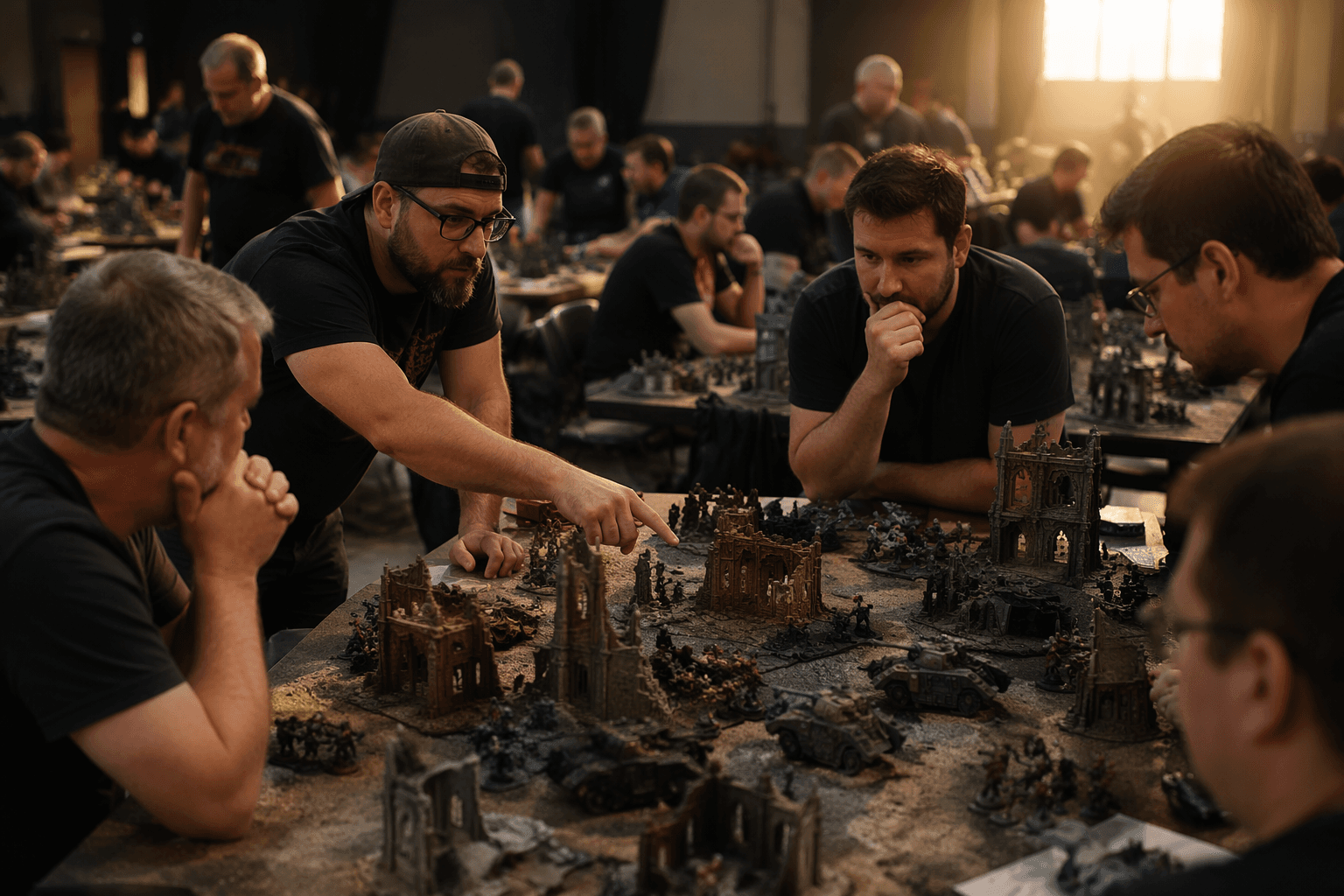
- Take and Hold rewards armies that want to own the middle of the table and stay there. Durable bricks, layered trading pieces, and units that can occupy ground without folding under pressure fit naturally here.
- Purge the Foe leans toward lists that solve problems by removing enemy units. If your plan is to hit hard, force trades on your terms, and win through battlefield attrition, this is the disposition that makes that plan feel like the point of the mission rather than a side effect.
- Disruption fits armies built to interfere rather than simply fight. Speed, redeployment, pressure into enemy territory, and units that can keep an opponent off balance all benefit when the mission wants you messing with their structure.
- Reconnaissance rewards lists that can spread out, touch multiple parts of the table, and convert mobility into scoring pressure. This is the home of armies that win by reading the board quickly and being where they need to be before the opponent can respond.
- Priority Assets is the cleanest expression of target selection. Lists that can identify the key piece, remove it, and then exploit the opening will tend to get more out of this style of mission pressure than armies that are trying to win by simple board-wide attrition.
The useful way to think about the five is not as a ranking, but as a set of answers to different matchup questions. Some armies want to dictate the center. Some want to take apart the opponent’s board state. Some want to move through the game like a knife, cutting away support and scoring angles. 11th edition makes those identities explicit before deployment.
What event play changes for everyone
Games Workshop’s Warhammer 40,000 Event Companions, published on June 12, 2026, make the implication even clearer. For events, players choose a single Force Disposition when they submit their army list, and that choice is locked in for the whole event. The companion says that gives players a predictable set of five primary missions to master, which means event prep is now part rules knowledge, part matchup planning, and part rehearsal.
The same event materials also include guidance on pairings and rankings, plus three terrain layouts for each mission and guidance on when to use them. That is not cosmetic detail. It tells you that the event is built to produce structure around the missions, but not sameness, so the same list may have to solve different table shapes and pressure points across a weekend.
For singles players, that means the disposition choice is a commitment. For team captains, it is even bigger than that.
Why teams feel this change the most
Warhammer World’s team-event guidance says team tournaments use a pairings system, and that teams of four players play as individuals whose results contribute to an overall team score. That is exactly why dispositions are now so important to team building: you are not only asking whether a list can win, but whether it can fill a role in a larger lineup.
A team list that looks excellent on paper can still be the wrong call if its disposition overlaps badly with the rest of the roster or if it cannot slot into the pairing matrix your captain wants. The new structure pushes teams to think in terms of board roles, mission coverage, and opponent targeting long before round one starts. The event companion’s pairing and ranking guidance makes that even more explicit, because fair pairings are now part of the competitive puzzle, not just the bracket afterthought.
The practical takeaway for 11th edition
The core lesson is simple: disposition is no longer a layer on top of list theory, it is part of the list itself. When you choose Take and Hold, Purge the Foe, Disruption, Reconnaissance, or Priority Assets, you are deciding what kind of game you want to force, what kind of matchup you want to invite, and what kind of army identity you can actually support over an entire event.
That is why 11th edition feels like a real competitive reset. The strongest lists will not just hit hard or score well, they will know what they are built to do before they ever hit the table, and that choice now starts with the disposition locked into the event sheet.
This article was produced by Prism’s automated news system from verified source data, official records, and press releases, then run through automated quality and moderation checks before publishing. The system is built and supervised by the people who set the standards it runs under. Read our full AI policy.
Did this article answer your question?