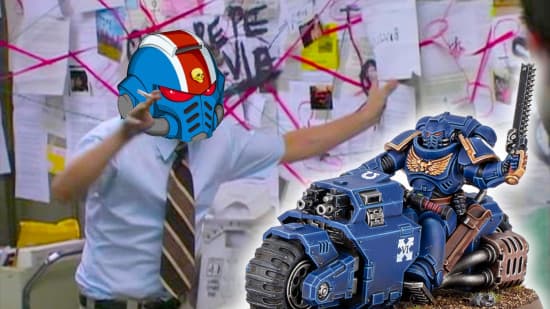
Warhammer Studio explains the characterful new Space Marine sculpts for Armageddon
Armageddon’s Space Marines are being sold as characters, not clones, with sculpt choices that hint at a sharper, more narrative-heavy look for the line.

GW is framing Armageddon as a statement about Space Marine design
Games Workshop is using Armageddon to sell more than a box of miniatures. With pre-orders less than a week away when Warhammer Community ran its first #New40k Round Table on 1 June 2026, the message was clear: this is the biggest Warhammer 40,000 launch set yet, and the new Space Marines are meant to define how the faction looks in the next era. Adam and Eddie sat down with Darren and Dom from the Warhammer Studio for the first episode of a five-part interview series, and the focus was not just on cool models, but on the design philosophy behind them.
That matters because Armageddon is being presented as a launch built on identity. The box includes new Space Marine and Ork miniatures, plus rules and lore, so the models are doing double duty as gaming pieces and as the visual shorthand for the new edition. Warhammer Community also pushed the live unboxing coverage for the boxed set, scheduled for 1 May 2026 at 7pm BST, as part of that bigger rollout. This is not being sold as a random battle box. It is being sold as a snapshot of what Warhammer 40,000 looks like when the line wants to feel fully in motion.
The new sculpts are designed to read as individuals
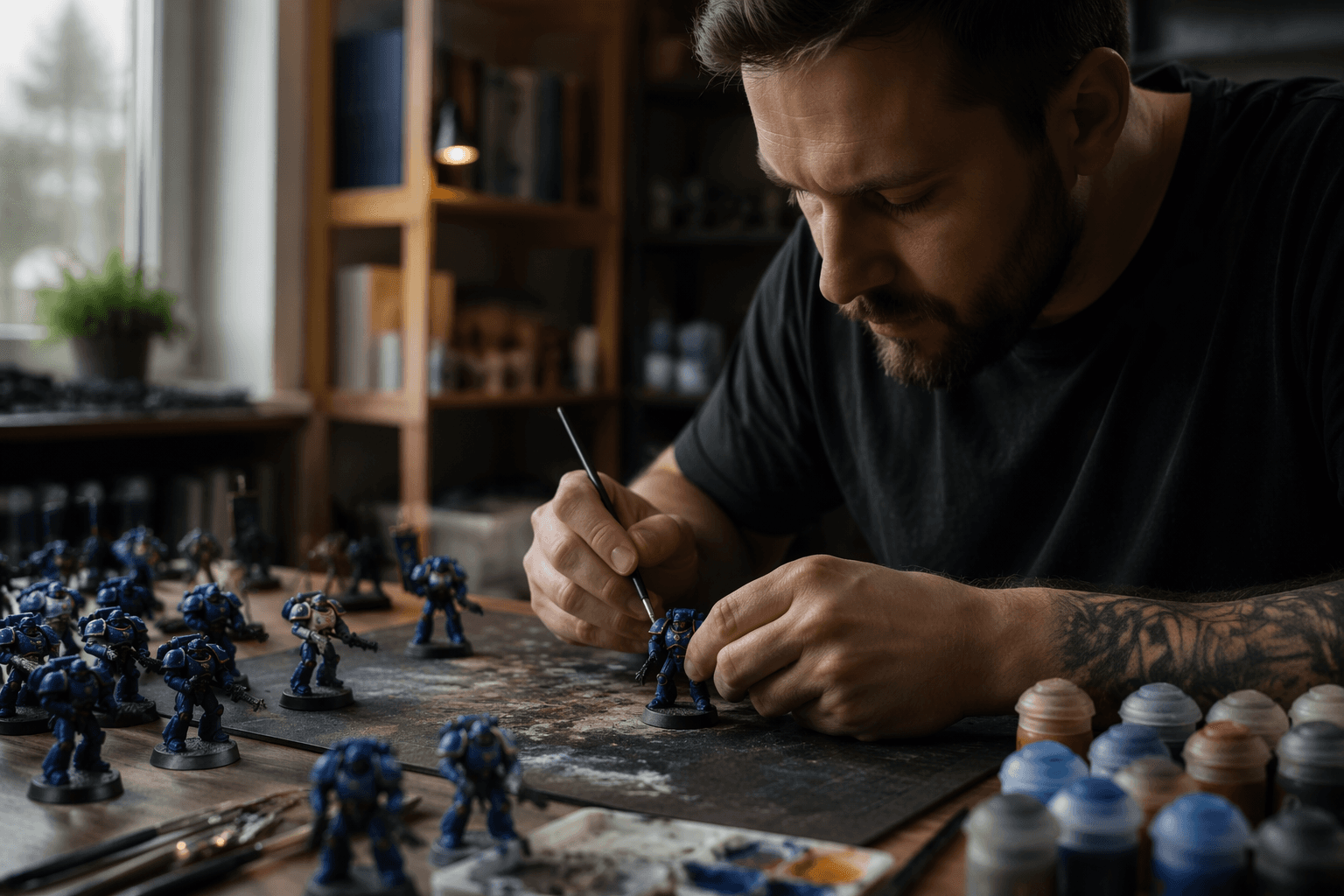
The most important thing the round table makes plain is that the Marines in Armageddon were not built as a set of interchangeable silhouettes. The sculpting team deliberately avoided repeating generic poses across the squad, and that choice changes the feel of the whole release. Instead of a unit that looks like mass-produced rank filler, the box leans into individual identity, with each model carrying its own battlefield role and visual story.
The Intercessors are the clearest example of that shift. Rather than reading as identical frontline soldiers, they are framed as characters with different jobs and attitudes. That is a subtle but significant design decision, because it pushes the box toward narrative modelling without sacrificing tabletop practicality. For collectors, it suggests that the new baseline Space Marine look is less about symmetry and more about personality, with each figure contributing something distinct to the squad.
The Vanguard Veterans take that idea in a more kinetic direction. Their design mixes airborne motion with ground combat, so the unit reads dynamically from multiple angles instead of relying on one heroic front view. That kind of sculpting choice tells you the studio wants these models to look good on the table, in display photos, and in motion during gameplay. It is a very deliberate attempt to make the squad feel like it is landing, striking, and recovering all at once.
What the armour tells us about the future Marine silhouette
The Eradicators point to a second theme in the Armageddon range: heavier armour is being used to sharpen the visual language of battlefield roles. Their Gravis armour gives them a more compact, brutal silhouette, which makes them stand apart from the lighter infantry in the line. That is not just a visual flourish. It reinforces the idea that the Space Marines in Armageddon are being designed as a spectrum of combat identities, where equipment, stance, and mass all communicate how a unit fights.
The Captain with Relic Shield pushes that same logic even further. Warhammer Studio treated it as a cinematic pose-design exercise, and that phrasing matters. It suggests the character was sculpted to project command, motion, and drama in a single read, the kind of miniature that anchors a launch box visually and sells the tone of the release immediately. For collectors, that is often the model that signals the broader aesthetic direction of the set. If the Captain is cinematic, the rest of the range is meant to feel equally intentional.
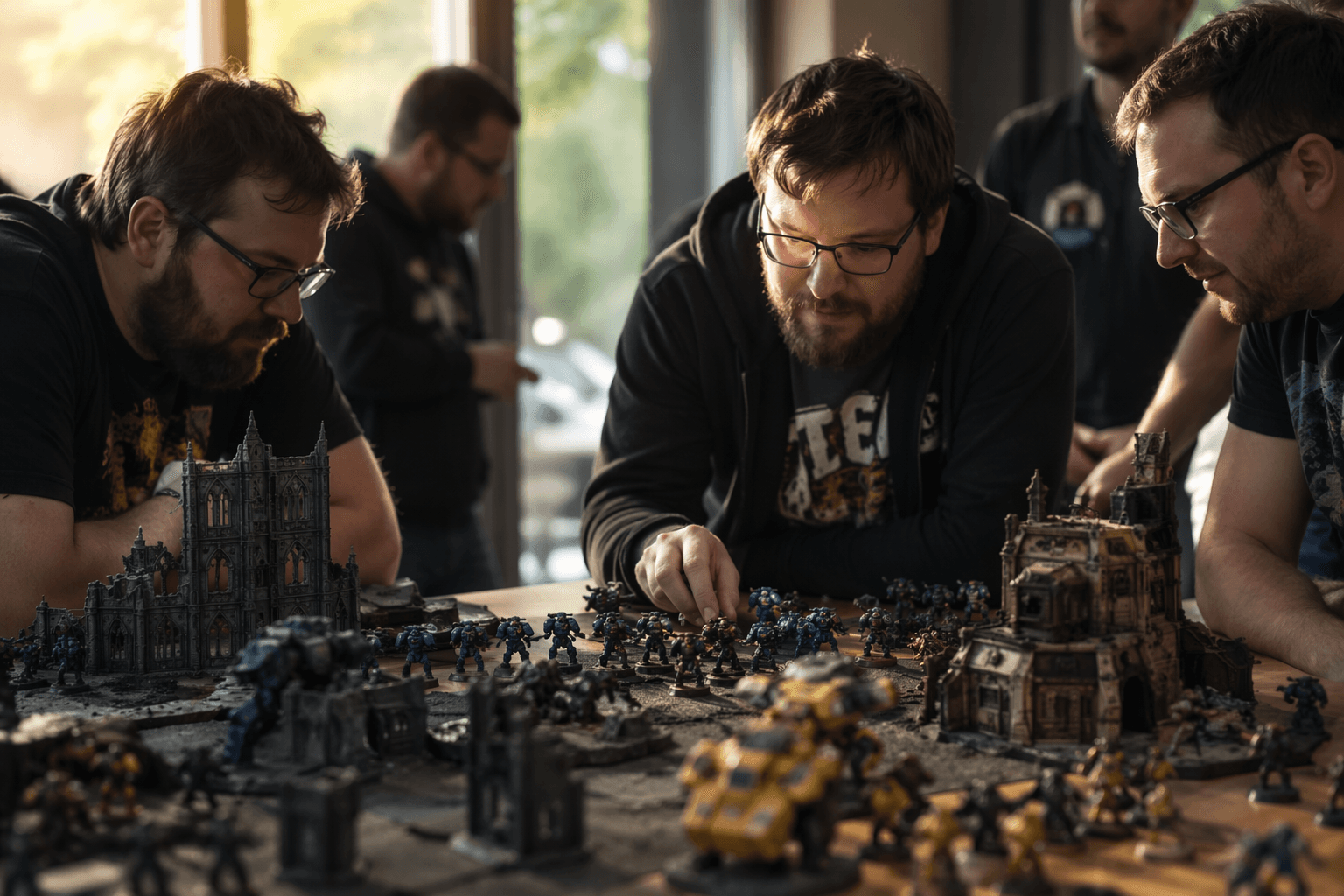
Taken together, those choices point to a broader shift in how Games Workshop is presenting Space Marines. The army is not being shown as a wall of armour with different guns. It is being shown as a cast, with each unit type expressing a different part of the faction’s battlefield language. That is a strong signal for anyone deciding whether Armageddon is just another starter-style release or a genuine refresh in how Marines are presented.
Armageddon’s lore backdrop gives the models extra weight
The design story lands harder because Armageddon itself is being framed as a classic Warhammer 40,000 pressure point. The Ork invasion is driven by Ghazghkull Thraka’s return to Armageddon, and the Imperial response is Operation Imperator, a coalition counteroffensive involving multiple Chapters. Warhammer Community specifically names the Blood Angels, Ultramarines, Space Wolves, Salamanders, White Scars, Storm Lords, Subjugators, and Black Templars among the forces tied to that effort.
That multi-Chapter framing matters to the box, because it makes the launch feel like a shared Imperial crusade rather than a single-army spotlight. Each Chapter is also linked to the Armageddon campaign banner, the special standard carried by participating forces, which adds a ceremonial edge to the story. This is the kind of lore detail that makes a launch box feel bigger than its sprues. It gives collectors a reason to see the models as part of a campaign tradition, not just a shopping event.
The setting’s history also reaches back to the worst scars on the planet. Warhammer Community’s lore coverage points out that Hades Hive was obliterated by an orbital rok barrage at the outset of the Third War for Armageddon, a reminder that this world has already paid for its place in the saga. Names like Commissar Yarrick and Marneus Calgar still sit in the background of that history, which is why Armageddon carries immediate recognition for long-time readers. It is not a fresh corner of the galaxy. It is a warzone with memory.
What collectors should take from the round table
For collectors, the practical takeaway is simple: Armageddon is being built to justify its place as a launch set by making every Marine look like a deliberate sculpt, not a generic body in a box. The Intercessors bring character, the Vanguard Veterans bring movement, the Eradicators bring weight, and the Captain with Relic Shield brings the cinematic centerpiece that often defines a release. That combination suggests Games Workshop is leaning into a more expressive Space Marine aesthetic, one where pose, armour class, and battlefield role all work together.
That is why the round table feels more revealing than a standard behind-the-scenes chat. It shows the studio signaling how Space Marines should read on the table in the new Armageddon era: more individual, more narrative, and more clearly tied to how each unit fights. The box is selling a campaign, but it is also sketching the future face of the faction, one sculpted character at a time.
This article was produced by Prism’s automated news system from verified source data, official records, and press releases, then run through automated quality and moderation checks before publishing. The system is built and supervised by the people who set the standards it runs under. Read our full AI policy.
Did this article answer your question?