Which Warhammer 40k starter set should new players buy in 2026?
Games Workshop’s 2026 40k starter ladder is clearer than ever: the right box depends on whether you want a demo, a true first army, or the best upgrade path.
Games Workshop has finally made the Warhammer 40,000 entry path easier to read. Instead of treating every starter box like the same purchase, the official range now breaks into four distinct steps, and that matters more than ever with a new edition already on the horizon.
The current starter ladder
The official getting-started page now separates Warhammer 40,000 into Getting Started, Introductory Set, Starter Set, and Ultimate Starter Set. That structure is the real story here, because each box is aimed at a different kind of first-time buyer. The cheapest option is a quick introduction, the Introductory Set is a first comprehensive step into building, painting, and playing, the Starter Set is the middle ground for people who already have hobby paints and tools, and the Ultimate Starter Set is the fullest launch point, with two armies, terrain, and more.
That distinction solves a problem every new player runs into: the most expensive box is not automatically the best buy. A newcomer who only wants to see whether the hobby clicks does not need to start by carrying home a giant battlefield. A player who already knows they are in for the long haul, though, can save money and time by buying a box that is designed to become a real force instead of a sample project.
Best for an absolute beginner: the Introductory Set
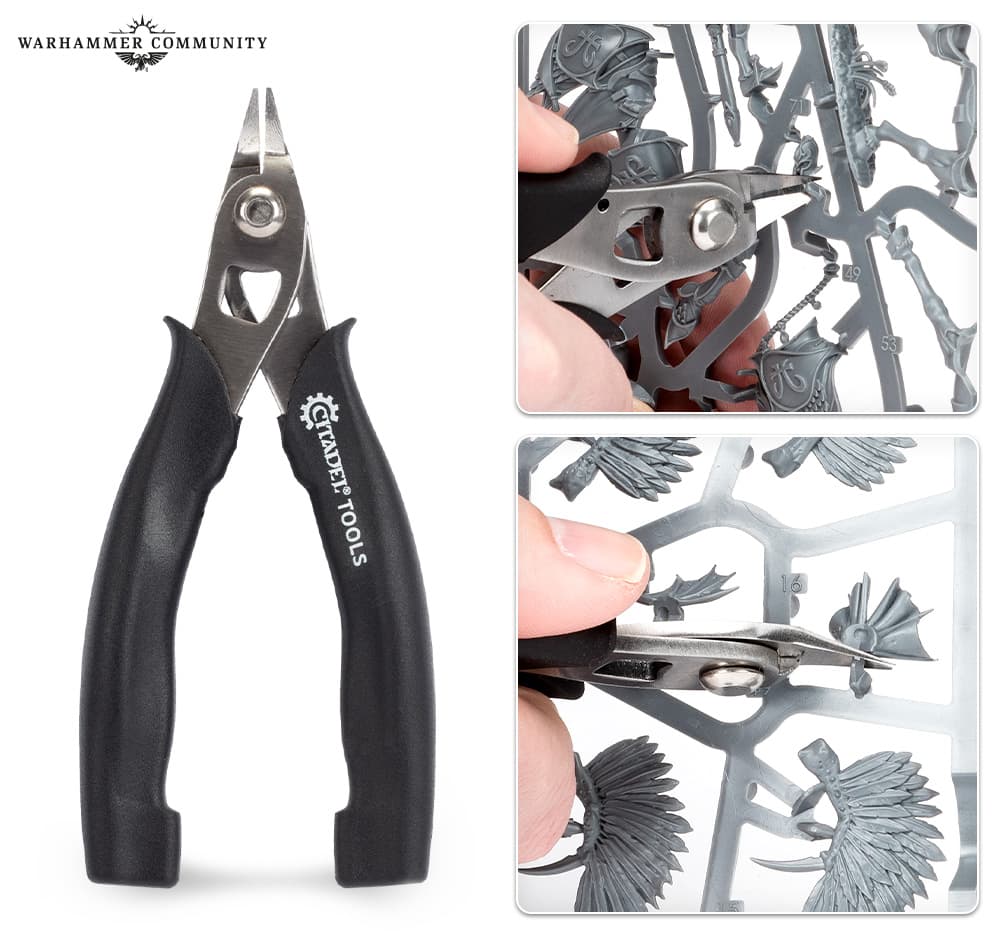
If this is your very first brush with 40k, the safest first purchase is the Introductory Set. Games Workshop lists it at $69.00, and it comes with 16 push-fit models, basic rules, dice, a gaming mat, reference sheets, a range ruler, five paints, a brush, and clippers. That bundle is important because it removes the biggest early hassle: you can start assembling and painting without having to build a full hobby toolkit on day one.
This is the box that lowers the intimidation barrier. You are not just buying miniatures, you are buying the whole first experience in one package, from construction to the first small games. For someone who is still deciding whether Warhammer 40,000 is a one-month curiosity or a long-term obsession, that is exactly the kind of low-risk entry point that makes sense.
The mistake to avoid here is skipping straight to a huge set because it looks like “better value.” If you are still unsure about painting, assembly, and whether you enjoy the game, the cheapest route is not the smartest route and the biggest box can become expensive shelf clutter.
Best value for a buyer who already has hobby gear: the Starter Set
If you already own paints and tools, the Starter Set is the cleanest buy. Games Workshop positions it as the middle ground, and that is the key phrase: it is not a stripped-down sampler, but it is also not the all-in launch bundle. The current set includes 38 push-fit miniatures and a 64-page handbook, along with rules reference sheets, dice, range rulers, and a gaming mat.
This is the box for someone who wants to get on the table without paying for duplicate hobby supplies. It gives you a much more substantial model count than the Introductory Set, while still staying focused enough to feel manageable. For a newcomer who has already watched a few battle reports, painted other miniatures, or split a previous box with a friend, this is where the cost-to-play starts looking especially strong.
The real advantage is not just quantity, but momentum. The Starter Set is built to move you past the “trying it out” stage and into actually learning the game with enough models and enough rules support to keep playing. If you want the smartest blend of price, contents, and long-term usefulness, this is the box that usually makes the most sense.
Best for someone aiming at a real army: the Ultimate Starter Set
If your goal is not merely to sample 40k but to build toward a full collection, the Ultimate Starter Set is the one to watch. Warhammer Community says it adds the extra miniatures needed to make two full Combat Patrols, along with terrain and double-sided gaming boards. That is a very different proposition from a demo box, because it is designed to create a proper playing environment as well as two playable forces.
This is where the long-term value argument gets serious. You are not just buying more models, you are buying a head start on the table itself. Two Combat Patrol-sized forces give you a much stronger bridge into normal games, and the terrain plus boards mean you are not immediately hunting for more scenery just to make your games feel complete.
If you already know you are going to stick with 40k and you want the fastest route from unopened sprues to a proper gaming setup, this is the box with the clearest upgrade path. It is the best answer for the player who wants to grow into something much larger, even if the final destination is a 2,000-point army rather than a pair of Combat Patrols.
Why Leviathan still matters
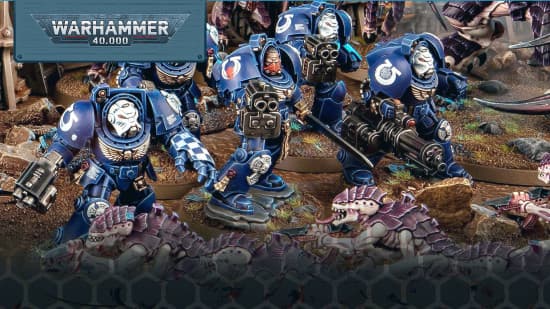
Any 2026 starter-set conversation has to include Leviathan, because it set the tone for the current edition. Leviathan was the 10th-edition launch box and Games Workshop described it as a limited-run launch set. It contained 72 miniatures in total, split between 25 Space Marines and 47 Tyranids, plus a 392-page hardback book and a deck of 66 mission cards.
That box was not a standard starter product, and that distinction matters. Leviathan was the big edition launch, the kind of release that drives excitement across the entire range, while the current Introductory, Starter, and Ultimate boxes are structured to help players enter the hobby at different commitment levels. Games Workshop also said Leviathan’s components would be made available separately soon after launch, which helped turn the launch box into a springboard rather than the only way into the edition.
For buyers in 2026, the lesson is simple: do not confuse a launch box with the right starter box for your needs. They serve different jobs.
Why 2026 changes the buying decision
There is one more wrinkle this year. Games Workshop has already revealed a new edition of Warhammer 40,000 with a launch set tied to Armageddon and a June 2026 release window. That is a big deal, because starter advice can shift quickly when a new edition, a new launch box, and a refreshed rules cycle are about to arrive together.
That does not make the current boxes irrelevant. It does mean the smartest purchase depends on timing as much as ambition. If you want to start right now, the Introductory Set, Starter Set, and Ultimate Starter Set still map neatly to three different kinds of first buyer. If you are willing to wait for the new edition launch, the Armageddon set could reshape the top end of the entry ladder the moment it lands.
The bottom line is blunt: buy for your actual next step, not for the loudest box on the shelf. The Introductory Set is the best first touch, the Starter Set is the best value for someone already equipped, and the Ultimate Starter Set is the best bridge into a real tabletop force. The biggest mistake is buying the most miniature-heavy box before you know whether you need a demo, a learning kit, or the foundation of a future army.
This article was produced by Prism’s automated news system from verified source data, official records, and press releases, then run through automated quality and moderation checks before publishing. The system is built and supervised by the people who set the standards it runs under. Read our full AI policy.
Did this article answer your question?