Warhammer 40k players say repetition, not tricks, drives bigger win rates
The biggest 40k win-rate jump is not a secret combo. It is reps, review, and staying with one army long enough to learn it.
The real upgrade is boring, and that is the point
A Reddit thread asking what change made the biggest difference in win rate drew 101 responses, and the most common answer was simple: “reps.” Even more specifically, players kept coming back to the same advice, use the same faction, and if you can stand it, the same list. That is not flashy, but it is the cleanest path to improvement because it stops you from relearning your own army every weekend.
The useful part of that answer is what it saves. When you are not spending mental bandwidth remembering every datasheet interaction from scratch, you can focus on the actual game, position, tempo, trading, and scoring. A lot of 40k improvement is not about memorizing more rules. It is about making the basics automatic enough that you have headroom left for the hard decisions.
Stay with one faction long enough to learn its bad days
The strongest pattern in the discussion was not “play more” in the abstract. It was “play more with the same tools.” A single faction, or even the same exact list, gives you repeated exposure to the same threats, the same scoring patterns, and the same mistakes. That matters because an army does not really reveal itself until you have watched it survive pressure, lose key pieces, and still try to win on points.
List-hopping feels productive because every new build looks like new knowledge. In practice, it often resets your learning curve. The week-to-week meta can make that temptation worse, because faction win rates and representation can move quickly, so the shiny army you chase today may not be the same one you face next month. Sticking with one army while the meta shifts teaches you something more durable: how to pilot your own force when the game stops being ideal.
Make every game count twice
Reps only matter if you learn from them. One of the best pieces of advice in the discussion was to play some slower games where you talk decisions out loud. That kind of practice forces you to explain why you are moving a unit, why you are committing a trade, or why you are holding a flank instead of rushing it. Once you say the thought process out loud, the weak spots in it get harder to ignore.
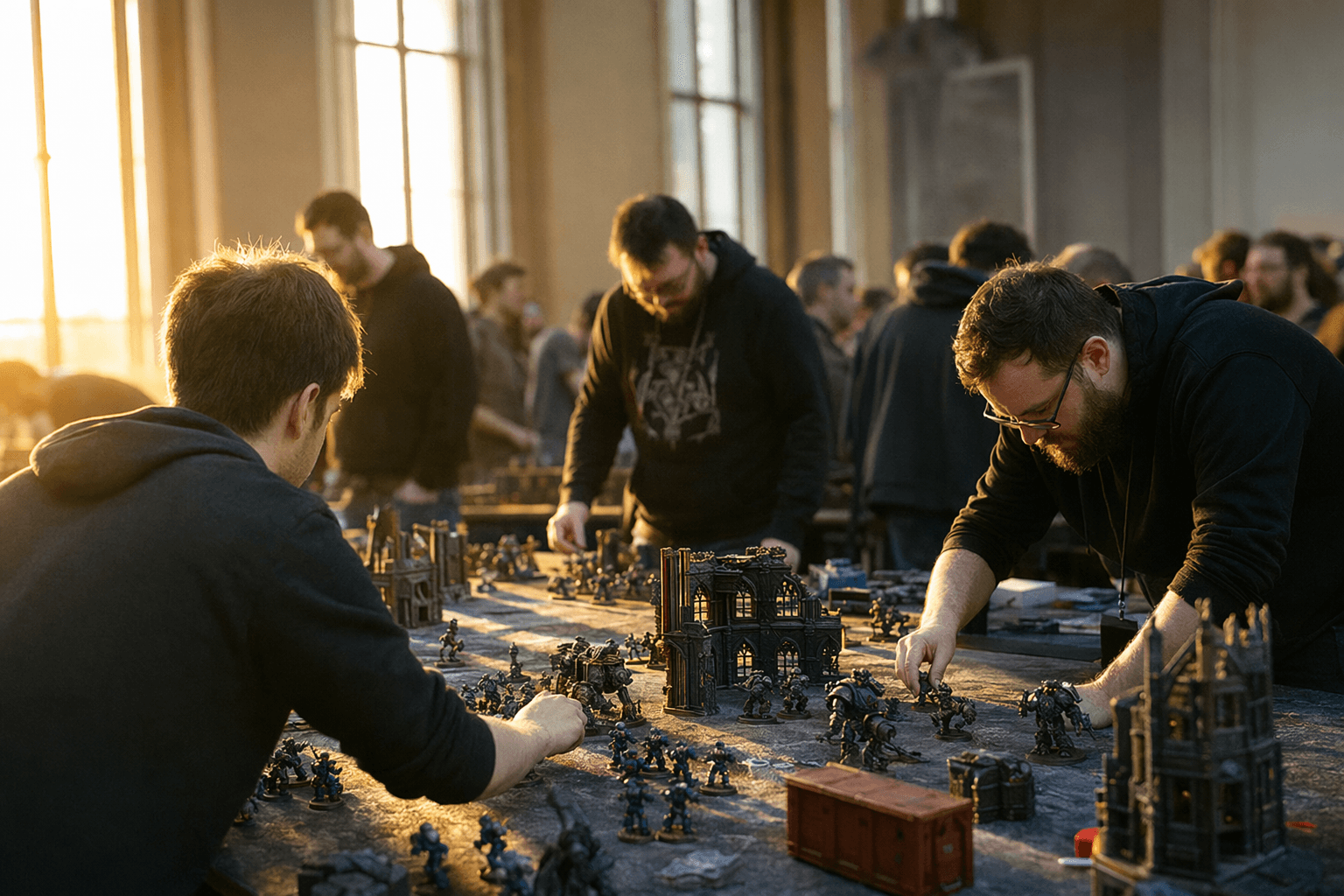
You also need to track the board state and the score evolution carefully, not just the final result. Plenty of games are lost long before the table looks lost, and the score sheet usually tells that story. After every match, write down:
- the turn where the game swung
- which unit did the job you expected, and which one did not
- one decision you would repeat exactly
- one mistake that cost points or tempo
- whether the problem was the list, the plan, or the execution
That kind of post-game review turns a casual match into a useful lesson. It also keeps you honest about whether you are losing because the list is weak or because your placement, target priority, or timing was off.
Do not keep changing lists while you are trying to learn
The same-faction advice is really about reducing noise. Every time you swap armies, detachments, or core packages, you reset your understanding of threat ranges, trade pieces, and scoring windows. If you are changing the list every few games, you are not polishing a skill set, you are repeatedly walking back to the start line.
The better approach is to keep one core shell and test it across different missions and opponents. That is where you learn how your army behaves when reserves arrive late, when primary points slip away, or when you have to choose between preserving a key unit and making a scoring play. Those moments are where games are won, and they are the exact moments repetition prepares you for.
Build a practice circle, not just a calendar
The article’s other big insight is that repetition gets stronger when it is social. A stable group gives you consistent opponents, better feedback, and access to broader tactical knowledge. That is why regular practice partners matter so much, and why team environments are such a force multiplier.

Goonhammer treats team tournaments as a significant part of the competitive 40k ecosystem, where list pairings and group strategy matter just as much as raw pilot skill. That makes sense. A good practice group will catch habits you cannot see yourself, like overcommitting a flank, wasting a key unit too early, or holding an objective piece back when it should have been trading. The more often the same people see your games, the sharper that feedback gets.
Match the grind to the goal
There is a real difference between preparing for a local RTT and preparing for qualification to the World Championships of Warhammer. The standard is not the same, and your practice volume should match the target. If you want to win your local scene, you need consistency and strong fundamentals. If you want to play at the top, you need a much deeper command of your army, your mission play, and your decision-making under pressure.
Warhammer Community reinforces that idea by treating competitive play as a living system. Its Warhammer 40,000 downloads are presented as the place for the most up-to-date FAQs and errata, updated with feedback from the Warhammer community, playtesters, and the Warhammer Design Studio. Its Tournament Companion is built to help players and organisers run competitive Warhammer 40,000 events smoothly. In other words, success in 40k is not just about reading one rulebook once. It is about staying current and learning how the game keeps moving.
The scale of the scene proves the point
The World Championships of Warhammer show how far that learning curve can go. The first event concluded in November 2023 in Atlanta, Georgia, United States, with more than 340 players from over 40 countries. Games Workshop later said the 2024 championships would have more than 600 spots across Warhammer 40,000, Age of Sigmar, Kill Team, and Underworlds, with qualifying players representing more than 45 countries, and the event was scheduled for Atlanta from November 21 to 24.
That is a huge ladder from local practice to elite competition, and it is built on recurring play. The players who rise fastest are usually not the ones who found a secret combo first. They are the ones who keep the same army in their hands long enough to master it, review every game with discipline, and let repetition do the job that tricks never can.
This article was produced by Prism’s automated news system from verified source data, official records, and press releases, then run through automated quality and moderation checks before publishing. The system is built and supervised by the people who set the standards it runs under. Read our full AI policy.
Did this article answer your question?