Word Bearers reborn, classic Horus Heresy extract revisits the original traitors
The XVII Legion returns in a rare Black Books extract, giving Word Bearers fans a clearer look at the fall that turned devotion into Chaos.
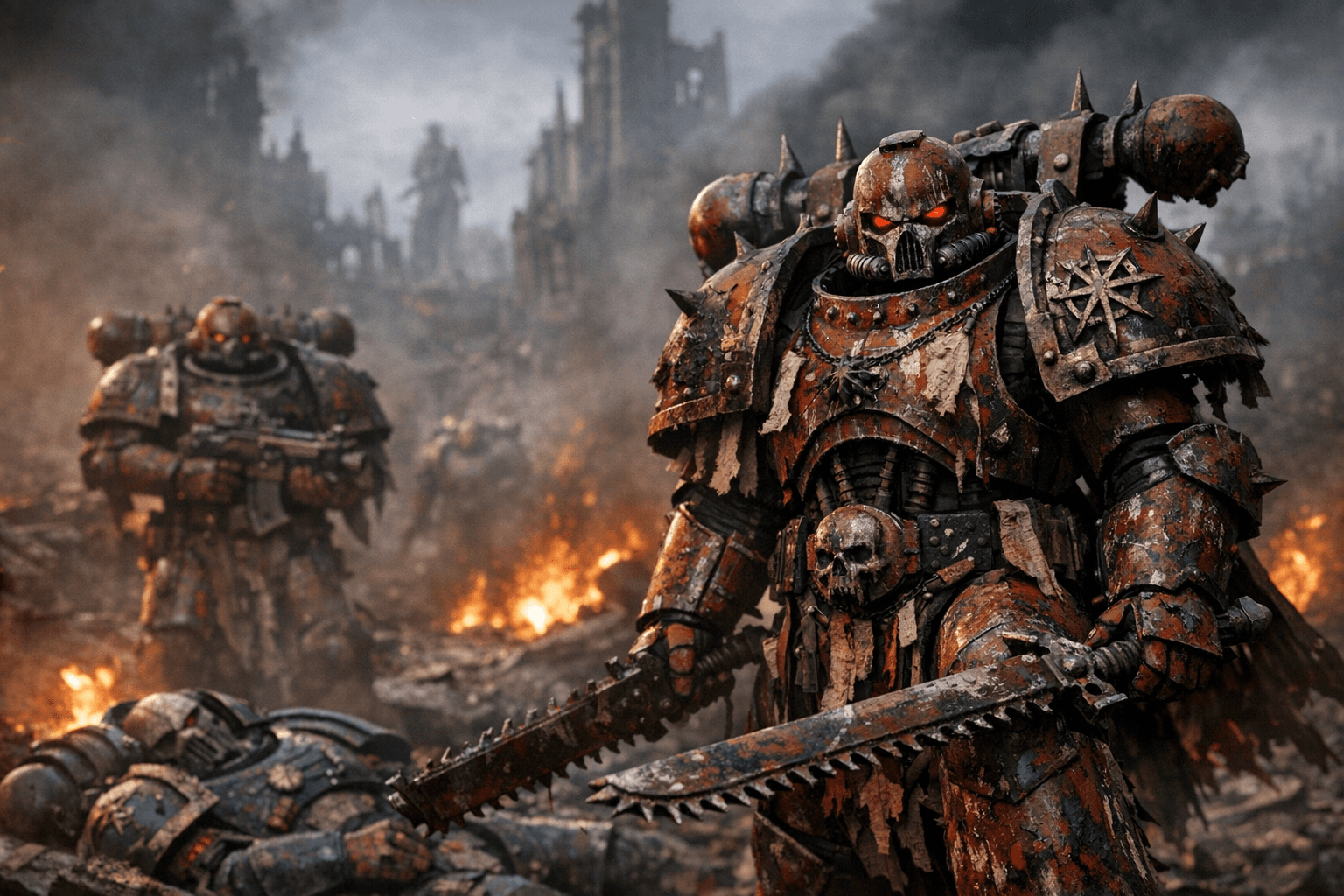
A classic extract that puts the original traitors back in the spotlight
The Word Bearers are one of the most important names in all of Warhammer 40,000, and this Black Books extract brings them back with the kind of weight only the Horus Heresy can deliver. Drawn from 2013’s *Book Two: Massacre*, it revisits the XVII Legion when they were still the Imperial Heralds, long before their name became shorthand for Chaos worship and spiritual corruption.
That is exactly why this matters to Horus Heresy readers who missed the original volumes or want key Word Bearers material in a more accessible form. This is not a generic lore recap. It is a focused look at the legion that helped turn devotion into damnation, and it shows how the Word Bearers became the template for traitor identity in the wider setting.
Why the Word Bearers still matter
The Horus Heresy takes place 10,000 years before Warhammer 40,000, when 18 Space Marine Legions fought for the Emperor or the forces of Chaos. Within that massive civil war, the Word Bearers stand apart because their betrayal was ideological as much as military. They were not just another legion that switched sides, they were the first of the nine Legions to betray the Emperor and become known as Chaos Space Marines.
Their story gives the 40k universe one of its strongest through-lines. Modern Chaos Space Marine identity, daemon worship, and the long war against the Imperium all connect back to the same original wound: the humiliation of a pious legion that believed it had found the truth only to be condemned for it. For readers who collect lore as much as armies, that gives the Word Bearers a special kind of value. They are not background villains, they are the faction that explains how heresy became culture.
From Imperial Heralds to the XVII Legion’s fall
The extract makes a point of starting where the story really begins, with the Legion’s original identity as the Imperial Heralds. From the beginning, their devotion to the Imperium and the Great Crusade was beyond question. Their loyalty was never in doubt, only the form that loyalty took.
That distinction is the heart of the Word Bearers’ tragedy. They were first tasked with spreading the Imperial Truth and destroying any work that spoke of sorcery or false gods, yet their own faith would later be turned against them. The result was not a sudden switch but a long collapse, one that pushed them toward the darker path they would eventually embrace under Lorgar Aurelian.
Warhammer Community’s broader lore pieces sharpen that picture further by showing how deliberately the Legion built its influence. The Word Bearers spread secret Warrior Lodges through other Legions and even into Horus Lupercal’s own inner circle, laying groundwork for corruption across the wider war effort. They did not merely fall into heresy, they helped engineer it.
Monarchia, Lorgar, and the spiritual break
No Word Bearers story works without Monarchia, and the extract leans into that defining humiliation. Official lore describes Monarchia as the Word Bearers’ perfect city, and the Ultramarines destroyed it as an example against false religion. That moment was not just a reprimand, it was the moment the Imperium publicly rejected the Word Bearers’ worldview.
Black Library’s synopsis for *The First Heretic*, Book 14 of *The Horus Heresy*, captures the emotional consequence perfectly: the Emperor castigates the Word Bearers for their worship, and Lorgar and his Legion seek another path. That reaction is what makes the Legion so central to the Heresy’s mythology. Lorgar’s response to Monarchia made him the first primarch seduced by Chaos, and the fallout rippled across the galaxy.
For 40k fans, that is the real collector-grade detail in stories like this. It is not just that Lorgar fell. It is that his fall established the logic of Chaos as faith, grievance, and purpose all at once. Once that door opened, the Word Bearers were never simply traitors again. They were the faction that turned belief into a weapon.
Why this extract is the right kind of reissue
There is a practical side to this return as well. Black Books material has always carried a collector’s appeal, but it can be hard to track down, especially for readers who came into the Heresy later. A focused extract gives newer readers a way into the Legion’s defining material without needing to hunt through older volumes, while long-time collectors get a reminder of why *Massacre* remains such a prized part of the Heresy shelf.
The timing also works as part of a larger editorial rhythm. Warhammer Community is signaling that next week’s Black Books feature will move on to the Space Wolves, which gives this run of coverage a satisfying sense of continuity. For readers following the series week by week, the Word Bearers piece functions like a loaded opening chapter, setting up the next leg of the Heresy-era revisit.
What this says about the modern faction
The most useful thing about this extract is that it explains why the Word Bearers still feel so recognizable in modern 40k. Warhammer Community’s later faction copy still describes them as fanatical warriors who worship and fight for the Dark Gods, and that is not just branding. It is the direct end point of the Imperial Heralds, the city of Monarchia, the lodges, the pilgrimage, and the long spiral into devotion twisted by shame.
That is why Word Bearers material keeps finding an audience. It is the cleanest line in the setting from Imperial idealism to Chaos absolutism, and it gives the Heresy a human shape even at the scale of galactic war. If you care about where the traitor legions came from, this is the moment the whole saga starts to bite.
This article was produced by Prism’s automated news system from verified source data, official records, and press releases, then run through automated quality and moderation checks before publishing. The system is built and supervised by the people who set the standards it runs under. Read our full AI policy.
Did this article answer your question?