Shave Dad shares seven-step guide to preventing razor burn
Razor burn is a fixable technique problem, and Shave Dad’s seven-step guide turns it into a checklist of prep, blade life, angle, pressure, and post-shave care.
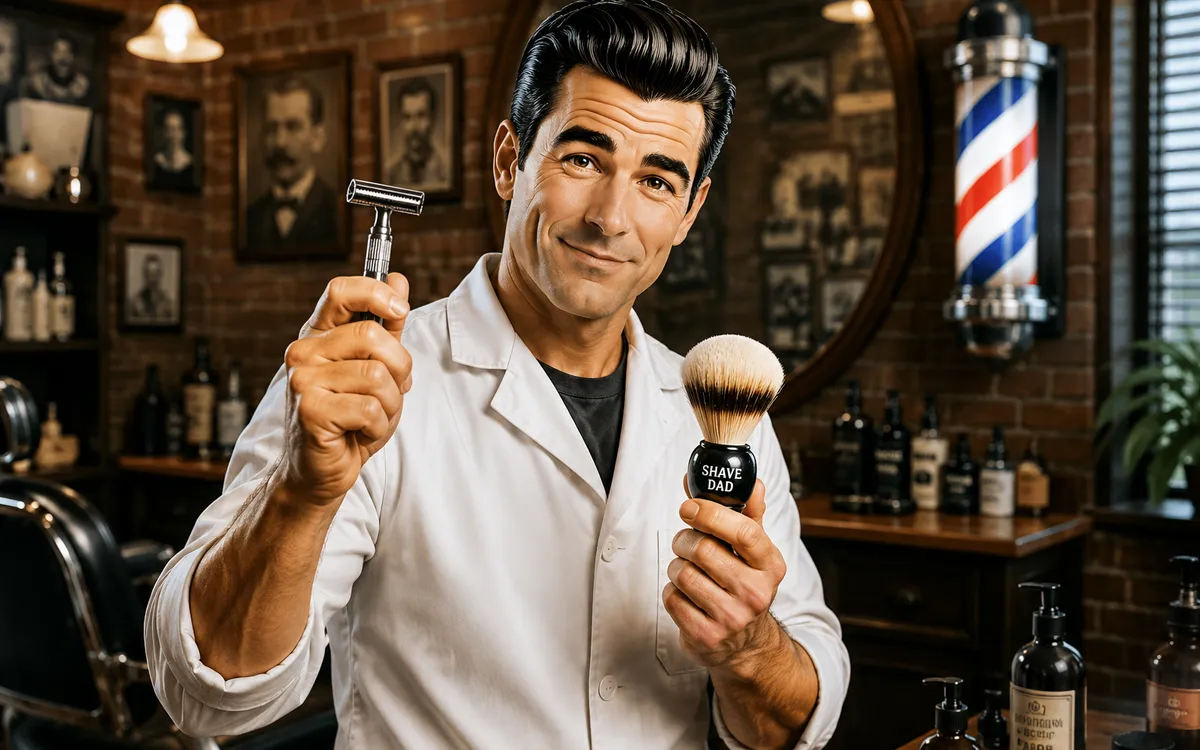
A bad shave usually leaves a trail, not a mystery. If your face lights up with redness, sting, or that raw post-shave bite, Shave Dad’s new razor-burn guide treats it as a troubleshooting job, not something to shrug off. Posted June 17, 2026, the seven-step playbook aims to stop irritation before it starts, and that is exactly the right mindset for a wet shaver who wants a repeatable routine instead of another round of trial and error.
Prep is where the shave starts, not where you rush through
If the skin is dry, tight, or still dirty, the rest of the shave is already fighting uphill. The American Academy of Dermatology recommends shaving after a shower, and that tracks with the logic here: warm, hydrated skin gives the blade less resistance and makes it easier to cut cleanly instead of scraping. Shave Dad’s own beginner material leans into the same idea by putting face wash and hot towel work ahead of the razor, which is the right place to start if your burn shows up before the first pass is even done.
The simplest diagnostic question is this: does your face feel soft and ready, or does it still feel guarded? If it feels guarded, the fix is usually not a new razor. It is more water, more time, and a better prep step that lets the whiskers soften before steel touches skin.
Lather should cushion, not just cover
A thin, airy lather looks tidy in the bowl and does almost nothing on the face. What you want is slickness, cushion, and enough hydration to let the blade glide without dragging. Shave Dad’s wet shaving basics are built around the traditional brush, soap, single-blade razor, and water setup, which makes sense because lather is part of the cutting system, not decoration.
The AAD’s advice lines up here too, since it recommends shaving cream or gel and points sensitive-skin users toward products built for less irritation. If your shave burns even when the razor feels sharp, look at the lather first. Too little water, too much product, or a rushed bowl whip can turn a decent razor into a sandpaper machine.
Angle is the difference between cutting hair and bulldozing skin
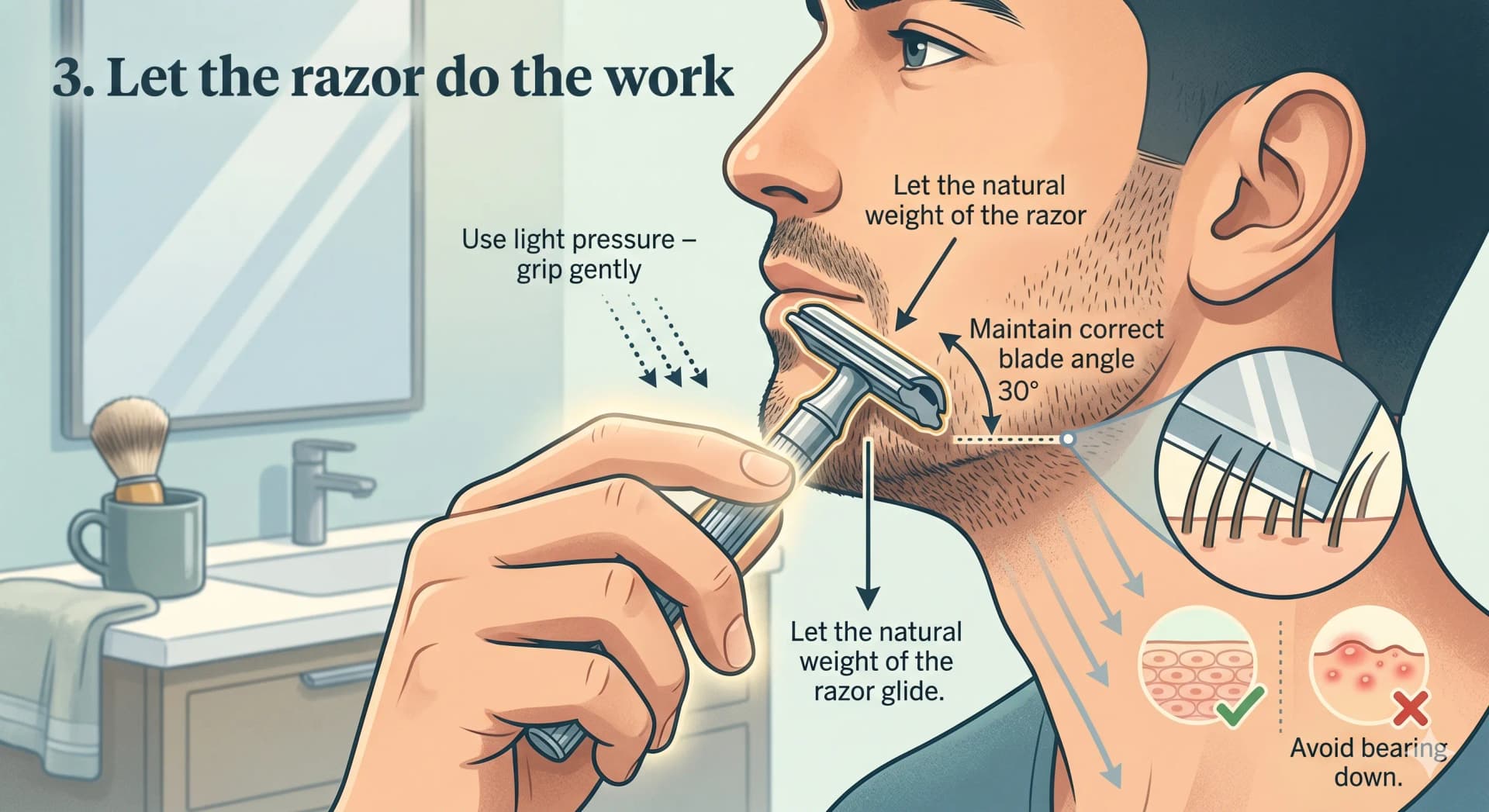
Most razor burn comes from forcing the edge to do a job it was never meant to do. A safety razor, cartridge, or straight razor all work better when you let the blade meet the beard at a clean angle and move with the grain on the first pass. The AAD is clear on that point: shaving in the direction hair grows lowers the irritation load immediately.

This is where a lot of shavers get themselves into trouble on the neck and jawline, where growth patterns are less polite. If the razor seems to chatter or skip, the angle is probably off. Adjust the handle, shorten the stroke, and let the edge find the hair instead of pressing it into the skin.
Pressure is the habit most likely to betray you
If burn shows up even with good prep and a decent lather, pressure is the next thing to blame. A wet shave should feel controlled, not forceful, and the more you chase closeness with your hand, the more likely you are to irritate the skin. That matters even more if you shave over acne, since the AAD says people with acne should shave lightly and avoid shaving directly over lesions.
The takeaway is simple: if you can hear the blade working, you do not need to feel it working too. Heavy pressure tends to show up as redness in the corners of the mouth, the chin, and the neck, where skin is easy to overwork and hard to calm once you have pushed too far.
Blade choice and blade life are not optional details
A sharp, clean blade matters more than most people want to admit. The AAD says a dull blade greatly increases the risk of razor bumps, and it also notes that multi-blade razors can shave too closely for some people who already deal with razor burns or ingrown hairs. That is a useful reminder for anyone who keeps blaming the soap when the real issue is that the blade is past its prime or too aggressive for the job.
The AAD’s five-to-seven-shave guidance is a good rule of thumb, and storing the razor dry matters too. If your shave starts fine and gets rough halfway through the week, the answer is probably not to tough it out. Change the blade, dry the razor properly, and stop asking tired steel to behave like fresh steel.
Pass count is where “close enough” becomes “too much”
Razor burn often shows up when you keep chasing smoothness after the beard is already gone. That is why a thoughtful pass count matters more than a heroic one. If your routine needs repeated cleanup strokes on the same area, you are usually compounding irritation instead of solving it.
The cleanest clue is timing: if the shave feels fine early and turns hot by the second or third pass, the trouble is usually the amount of work you are asking the razor to do. Better prep, better angle, and a fresher blade should reduce the need to mow the same patch again and again. Rinsing after each swipe, another AAD recommendation, keeps cut hair and cream from turning into drag on the next pass.
Post-shave is where you either calm the skin or keep irritating it
Once the blade leaves your face, the job is not finished. Shave Dad’s pre- and post-shave routine points to the usual finishers, face wash, cold rinse, alum, splash, and balm, and that sequence is built to reset the skin instead of letting irritation linger. The AAD also recommends storing the razor dry, which is part of the same logic, because a clean dry razor is less likely to become a problem on the next shave.
This last step matters because razor burn is often a chain reaction. If you cool the skin, treat it gently, and put the razor away correctly, you reduce the odds that tomorrow’s shave starts from a damaged baseline.
Why Shave Dad’s version fits the wet shaving world
Shave Dad is a good home for this kind of guide because the site already lives in the overlap between education, gear, and community. It describes itself as a wet shaving community focused on limited-edition collaborations, reviews, and field-tested gear, and says it has been bringing artisans, content creators, and shavers together since 2017. The audience spans everyone from beginner wet shavers to forty-year veterans, which is exactly the range that benefits from a straight answer about what is causing irritation and how to fix it.
That focus also matches the broader history of the hobby. Britannica traces shaving tools back to prehistoric cave drawings and ancient Egyptian tombs, says the safety razor was manufactured in the United States in 1880, and notes that King C. Gillette’s company made its first sale in 1903 and had produced 90,000 razors and 12,400,000 blades by the end of 1904. In other words, the fight between technique and gear has been going on for a very long time, and the winners are usually the shavers who stop blaming the razor for a prep problem, a pressure problem, or a blade that has already worn out its welcome.
When razor burn shows up, it is usually not a verdict on wet shaving. It is a signal. Read it that way, and the fix gets a lot less mysterious: soften the beard, build a better lather, lighten your hand, swap the blade before it turns dull, and let the post-shave routine finish the job.
This article was produced by Prism’s automated news system from verified source data, official records, and press releases, then run through automated quality and moderation checks before publishing. The system is built and supervised by the people who set the standards it runs under. Read our full AI policy.
Did this article answer your question?