Wet shaving works as a system, not one product swap
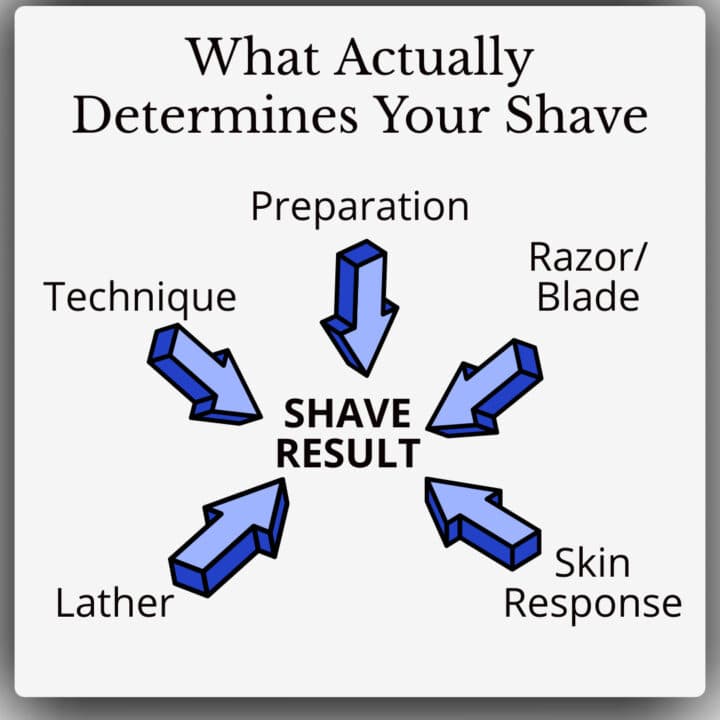
Bad shaves usually are not one bad razor. Prep, lather, technique, blade choice, and skin response all interact, so the fix starts with diagnosis.
The American Academy of Dermatology recommends replacing disposable razors after 5 to 7 shaves. Wet shaving gets mis-sold as a one-swap hobby. Change the razor, change the blade, change the soap, and the problem supposedly disappears. Sharpologist's core point is that shave quality comes from how the whole setup behaves together, not from one isolated part.
The practical mistake is easy to spot. A shaver has a rough pass, grabs a different blade, gets one good result, then assumes the blade was the whole story. Next week the same setup feels worse because the prep changed, the lather collapsed, the angle drifted, or the skin was already irritated. That is why a troubleshooting mindset beats product hopping every time.
Treat the shave like a system
The useful way to think about a shave is as a chain of linked variables. Preparation hydrates the hair. Lather creates the lubrication layer that lets the blade move cleanly. Razor and blade choice shape how much efficiency and exposure you get. Technique determines whether that potential turns into a close shave or a scrape. Skin response tells you whether the routine is actually sustainable.
That is the core correction Sharpologist is making: do not judge the whole shave by one gear change. A new soap can feel better simply because you spent more time building lather. A sharper blade can seem magical until it meets poor angle control. Even a great razor can punish dry skin if the prep was rushed.
Prep and lather do more than make the routine feel nice
Shaving after a shower, when skin is warm and moist, better prepares the hair and skin for the blade. The American Academy of Dermatology also recommends using shaving cream or gel rather than trying to rely on water alone.

Those details matter because prep changes the work the blade has to do. Warm, moist skin and hydrated hair reduce resistance, which makes the stroke cleaner and lowers the odds of tugging. Lather is not decoration here, it is the cushion and glide layer that keeps the edge from dragging. If the shave feels harsh, the question is not just which blade you used. It is whether the skin was ready and whether the lather was actually doing its job.
There is a simple reason this gets overlooked: shopping is easier than diagnosing. A new brush or soap is a visible fix, but better prep is usually the less glamorous answer.
Technique and skin response are part of the hardware equation
The American Academy of Dermatology recommends shaving in the direction that the hair grows to help prevent razor bumps and burns. Stroke direction, pressure, and how often you revisit an area can make a mild setup feel aggressive or make a sharp setup behave well.
The American Academy of Dermatology also recommends rinsing after each swipe. A blade that has stayed in rotation too long, or a head that is clogged and not rinsed cleanly, changes how the shave feels before the shaver ever blames the soap. If irritation shows up early, skin response may be telling you the process itself is too rough, not that the whole category is wrong.
This is where the hobby can get expensive in a hurry. Wet shavers love discussing blades, and for good reason, but blade choice is only one variable in a larger loop.

The hardware story has always been about systems
A hoe-shaped safety razor was manufactured in the United States in 1880, then King Camp Gillette combined that safety-razor shape with a double-edged replaceable blade in the early 20th century. He established the Gillette Safety Razor Company in 1901.
The design breakthrough was not just a new head shape or a sharper edge, but the pairing of form and replaceable blade.
A smarter way to troubleshoot a bad shave
When a shave goes sideways, the fastest fix is not always a new purchase. Start by asking what changed. Did you shave right after a shower, or did you rush dry skin? Did you use shaving cream or gel, or did the lather break down? Did you stay with the direction of hair growth, or did you chase closeness too early?
Then look at the hardware only after the process. A worn disposable razor is a real problem. So is a blade choice that feels efficient but amplifies irritation when paired with weak prep.
This article was produced by Prism’s automated news system from verified source data, official records, and press releases, then run through automated quality and moderation checks before publishing. The system is built and supervised by the people who set the standards it runs under. Read our full AI policy.
Did this article answer your question?