Best Large-Swing Wood Lathes for Turning Oversized Bowls and Vessels
A 900-lb cast-iron machine versus a 300-lb variable-speed contender: here are the large-swing lathes that actually handle gallery-scale bowls.
Before you read a single paragraph, screenshot this table. It contains the only numbers that matter when you're shopping for a lathe that can eat a 20-inch walnut crotch without flinching.
| Model | Swing | HP | Spindle Thread | Speed Range | Weight | Bed Length | Price Band |
|---|---|---|---|---|---|---|---|
| Powermatic 4224B | 24 in | 3 HP | 1-1/4" x 8 TPI | 50–3,200 RPM (2 ranges) | 900+ lbs | 42" btw centers | ~$5,000–$6,500 |
| JET JWL-1840EVS | 18 in | 2 HP | 1" x 8 TPI | 40–3,200 RPM (infinite EVS) | ~300 lbs | 40" btw centers | ~$1,800–$2,200 |
| Budget EVS Class | 12–16 in | 1–1.5 HP | 1" x 8 TPI | ~60–3,000 RPM | 100–180 lbs | 20–36" btw centers | ~$500–$1,100 |
One number in that table earns its own paragraph: 900 pounds. That is the shipping weight of the Powermatic 4224B, a figure that reframes every other question you might ask about it. You are not buying a lathe. You are installing infrastructure.
1. Powermatic 4224B (Premium/Editor's Choice)
The Powermatic 4224B is the most powerful and feature-rich lathe in Powermatic's lineup, engineered for serious woodturners who demand uncompromising performance. Weighing over 900 lbs, this robust machine delivers exceptional stability and vibration control, making it ideal for large-scale or intricate turning projects. The swing is the headline: 24 inches over the bed, 42 inches between centers, with a 1-1/4" x 8 TPI spindle that accepts heavy-duty chucks and faceplates without adapter wobble. Two electronic variable speed ranges (low: 50–1,200 RPM; high: 125–3,200 RPM) mean you can creep a raw 20-inch blank into balance at just 50 RPM before committing to a cut, which is exactly what large-vessel work demands.
With innovative features like a sliding headstock, electronic variable speed, and a built-in vacuum system, the 4224B offers unmatched control and ease of use. That integrated vacuum system is a genuine differentiator: large bowls come off the lathe without the faceplate removal fight, and the vacuum registers repeatably for reverse-chuck finishing cuts on the foot. The 4224B was designed by professional woodturner Nick Cook alongside top Powermatic engineers, which shows in details like the digital RPM readout and the indexing built into the headstock. The spec that justifies the premium price: 3 HP at 220V sustained through the low-speed range, where big blanks actually stall lesser motors.
Hidden costs to price in: dedicated 220V circuit (budget $150–$400 for an electrician), a hoist or furniture dolly rated above 1,000 lbs for positioning, and floor space of at least 8 by 4 feet with outboard clearance. The 1-1/4" spindle also means your existing 1" chucks require a step-down adapter; factor in a quality set of bowl-specific jaws sized for 4- to 6-inch grip diameters.
2. JET JWL-1840EVS (Best Value/Mid-Range Pick)
The JET JWL-1840EVS is a powerful and versatile wood lathe that offers a wide range of benefits to woodturners of all skill levels. The headstock slides the full length of the bed, which unlocks outboard turning on a standard-footprint machine, a meaningful feature when you need to swing a 17-inch platter that the headstock position would otherwise block. The included four-inch cast iron risers allow you to easily choose the working height that maximizes comfort, a practical detail that matters enormously on a 2-hour deep-vessel session.
The EVS system runs 40–3,200 RPM in a single infinite band, with a digital readout, so you dial in 80 RPM for an out-of-round blank and nudge it up in real time without reaching for a belt. The 2 HP motor at 230V is the spec that justifies this as the best-value pick: it sustains torque on blanks up to roughly 18 inches without the speed-drop stall that plagues 1.5 HP machines when a tool catches in wet wood. The tailstock features Acme threads for smooth and durable movement, and an improved quill locking mechanism that incorporates an anti-rotation key.
At approximately 300 lbs, the 1840EVS can be moved by two people with an appliance dolly, which matters in a shared shop or when you're reconfiguring your turning space for a large commission. The 1" x 8 TPI spindle is the industry standard at this price point, meaning your existing Nova or Oneway chuck mounts directly. Hidden cost to flag: this machine also requires 230V, so the electrician's bill is the same as the Powermatic. Do not budget 120V and assume an adapter solves the problem.
3. Budget Electronic Variable Speed Class (12–16" Swing)
The research notes identify this tier as benchtop and compact-floor machines with electronic speed control in the 60–3,000 RPM range, suited to vessel work on blanks up to roughly 14 inches. The specific spec that separates worthwhile budget machines from dead-ends is the presence of true electronic variable speed (not a step-pulley with a single motor speed) and a cast-iron or heavy-steel construction that provides at least minimal vibration damping.
At 1 to 1.5 HP and weights in the 100–180 lb range, these machines will not handle a fresh-cut 16-inch maple crotch, and you should not try. What they do handle is natural-edge bowls in the 8–12-inch range, hollowed vessels in end-grain blanks, and practice work that trains your tool control before you step up to a 3 HP machine and a blank that costs $80. The 1" x 8 TPI spindle standard means accessories carry forward when you upgrade, which makes this tier a legitimate starting point rather than a dead end.
Matching machine to work: three use cases
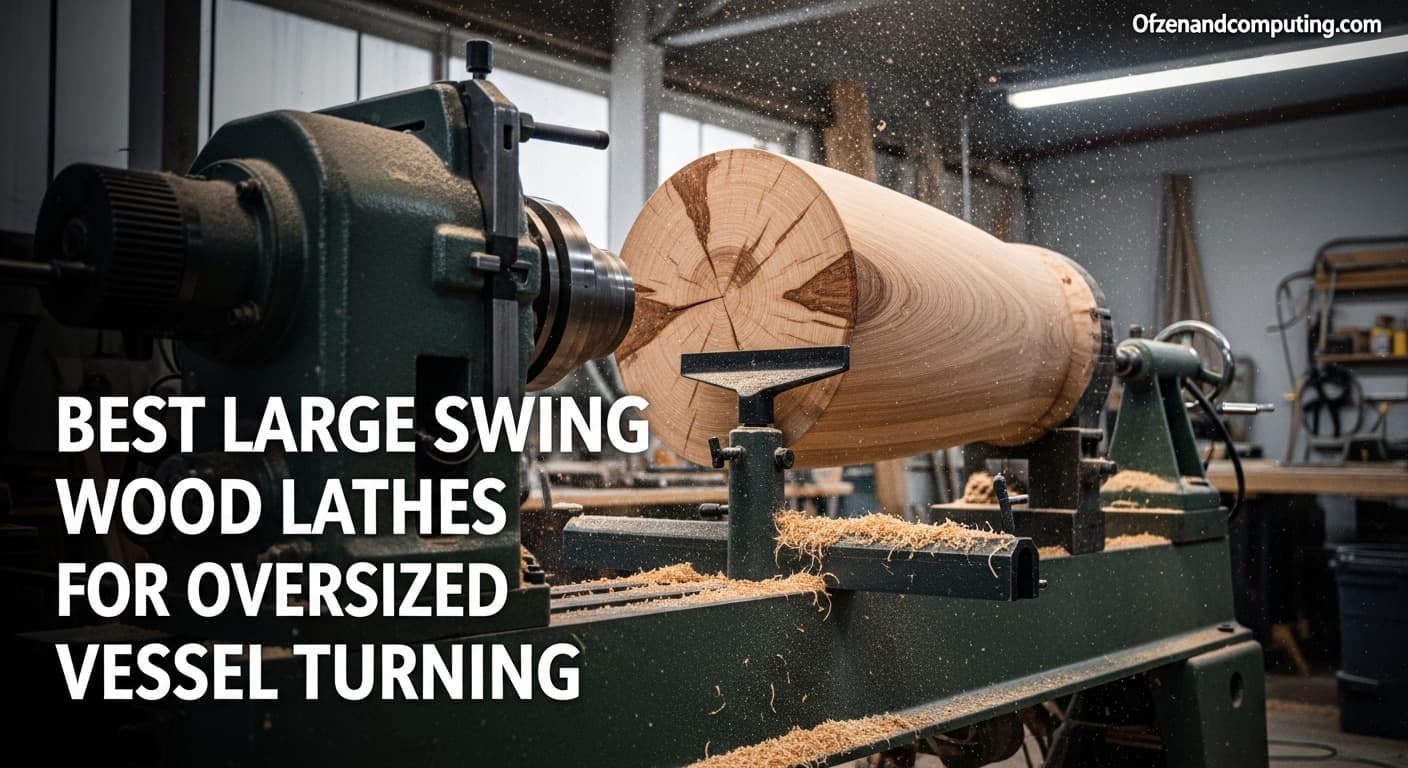
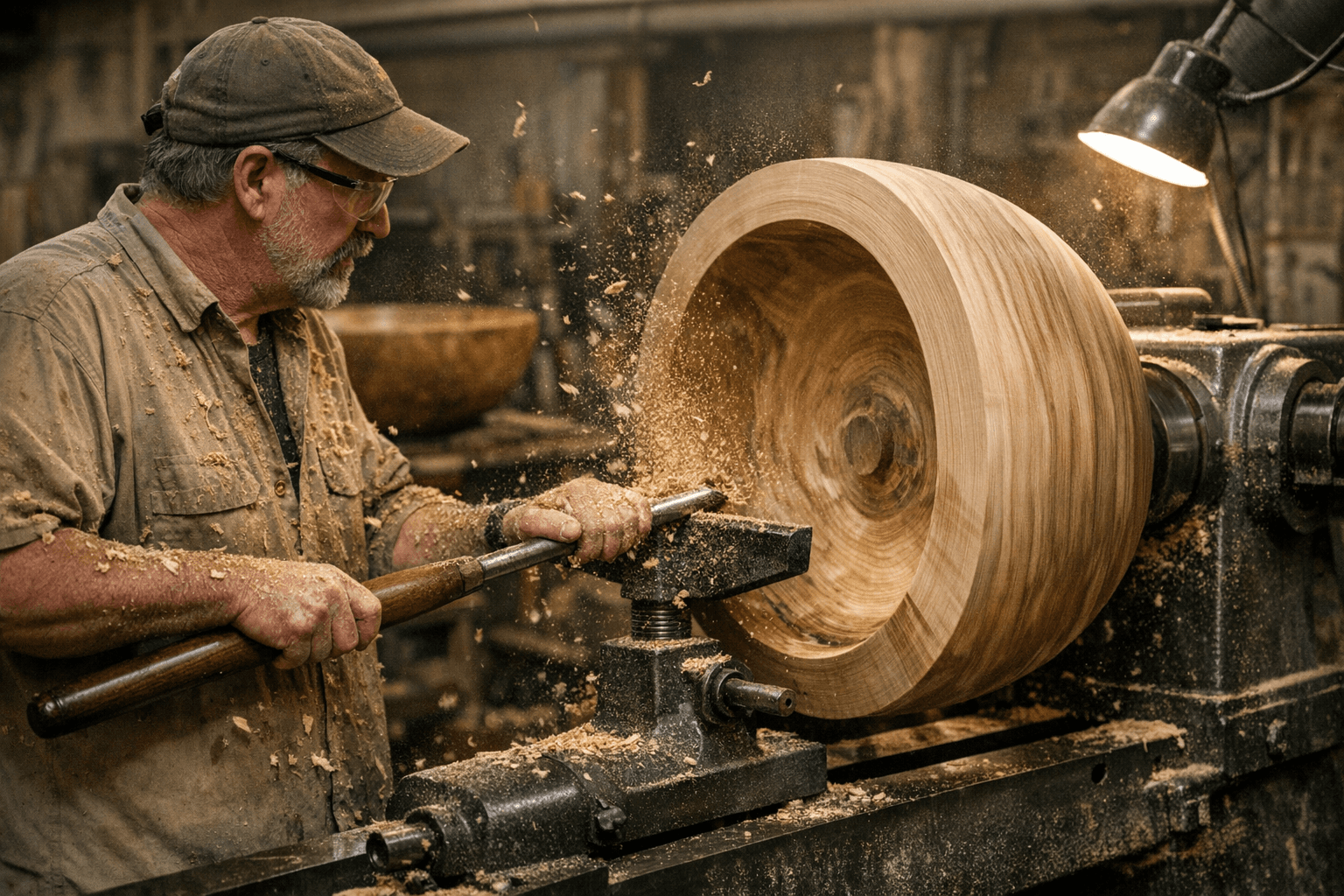
Oversized bowls (14 inches and above) expose every weakness in an underpowered or poorly damped lathe. The combination of high blank mass, interrupted cuts across figure, and the leverage of a long-handled bowl gouge on a large radius generates the kind of low-frequency vibration that walks a lightweight machine across the floor. This is where the 4224B's 900-lb mass earns its keep: the physics of damping are simple, and more cast iron wins.
Deep vessels and hollow forms introduce a different problem. You are working inside the piece, often at slow speeds, with a long boring bar that amplifies any headstock vibration directly into the cut surface. Low-end RPM control is the critical variable here, not top speed. The 40 RPM floor of the 1840EVS and the 50 RPM low-range floor of the 4224B both address this; a belt-drive machine with a 250 RPM minimum does not.
Outboard turning, required when a platter blank exceeds the swing-over-bed but the outboard spindle side is unobstructed, needs both a machine with an outboard spindle thread and enough floor clearance on the left side to swing the work. The 4224B's 1-1/4" x 8 TPI outboard thread and the 1840EVS's sliding headstock are both workable solutions, but account for three to four feet of left-side clearance in your shop plan before you commit.
The purchase decision in plain terms
If your turning is moving toward gallery shows, commissions, or any blank above 16 inches in diameter, the 4224B is the machine to save toward. The premium is real, but so is the capability gap. If you are scaling up from small-bowl work and need an 18-inch capacity machine that runs on a single 230V circuit, fits in a standard garage bay, and accepts your current chuck set, the JWL-1840EVS is the best-value choice available at this writing. The budget EVS class makes sense only as a deliberate stepping stone, and only if you buy one with a 1" x 8 TPI spindle so your accessories survive the upgrade.
The secondary market follows these guides closely. High-capacity cast-iron lathes from the previous decade frequently reappear on woodturning club forums and Craigslist in the months after a buying guide cycle, as turners upgrade and their old machines flow down. If you cannot budget a new 4224B, watch for a previous-generation Powermatic 3520 or equivalent, which shares the same 20-inch swing class and carries much of the same mass advantage at a significantly reduced used price.
This article was produced by Prism’s automated news system from verified source data, official records, and press releases, then run through automated quality and moderation checks before publishing. The system is built and supervised by the people who set the standards it runs under. Read our full AI policy.
Did this article answer your question?