Carolina Mountain Woodturners offers four-day sphere class with Tucker Garrison
Carolina Mountain Woodturners put Tucker Garrison’s sphere class in front of turners who are ready for a real geometry test, not a first project.
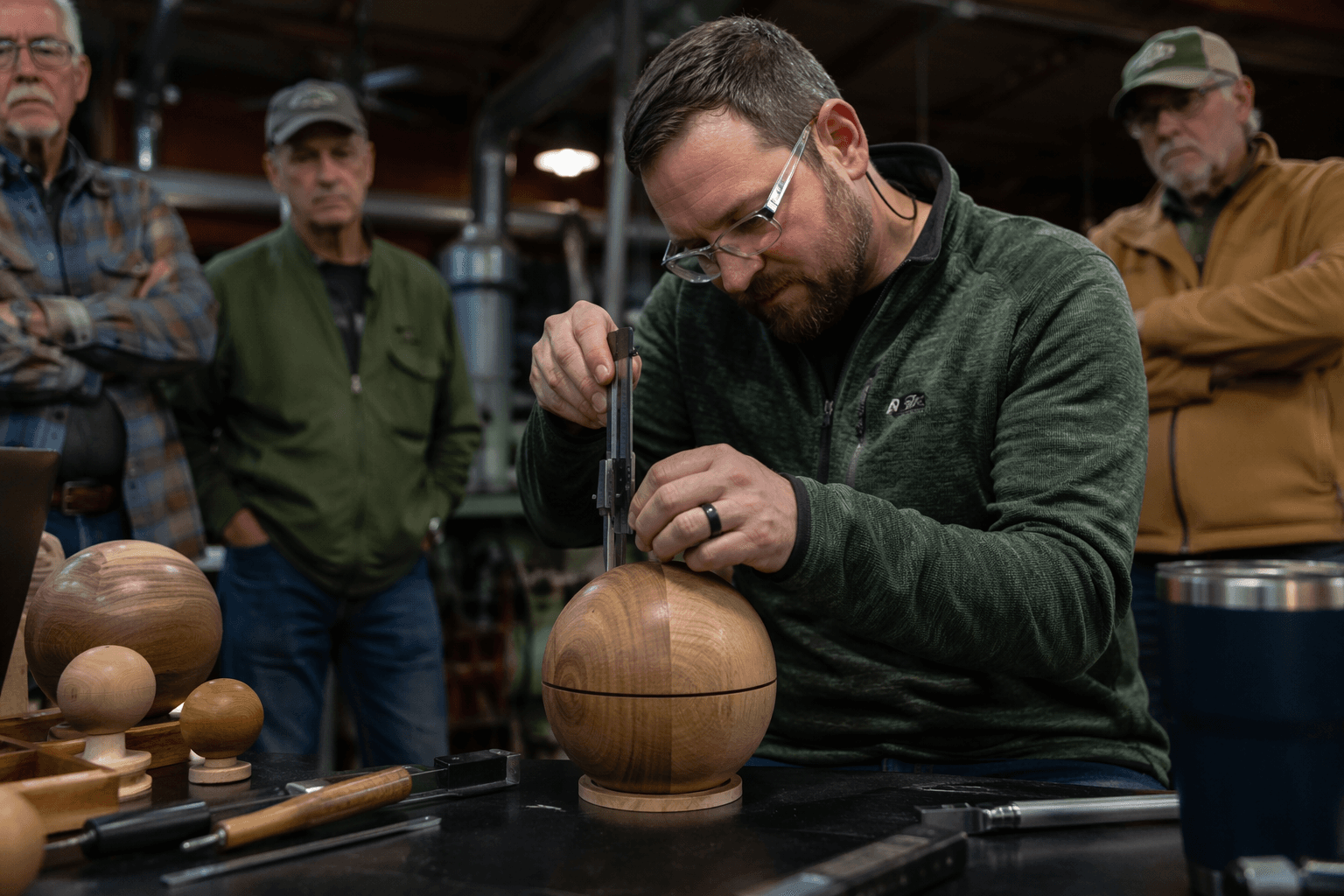
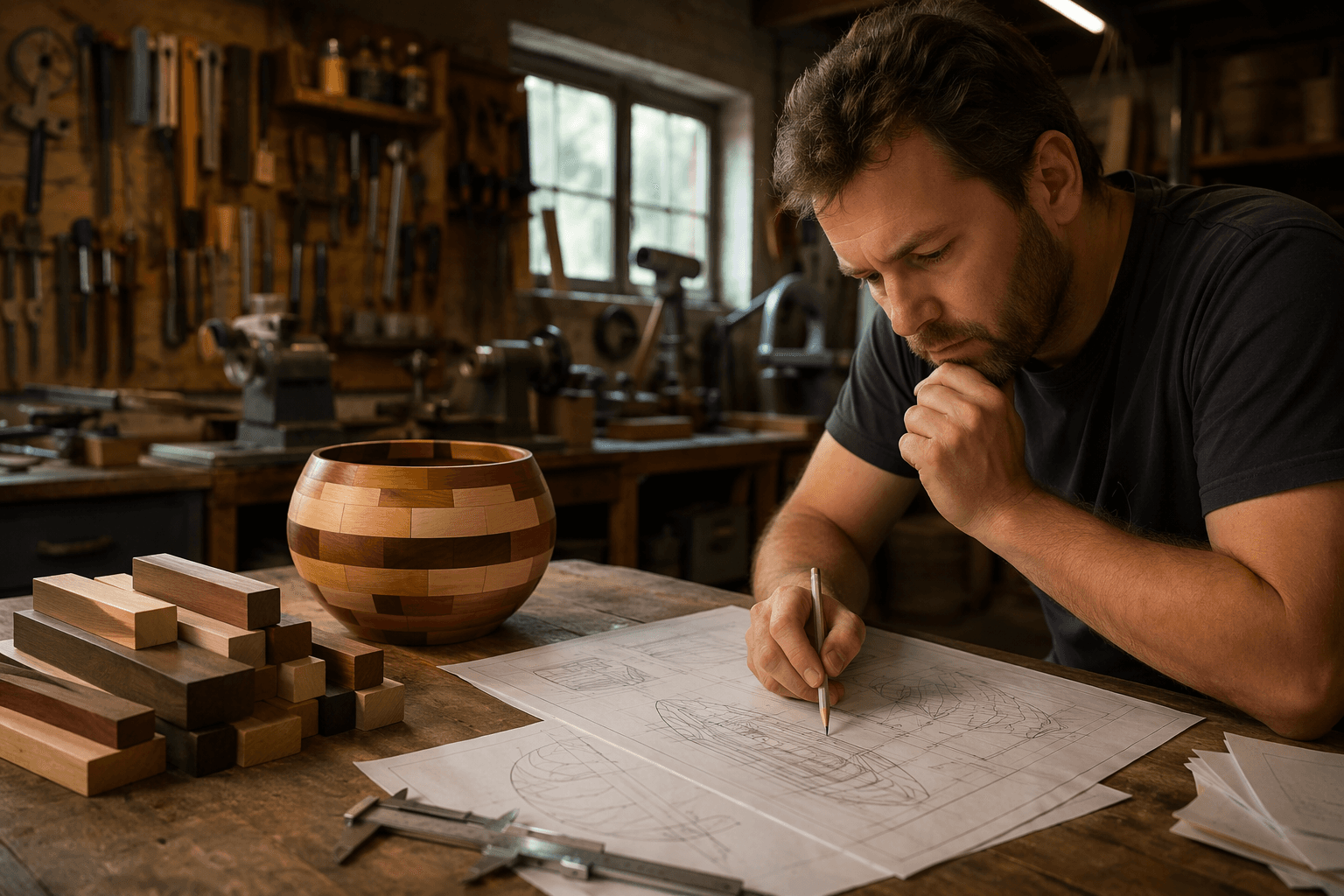
A 4-inch wooden sphere looks simple until it has to come off the lathe, go back on, and stay perfectly true through drilling, hollowing, power carving and sanding. Carolina Mountain Woodturners put Tucker Garrison’s four-day sphere class in that exact lane, with the club making clear that it was not for beginners and was meant for intermediate to advanced turners.
The class was scheduled for May 23-24 and May 30-31, 2026, from 9:30 a.m. to 2:30 p.m. each day, with students asked to arrive by 9:15 a.m. to set up. The fee covered all materials, and participants were expected to attend all four days. The listing also showed strong demand for the specialized workshop, with only four spots left.
The appeal of a sphere class is obvious to anyone who has already gotten comfortable with spindles and bowls and wants the next problem to solve. Sphere turning builds the same accuracy turners use elsewhere, from spindle work to faceplate work, while also training the eye to see symmetrical curves. It is also unforgiving. Australian Wood Review has pointed out that even a carefully shaped sphere can distort during sanding because different grain directions behave differently, which makes surface prep and finishing a major part of the lesson rather than an afterthought.
Garrison’s syllabus reflected that reality. Day one began with making a spherical chuck to accept a 4-inch sphere. Day two moved to making the sphere itself and laying out 12 equally spaced points. Day three pushed into the hard part, mounting the sphere in the chuck, drilling past the center, turning the outer surface, hollowing the inside area, laying out the design, and beginning to remove negative space with the power carver and burrs. Day four finished the negative space removal and started power sanding and hand sanding, though the final sanding was expected to continue at home. The club said the project usually took about 30 hours, and most of that time went to power carving and sanding.
The tools list matched the scope of the job: bowl gouge, spindle gouge, parting tool, 1 1/8-inch Forstner bit, hollowing tool, micro power carver burrs and a micro drum sander. CMW said some tools could be borrowed, a practical detail that matters when a class asks for more than a basic spindle kit.
Garrison brought more than technique to the room. Carolina Mountain Woodturners said he had been involved with the club for more than 20 years, served as president and as a long-time board member overseeing the Turning Learning Center, founded the annual CMW Retreat at Arrowmont School of Arts and Crafts, and showed work at AAW Symposium exhibits, Grovewood Gallery and the North Carolina Arboretum. That background helps explain why this class was framed as serious instruction, not a casual demo. In a club that traces its roots to 1998 and says it grew from eight members to nearly 400 artisans, the sphere class fit the larger pattern: a hard, hands-on project for turners who are ready to be measured by accuracy, control and finish all at once.
This article was produced by Prism’s automated news system from verified source data, official records, and press releases, then run through automated quality and moderation checks before publishing. The system is built and supervised by the people who set the standards it runs under. Read our full AI policy.
Did this article answer your question?