Richard Findley tackles his first hollow form with advice and borrowed tools
Findley’s first hollow form turns intimidation into a starter plan: borrow tools, start with an open vase, and learn the basics before chasing an enclosed vessel.
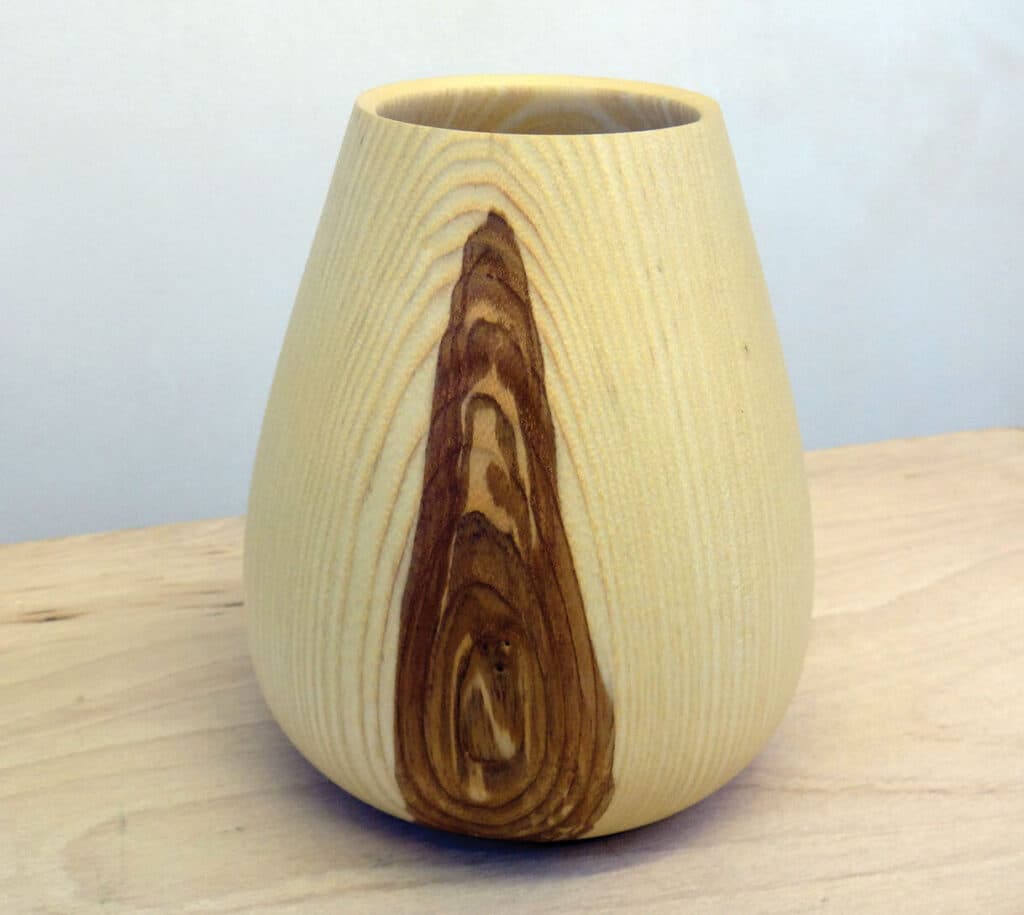
Richard Findley’s first hollow form is useful because it does not pretend the leap is small. He starts from the same place a lot of turners do: admiring hollow forms at demos, in books, and in magazines, then putting the idea off because the tools look expensive, the choices look endless, and the whole process feels easy to get wrong. His answer is not bravado. It is a practical first move, a straightforward open vase, borrowed tools, and a willingness to learn in public.
Why hollow forms feel like a jump
If you have lived mostly in bowls, boxes, and spindle work, hollow forms can look like the next level for a reason. Woodworkers Institute defines a hollow form as an enclosed vessel with an opening smaller than its widest point, and that geometry changes everything about access, sightlines, and control. Once the opening tightens, standard gouges stop feeling like the obvious answer and specialized hollowing systems start to make more sense.
That is exactly why deeper forms such as vases and urns become a dividing line. The Woodworkers Institute hollow-form guide points out that this is where turners often move beyond standard gouges to purpose-built hollowing systems, and those rigs are designed to make deep hollowing easier and safer by supporting the tool and reducing leverage forces. In other words, the fear is not irrational. The physics really do change once the tool is buried inside the vessel.
Findley’s way in: start with one open vase
Findley does not jump straight into the hardest version of the job. His plan is to turn two hollow forms, starting with a fairly straightforward open vase before moving on to a more enclosed shape that will demand more control. That sequence matters because it turns an intimidating category into a staged project, not a one-shot test of nerve.
He is also honest about why he waited. Hollowing tools looked pricey, the range of options felt overwhelming, and he prefers seasoned timber over wet logs, which means he is naturally less enthusiastic about bringing moisture and insects into his timber pile. That combination of caution and curiosity is exactly what makes the tutorial worth reading: the reluctance is familiar, but so is the fix. Begin with the easier silhouette, learn the tools on a form that leaves you some room to breathe, then decide whether you want to push deeper.
Borrowed tools, borrowed confidence
Findley’s setup leans on the sort of help that gets a lot of turners over the first hump. George Watkins, a well-known hollow-form turner with box-making experience, provides wood and advice. Mark Baker sends a package of tools. That matters because hollow turning often starts with borrowed kit and borrowed confidence long before anybody owns a full hollowing arsenal.
The tool question is a big part of the intimidation barrier, and Findley treats it as a real decision rather than a shopping exercise. He breaks hollowing tools into three broad camps: scrapers, carbide-tipped cutters, and shielded cutters, each with variations depending on the job. That is the right way to think about it if you are standing in front of a wall of options and trying not to buy the wrong thing too early.
What the basics really cover
Findley’s walkthrough is broad enough to be useful without becoming abstract. He moves through the project plan, the theory, the timber, moisture content, design, workholding, hollowing, sanding, and finishing. That order is smart because hollow forms punish improvisation at every stage. If the blank is wrong, the holding is wrong, or the wall thickness is inconsistent, the polished finish at the end will not save it.
The theory section also helps strip away some of the mystique. Calling a hollow form a large turned box without a lid may be a simplification, but it is a useful one when you are trying to understand the job in familiar terms. It puts the emphasis back on form, access, and wall management, which are the real skills you are building whether the vessel is open, partly enclosed, or fully closed in.
A first project should be small enough to finish
Woodworkers Journal makes the same basic point from a slightly different angle: small hollow forms are a good way to move beyond basic spindle turning, and a first project can be built from a billet around 2 x 2 x 4 inches. That size is not glamorous, but it is exactly the sort of scale that lets you learn the workflow without turning the job into a fight.
That advice lines up neatly with Findley’s open-vase-first approach. If you keep the blank compact and the form simple, you can concentrate on cutter control, wall thickness, and the feel of the cut instead of trying to tame a giant enclosed vessel on day one. The goal is not to produce a showpiece immediately. The goal is to get far enough through the process that the next attempt feels possible.
Why this tutorial matters to turners who have stalled out
Findley’s background gives the piece extra weight. The Turner’s Workshop says he started the business in 2006, had been working in woodwork and joinery since leaving school in 1996, joined Tudor Rose Woodturners in 2005, and was accepted onto the Register of Professional Turners in 2010. That is not the profile of someone guessing his way through a new form. It is the profile of a turner who knows exactly how to make a difficult subject feel approachable without pretending it is easy.
There is also a nice line of continuity in the editorial world around him. Woodworkers Institute and GMC Books describe Mark Baker as the late editor who commissioned Findley on challenge-based projects that were later compiled into Creative Woodturning Projects. That tradition shows in this hollow-form piece. It is not about the polished reveal at the end. It is about the learning process, the borrowed tools, the first open shape, and the moment you realize hollow forms are not reserved for some rarified club of experts.
That is the real takeaway if hollow forms have been sitting on your mental someday list. The entry point is not a perfect rig, a perfect blank, or perfect confidence. It is a small first vessel, a sensible tool choice, and the willingness to start with an open form before you ask yourself to close the walls in.
This article was produced by Prism’s automated news system from verified source data, official records, and press releases, then run through automated quality and moderation checks before publishing. The system is built and supervised by the people who set the standards it runs under. Read our full AI policy.
Did this article answer your question?