How to set up a safer, more efficient woodturning workstation
A safer turning station starts with your body, not the lathe. Get height, light, airflow, and reach right, and the shop stops fighting you.
When a woodturning session runs long, the first breakdown is rarely the wood. It is usually your setup: the lathe sits too high, the light throws shadows across the cut, tools drift out of easy reach, and dust starts hanging in the air. The American Association of Woodturners organizes workstation planning around the pieces that matter most if you want to turn longer, with less fatigue, and with fewer shortcuts creeping in as the session goes on.
Start with the room, not just the lathe
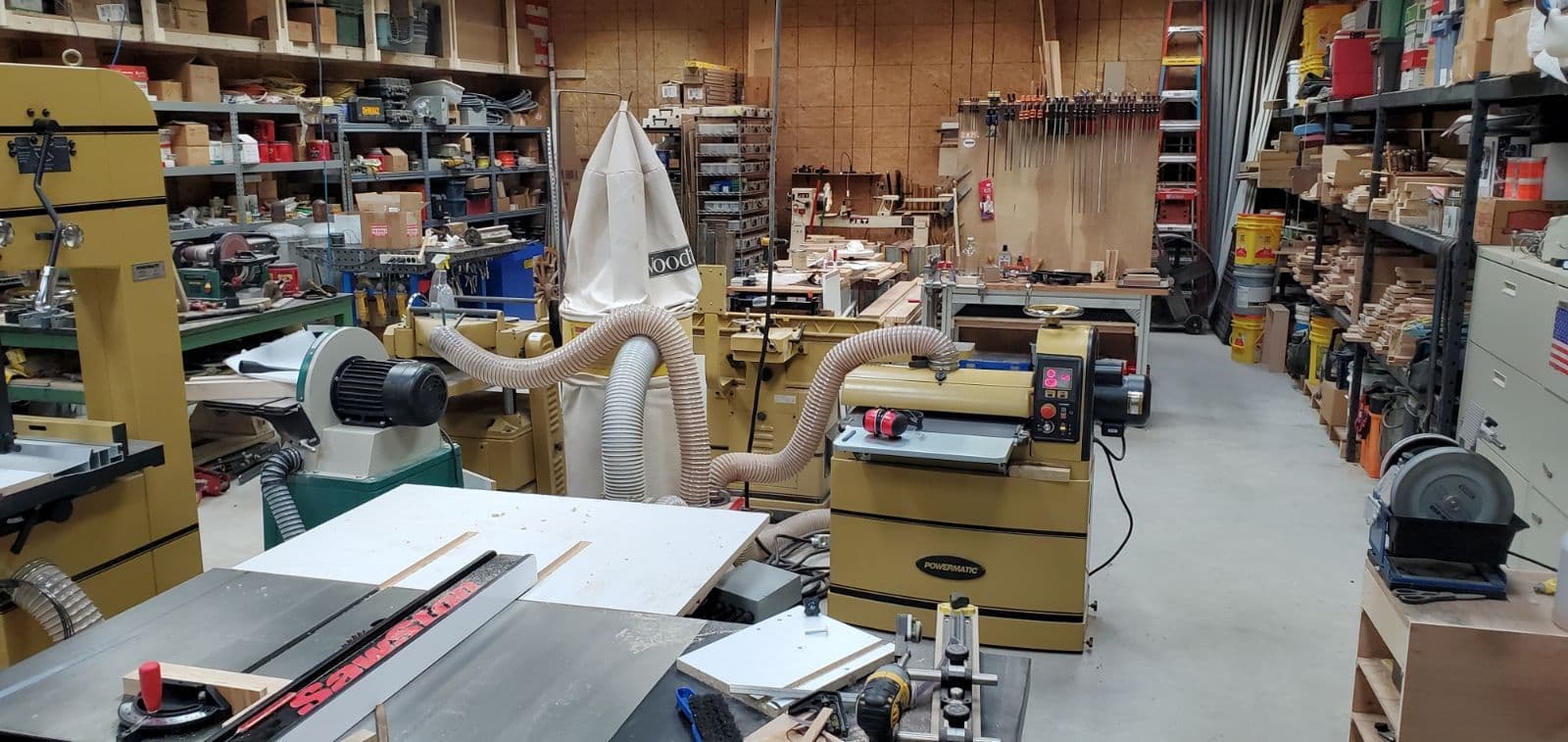
A turning station works best when the space around it is planned as carefully as the machine itself. The AAW organizes workstation setup around space planning, lighting, electrical service, and dust collection. Those four elements shape how safely and comfortably you work every time you step up to the lathe. The basic goal is simple: keep the turning zone clear enough that you can move, see, and react without crowding the machine or yourself.
That means thinking about where the lathe sits relative to walls, walkways, doors, and other shop traffic. You want enough room to handle long stock, enough clearance to move around the headstock and tailstock without twisting awkwardly, and enough access that you are not tempted to balance tools, blanks, or finishing supplies on the bed. If the layout forces you to reach across the machine or sidestep clutter every time you change a gouge, the shop is already working against you.
Set the height for your body first
Lathe height is one of the most overlooked setup choices, but it is one of the most important. AAW materials commonly use spindle center height at or near elbow height, or the elbow pivot, as a starting point for setup. That is not a rigid rule, but it gives you a practical reference that connects the machine to your stance and shoulder position instead of to a random stand height.
The fit matters because turning is not one motion. Spindle work, bowl work, and detail cuts all ask something slightly different from your wrists, elbows, and back. If you stand hunched, you will feel it in your lower back and shoulders; if the spindle sits too high, your hands lose leverage and your cuts can get tense. Lowering the lathe can make it easier to reach a comfortable turning height, and adjustable stands or riser blocks can help you dial in the fit.
That flexibility matters even more if you split time between standing and seated work. The setup should match the turner, not the other way around. A lathe that feels fine for a short spindle session can become miserable during a longer bowl turning run if you have to lean or lift your shoulders to maintain control.
Keep the tools where your hands naturally go
Efficient storage in a turning shop is not about cramming more into the room. It is about keeping gouges, scrapers, sanding supplies, chucks, and finishing materials close enough to use without making the lathe area cluttered. Ergonomic storage matters for exactly that reason: every extra step, bend, and reach adds fatigue, and fatigue leads to sloppy habits.
A good turning station lets you move through the job without thinking about where the next tool is hiding. Keep the tools you use constantly within easy arm’s reach, but off the bed and away from the spinning work. Place rarely used items farther out, and resist the urge to create a catch-all shelf beside the lathe. The cleaner the workflow, the less likely you are to set down a chisel in the wrong place, fumble for sandpaper with one hand, or leave a loose item where it can become a distraction.
Get the light on the cut, not over your shoulder
Good lighting is not a comfort upgrade. It is part of safe turning. The edge of the tool, the profile of the workpiece, and the quality of the surface all become easier to read when light is placed to reduce shadows and glare at the point of cut. If the light is behind you or too far off to the side, you end up guessing at detail work that should be visible at a glance.
A turning station benefits from focused, adjustable light that reaches the bowl rim, spindle shoulder, or bead profile without washing out the scene. That matters most when you are doing fine detail cuts or sanding where surface changes are subtle. A well-lit lathe zone also reduces the temptation to lean in closer than you should, which is one of the quickest ways to invite awkward posture and unsafe reach.
Treat dust collection as part of the workstation
Wood dust is not a side issue. OSHA treats airborne dust from sanding and cutting as a health hazard. It can cause allergic respiratory symptoms, mucosal and non-allergic respiratory symptoms, and cancer. Excessive exposure can irritate the eyes, nose, and throat and impair pulmonary function, while western red cedar dust can cause asthma. NIOSH identifies hard wood dust, soft wood dust, and western red cedar dust as relevant hazards, and the National Cancer Institute links wood dust to a higher risk of cancers of the paranasal sinuses and nasal cavity.
That is why dust collection belongs in the same conversation as lathe placement and lighting. Turning makes fine particulate matter, and the machine does not care whether you are roughing a blank or finishing a rim. Put dust extraction where it can actually catch the material you create, and pair it with shop habits that keep dust from building up around the machine, on the floor, and in the air you breathe.
Never make the face shield optional
Wear a full face shield whenever the lathe is turned on. In AAW safety materials, that belongs in the workstation setup, not a separate safety lecture, because the shield has to be ready before the first spindle starts spinning. If the face shield lives across the shop or behind a pile of accessories, it is already too far away.
An accident at the lathe can happen with blinding suddenness, while respiratory problems can build over years.
Build the station for the long session, not just the first cut
The best turning bench or lathe corner is the one that still feels workable after an hour, not just after the first few cuts. You want tools where your hands expect them, light where your eyes need it, dust control working before the air gets hazy, and lathe height that lets your stance stay balanced instead of braced.
This article was produced by Prism’s automated news system from verified source data, official records, and press releases, then run through automated quality and moderation checks before publishing. The system is built and supervised by the people who set the standards it runs under. Read our full AI policy.
Did this article answer your question?