How to add subtle decoration to a turned bowl without overpowering it
A plain bowl gets memorable when the decoration follows the curve instead of fighting it. A ring of 24 plugs shows how restraint can do the heavy lifting.
A bowl can be technically right and still vanish on the shelf. The trick is not to pile on more surface treatment, but to place the decoration where it supports the shape, lets the rim read clearly, and keeps the form in charge. That is where a simple ring of contrasting plugs, a touch of pyrography, or a restrained textured band can turn an ordinary turned bowl into something worth a second look.
Start with the form, then decide how much ornament it can carry
The clearest lesson in this kind of work is restraint. Decorative turning does not need to mean power carving, elaborate segmented construction, or a surface so busy that the bowl stops feeling like a bowl. Contrasting-wood plugs, pyrography, and textured cuts can all work, but only when they echo the curve and proportion already built into the form.
That idea has a long paper trail in the craft. Fine Woodworking issue 50, from January/February 1985, already pointed toward patterned bowls shaped with a router, and the conversation has only widened since then. The American Association of Woodturners keeps the topic alive in a very practical way: its Annual International Symposium runs three and a half days of demonstrations, panel discussions, and special events, and the 2026 virtual symposium schedule includes branding and pyrography, roped bowl design, and other surface enhancement techniques. The message is plain enough. Decoration is not a side show in woodturning, it is one more way to finish a form cleanly.
A small maple bowl with room for one good idea
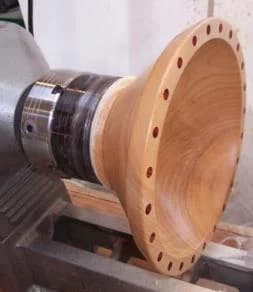
The strongest example here starts with a modest bowl, not a showpiece. The turner says he only makes about 12 to 15 bowls a year, and many of those are small test pieces or student examples, so the project comes from real shop habit rather than design theory. The bowl itself was rough-turned and cored maple, about 10 inches in diameter, and the decorative plan was simple: 24 contrasting dots around the rim.
That detail matters because it shows how a restrained idea can still feel intentional. The rim was left a little wider than usual, giving the decoration space without crowding the lip. The bowl had also gone a bit warped and out of round while it sat, which is not unusual for a cored piece waiting for its second trip to the lathe. Instead of treating that movement as a problem, the process used it as part of the setup for a careful, final return to symmetry.
Use the second mounting to protect the first impression
The mechanics of the re-turning are just as important as the decoration itself. The bowl went back on the lathe with a rim chuck and a cup-shaped live center for extra support, then was trued up so the foot could be finished safely before the rest of the bowl was brought to final form. That sequence keeps the work stable while you correct the outside and interior, and it is a reminder that the best decoration often depends on the least glamorous part of the job: getting the bowl mounted securely enough to do precise work.
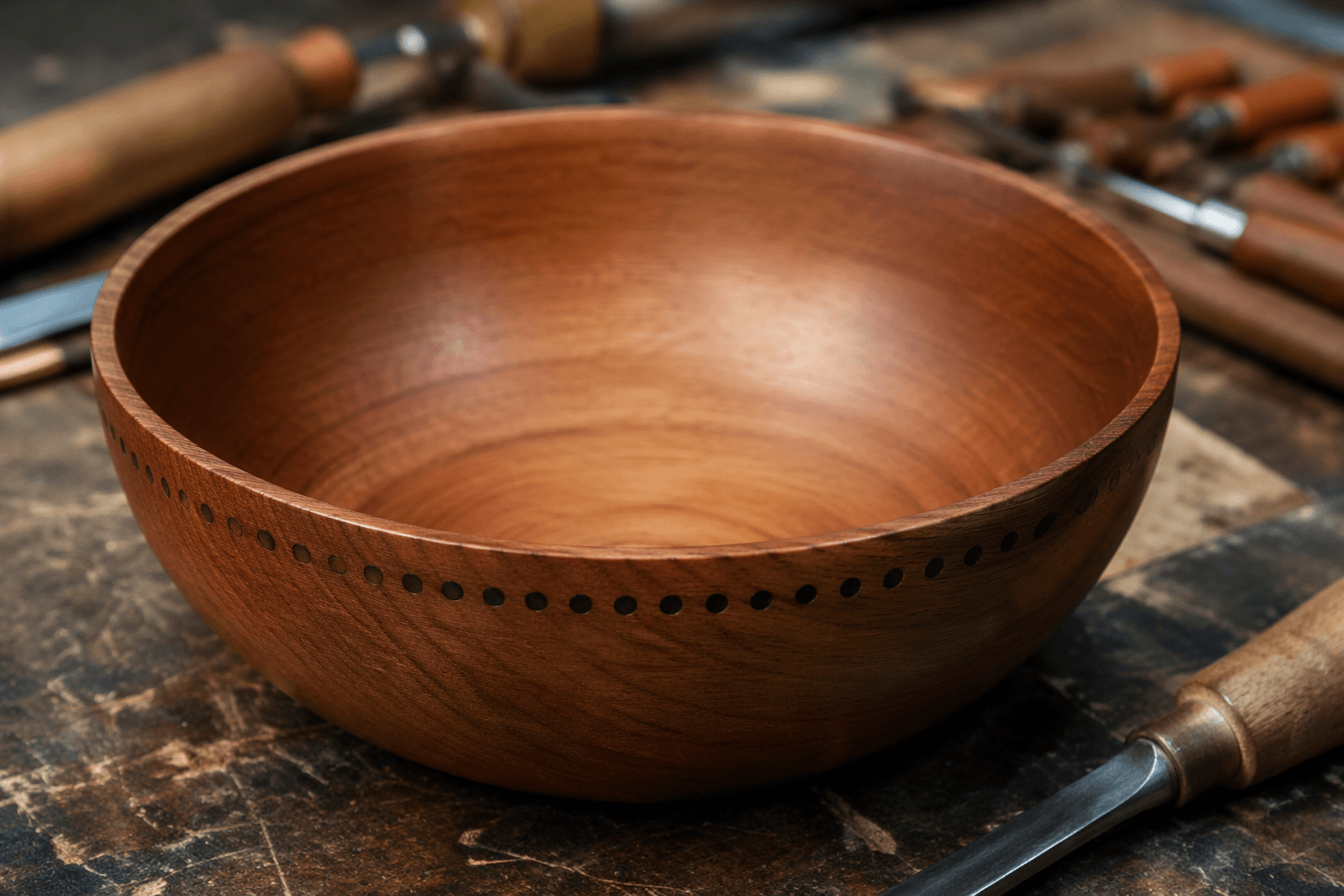
The bowl was also indexed at the maximum indexing positions on a Nova DVR 3000, which made the spacing possible. On a piece like this, the pattern has to read as deliberate, not merely repeated, and even spacing is what makes 24 dots feel calm instead of fussy. When the setup is consistent, the decoration sits on the rim like a quiet decision rather than a rescue operation.
Make the plugs, then let the rhythm do the work
The dots themselves came from a practical source. The contrasting wood was a reddish piece salvaged from a scrapped-out crate, about 3/4 inch thick, and a plug cutter was used to make enough plugs for all 24 holes. The holes were drilled with a Forstner bit in a Oneway Drill Wizard, then each plug was glued in as the work progressed.
That last part is the kind of shop detail that makes the method usable, not just attractive. The author says he uses Titebond II almost exclusively, and the workflow keeps the pace steady: drill, fit, glue, move to the next position. Once the ring is complete, the contrast reads as a thin accent band rather than a loud pattern, which is exactly why it works on a bowl that is already well proportioned.
Other ways to keep decoration in scale
The same principle can carry to other bowl surfaces without changing the character of the piece. A narrow burned line, a small field of texture near the foot, or a modest roped band can all add interest if they stay secondary to the silhouette. The current AAW symposium programming makes that clear, because branding, pyrography, roped bowl design, and surface enhancement are being treated as active parts of the turning conversation, not special effects reserved for one-off showcase pieces.
That is what makes subtle decoration such a useful next step. It gives a bowl a point of view without forcing it to compete with itself, and it lets the rim or foot do the talking while the ornament stays in support. A plain form does not need to be buried to be memorable, and when the decoration is chosen with the bowl in mind, even 24 small dots can be enough to wake the whole piece up.
This article was produced by Prism’s automated news system from verified source data, official records, and press releases, then run through automated quality and moderation checks before publishing. The system is built and supervised by the people who set the standards it runs under. Read our full AI policy.
Did this article answer your question?