Illinois woodturner Mark Taylor turns art-school vision into sculptural forms
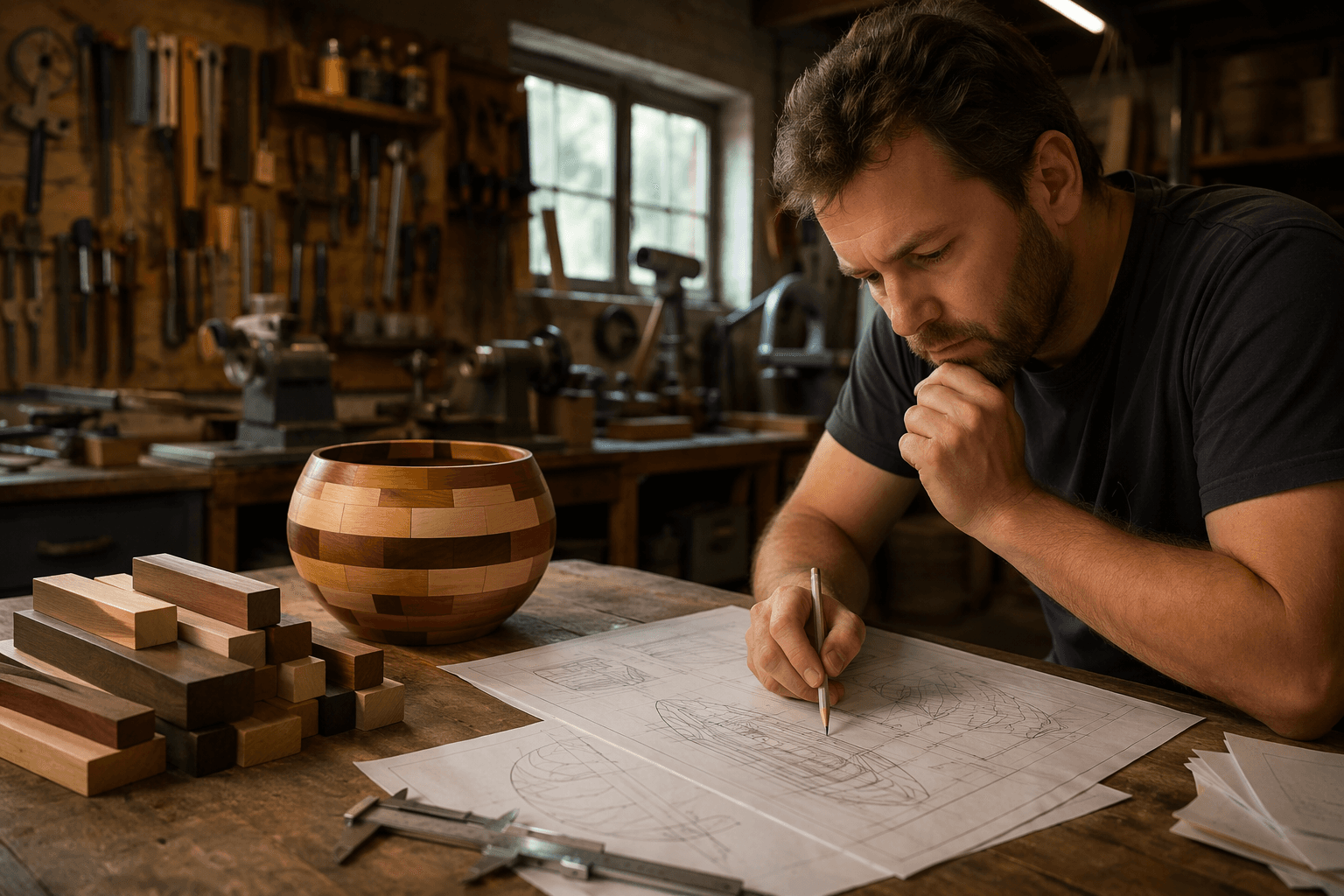
Mark Taylor treats the blank like a drawing problem first, and that habit turns subtraction at the lathe into sculpture, not just shape.

Seeing the form before the cut
Mark Taylor treats the blank at the lathe like a drawing problem first. His background in figure drawing, furniture-making, and study at the School of the Art Institute of Chicago taught him to read line, balance, restraint, and proportion before a tool ever meets the wood.
That is the thread running through his work under the Treverk Woodturning name. Taylor’s forms do not feel like they are chasing ornament for its own sake. They feel considered, as if the profile, the negative space, and the way light breaks across a curve were already settled in his head long before the shavings started to fall.
Why sketching matters before turning
Taylor’s path is a useful reminder that strong turning rarely begins with the gouge. It begins with the eye. The habits he absorbed in art school and furniture work still show up in the way he approaches a vessel or sculptural form, where the silhouette matters as much as the surface and where a small change in proportion can shift a piece from ordinary to memorable.
A few habits from that way of thinking translate directly to the lathe:
- Sketch the profile first, even loosely, so you can see the arc of the piece before you commit to it.
- Watch the empty space inside and around the form, not just the wood itself.
- Let restraint do some of the work, especially when the shape is already saying enough.
- Think in terms of relationships, rim to body, stem to base, curve to flat, rather than isolated details.
That is where Taylor’s work becomes a lesson in design thinking, not just technique. The sketch is not a promise that the wood must obey. It is a starting point for a conversation.
From furniture legs to sculptural turning
Taylor’s shift into woodturning came through furniture, specifically through turning legs. Once he began working that way, the lathe offered something cabinetmaking did not: a more direct route to form, structure, and negative space. Instead of building around the shape, he could remove material until the shape itself emerged.
That change matters because it explains why his work now leans sculptural. Treverk describes his pieces as one-of-a-kind hand-turned vessels and sculptural forms, and that is exactly the language the work invites. The pieces are not trying to disguise the process. They wear the evidence of turning as part of their identity.
Taylor’s own understanding of craft sharpens that point. His Treverk bio says he learned that mechanics can be taught, but creativity cannot be transferred. For turners, that distinction is the real challenge at the bench. Tool control can be taught, but deciding where to stop, where to leave thickness, and where to let a void open up is the artist’s judgment call.
Subtraction, grain, and the refusal of a fixed plan
Taylor describes his process as one of subtraction, and that word is doing a lot of work. In his hands, turning is not about forcing a preconceived image onto the blank. It is about taking material away until the wood reveals what it can become. The result is less about control than collaboration.
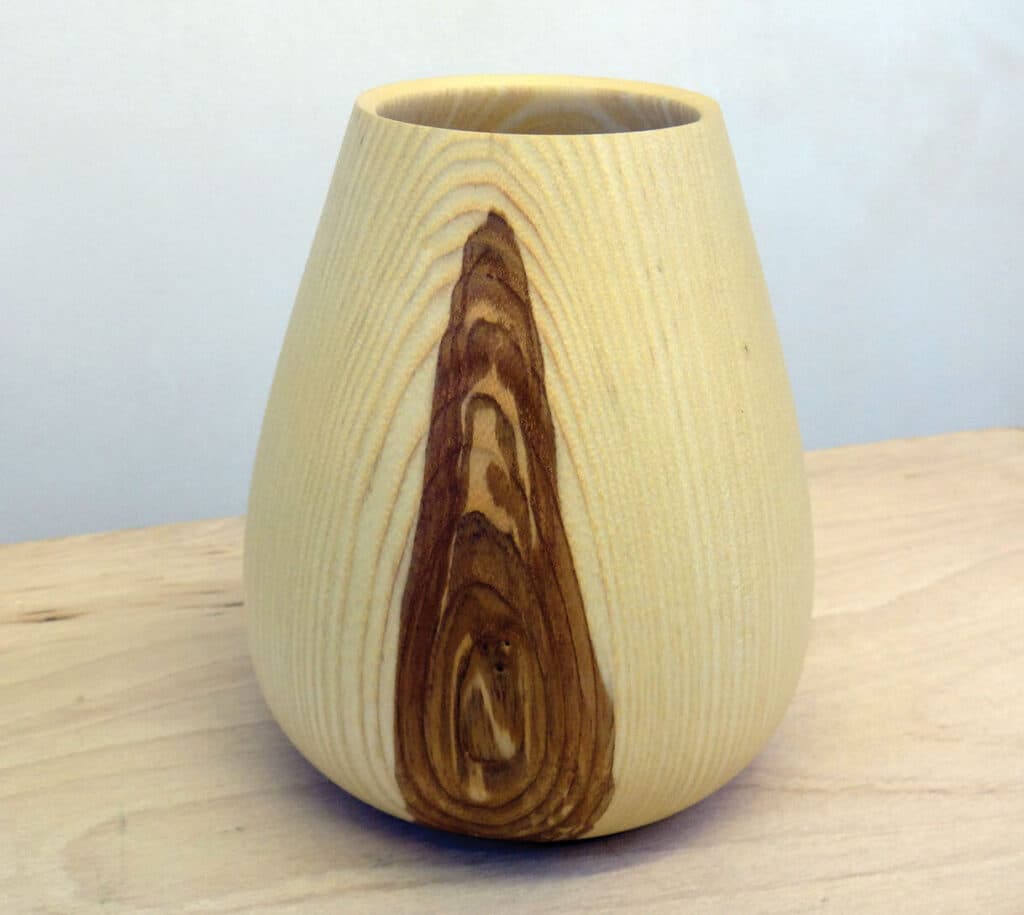
That approach also makes room for the realities of the material itself. Grain, burls, fractures, and other natural flaws are not just defects to be minimized. They become part of the composition, sometimes even the thing that redirects the final form. The wood resists a fixed plan, and Taylor seems comfortable letting that resistance influence the outcome.

For woodturners, that is one of the most transferable lessons in his work. A piece becomes stronger when the maker can hold two ideas at once: a clear intention and a willingness to change course. The blank may look promising in the rough, but the final profile often improves when the turner respects what the wood is actually offering.
Treverk as a brand and a point of view
Treverk Woodturning gives Taylor’s work a name that fits the philosophy. The brand was founded in 2018, and its name comes from the Norwegian words “tre” for wood and “verk” for craft. That pairing matches the way his practice bridges material knowledge and artistic ambition.
The branding is not a separate layer pasted onto the work. It reinforces the same idea that runs through the forms themselves: this is woodturning rooted in making, but not limited by utility. The emphasis on hand-turned vessels and sculptural objects suggests a practice that values the lathe as a site of design, not just production.
That distinction should feel familiar in a community where the line between craft and art has always been in motion. Taylor’s work lands in the space where those categories overlap. It is still unmistakably woodturning, but it is also aiming for the kind of visual seriousness that belongs in contemporary fine-art settings.
A bigger public stage in 2026
Taylor’s next public steps point in that direction. He will show at the Kalamazoo Institute of Arts Fair on June 5-6, 2026, in Bronson Park in downtown Kalamazoo. The fair is the 75th annual edition, it is free to attend, and the institution expects more than 15,000 visitors, with up to 135 juried fine artists taking part.
That scale matters. A fair with that kind of audience puts turnings, vessels, and sculptural forms in front of people who may not be looking for them specifically, which is often how a maker’s language expands. Taylor is also slated for his first ArtPrize entry later in the summer, followed by a solo exhibition at Glen Oaks Community College in the fall. Taken together, those appearances mark a move from the studio into more visible fine-art territory.
For woodturners, that shift is worth watching. It shows how a practice often associated with bowls, boxes, and functional forms can carry into exhibitions where concept, presentation, and form are front and center. It also suggests that a turner who thinks like a drafter, furniture maker, and sculptor can claim space far beyond the usual craft fair lane.
Part of a larger turning community
Taylor’s work may read as highly individual, but it sits inside a broader network of woodturning culture. Chicago Woodturners describes itself as a nonprofit dedicated to woodturning education and says it is a chapter of the American Association of Woodturners. That kind of institutional support matters because it shows how practices like Taylor’s are nourished by community knowledge, demos, and shared language.
That larger context helps explain why his work feels both disciplined and exploratory. He is not turning in isolation from the traditions around him. He is building on a community that understands the lathe as a place where skill, curiosity, and design judgment all have to meet.
Taylor’s story comes back to the same starting point: seeing the form before the cut. That is the art-school habit that still shapes his woodturning, and it is the reason his pieces feel like they were drawn into being as much as turned.
This article was produced by Prism’s automated news system from verified source data, official records, and press releases, then run through automated quality and moderation checks before publishing. The system is built and supervised by the people who set the standards it runs under. Read our full AI policy.
Did this article answer your question?