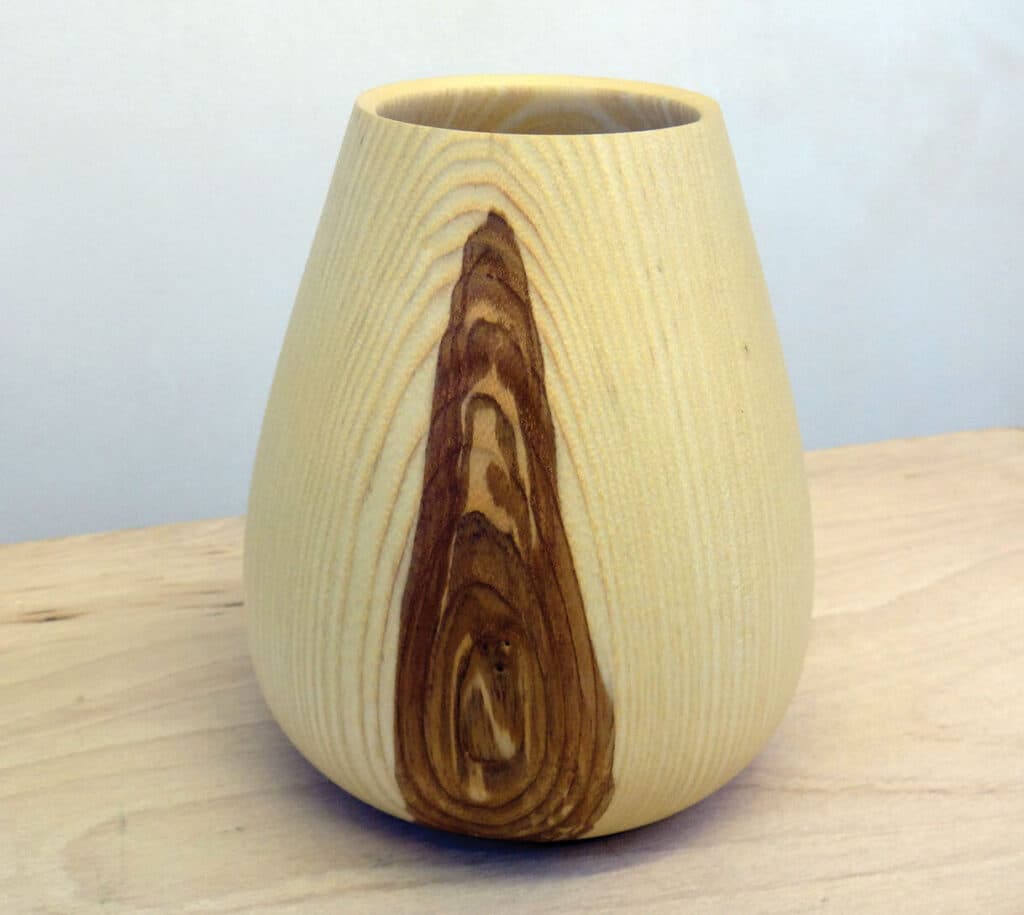
Mystery log turns into golden mulberry hollow form
A dark log that looked like walnut flashed bright yellow at the lathe, and the surprise payoff was a golden mulberry hollow form with real lesson value.

Reading the blank before you commit
A mystery log only earns its keep when the wood starts telling the truth at the lathe. In this case, a dark brown chunk pulled from the pile first read as walnut, then changed the story the moment the cuts began and the shavings turned bright yellow. That single color shift is the kind of clue turners live for, because it can separate an ordinary rough-out from a piece with real figure, character, and a finish worth chasing.
The finished result, a low-profile hollow form with a textured rim and swirling grain, shows why the gamble paid off. Once dried and finished, the wood reportedly took on a beautiful golden color, and that final shift is part of the appeal of mulberry: it does not always announce itself clearly at the start, but it often rewards the turner who pays attention to the material instead of forcing a preset idea onto it.
Why mulberry can hide in plain sight
Mulberry is one of those woods that can confuse even a careful eye. The Wood Database notes that it can resemble osage orange, and black locust can look similar as well, which helps explain why a mystery log might be misread as walnut until fresh shavings give the game away. That overlap in appearance makes species identification part science, part shop instinct, and part patience.
The species history adds another layer. US Forest Service material says white mulberry is native to China and was introduced to North America in the 1600s, with Virginia even requiring male residents to plant at least four white mulberry trees in 1624 to support a silk industry. That long North American history matters because mulberry is not just an oddball blank in the pile, it is a wood with a deep and complicated backstory that has traveled through colonial planting schemes, landscape use, and now the turning shop.
The clues that tell you to keep turning
The best part of the story is not just that the wood turned out to be mulberry. It is how the clues lined up once the first cuts were made. Dark bark and a brown exterior can suggest one species, but fresh shavings, heartwood color, texture, and the way the grain opens under the tool give you a much better read on whether the blank deserves more time.
When you face a mystery log, these are the details that matter most:
- Shaving color: Bright yellow shavings can be the first sign that the interior is nothing like the outside shell.
- Grain behavior: Swirling grain is a gift in a hollow form, especially when the shape stays low and lets the figure move around the body.
- Texture and density: Mulberry is described in woodworking references as turning, gluing, and finishing well, which lowers the risk when you decide to keep going.
- Color shift after drying: Mulberry heartwood starts bright golden or golden brown and darkens with age and light exposure, so the blank you rough out today may finish very differently after it dries.
- Risk tolerance: A mystery log is worth more when you are willing to follow the wood’s clues instead of demanding a specific species ID before you start.
That last point is the real turning lesson here. The maker did not need certainty at the first cut, only enough evidence to keep exploring. When the shavings turned yellow, the project stopped being a guessing game and became a controlled investigation.
Why a hollow form suits the wood
Hollow forms are a natural fit for material with this much character. In turning, a hollow form is hollowed to a relatively uniform wall thickness, and that format is designed to showcase grain, voids, and interior shape rather than hiding them. The American Association of Woodturners and other turning guides treat hollow forms as a way to emphasize unusual figure, and this mulberry piece fits that logic perfectly.
That same community experience shows how flexible the form can be. One member example described a mulberry hollow form at 4 inches by 4 inches, finished with Myland’s, and noted that thick walls were enough because there was no real need to hollow it more. That is a useful reminder that a hollow form does not have to be aggressively thin to succeed. Sometimes the right move is to let the profile, the wall mass, and the grain do the work.
The low-profile shape in this project reinforces that point. A flatter silhouette gives the textured rim and the grain movement room to breathe, while the hollowing keeps the form light and focused. The design does not fight the wood’s natural personality, it gives it a stage.
Why the final color matters so much
Mulberry’s color story is a big part of the payoff. Woodworking references describe the heartwood as starting out bright golden or golden brown before darkening over time toward deeper brown or reddish-brown tones, especially with light exposure. That means the golden finish on this piece is not accidental, it is part of the species’ visual arc.
For turners, that creates a design decision worth taking seriously. If you want the fresh golden look, you need to understand that the wood may age into a darker register later. If you prefer deeper warmth, you can lean into the aging process and let time do some of the finishing for you. Either way, the final look is not just about the last sanding pass, it is about anticipating how the wood will continue to change after it leaves the lathe.
That is what makes this project so satisfying to watch and so useful to study. The piece begins as an unidentified chunk in the log pile and ends as a golden hollow form with real presence. The surprise is the hook, but the lesson is the craft: grain, color, texture, and a sensible appetite for risk are often enough to tell you when a mystery blank is worth the effort, and mulberry is one of the best reminders that the lathe can still turn uncertainty into something unmistakable.
This article was produced by Prism’s automated news system from verified source data, official records, and press releases, then run through automated quality and moderation checks before publishing. The system is built and supervised by the people who set the standards it runs under. Read our full AI policy.
Did this article answer your question?