Jack Mack turns ash burl into a delicate decorative bowl
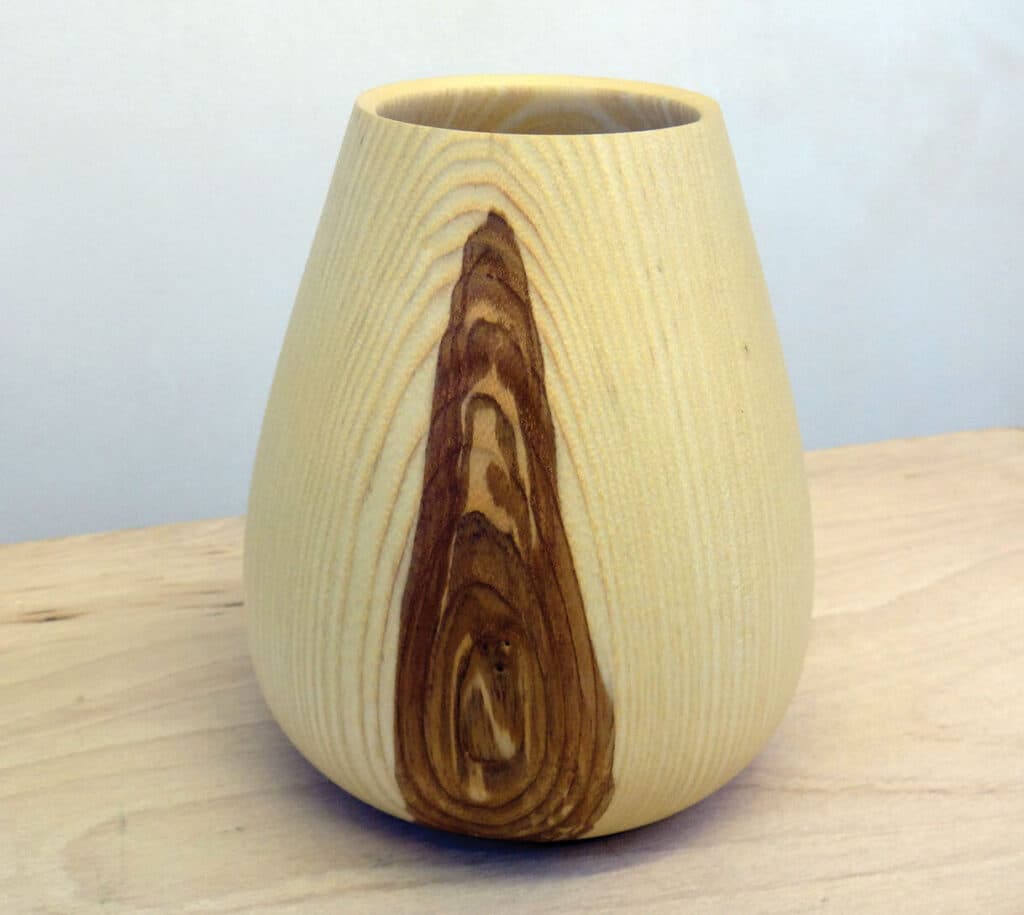
Jack Mack makes ash burl look approachable, letting wild figure and a clean bowl form do the heavy lifting.
A dramatic blank made simple
Jack Mack’s The Birch Knot works because it treats ash burl like a showpiece without turning the process into a stunt. Posted on May 8, 2026, the video shows a woodturning lathe being used to make a delicate, decorative bowl, and that framing tells you everything about the project’s priorities: this is about form, figure, and finish, not utility. The page had roughly 7,307 views shortly after posting, which fits the channel’s steady rhythm of visually striking turns presented in a way that feels watchable rather than overworked.
That balance is a big part of the appeal. Jack Mack Woodturning was showing about 498K subscribers and around 400 videos, and the channel bio makes the aesthetic clear, with a focus on unique wood paired with epoxy resin to create open and closed form vessels. Even the title, The Birch Knot, sells the idea that the wood itself is the star. When a blank already carries that much visual noise, the smartest move is often the simplest one: let the material speak and keep the silhouette clean.
Why burl changes the game
Burl is one of those woods that rewards restraint because the figure is already doing half the work. The U.S. Forest Service defines a burl as a tree growth where the grain has grown in a deformed manner, often as a rounded outgrowth filled with small knots. Texas A&M Forest Service adds that burl grain can be wavy, curly, or bird’s-eye, and that burls often form as a response to stress in the tree. In other words, the blank is not just pretty, it is the result of unusual growth, which is exactly why it can look so dramatic on the lathe.
That same wild grain is also why burl demands respect. Awoodturning forum discussion notes that burls can reveal hidden faults and require careful attention to the final grain orientation and structure, which is the kind of practical warning every turner recognizes after a few sketchy blanks. Penn State Extension says tree burls produce unique grain patterns that are valuable to specialty woodworkers and artists, and that is the sweet spot here: you are not forcing the wood into something ordinary, you are shaping it just enough to keep the best figure intact. The more chaotic the surface looks, the more important it becomes to read the blank before you make the first meaningful cut.
How to keep the process accessible
The best thing about a piece like this is that it does not need a complicated production story to feel advanced. A decorative bowl made from ash burl can look museum-level from the outside while the actual turning stays straightforward: establish the form, keep the wall treatment controlled, and avoid burying the figure under fussy embellishment. When the wood already carries knots, curl, and movement, a simple bowl profile is often the strongest choice because it gives the grain room to breathe.
A practical burl workflow usually comes down to a few disciplined habits:
- Study the blank before you commit to the shape, especially where the grain changes direction and where hidden defects may sit.
- Favor measured cuts over aggressive shaping, because burl rewards patience and punishes impatience fast.
- Keep the outline clean so the figure stays readable instead of getting lost in an overdesigned silhouette.
- Let the most interesting grain run where the eye will naturally land, especially across the rim and the belly of the bowl.
- Accept irregularity as part of the design, because with burl, perfect symmetry can actually flatten the character.
That last point matters more than people admit. A delicate decorative bowl works because it looks intentional, not because every curve is mathematically perfect. The visual drama is already in the ash burl, and the turner’s job is to frame it, not compete with it.
Why Jack Mack’s presentation lands
The channel’s format matters almost as much as the wood choice. Jack Mack Woodturning asks viewers to like, share, and subscribe, which is a familiar signal that this is part of an ongoing publishing cadence, not a one-off shop experiment. That regular rhythm helps the work feel approachable, because you are not watching a heavily edited spectacle so much as a repeatable style of making, one that can turn unique material into bowls, vases, and hollow forms without losing the sense that the craft is actually doable.
That is also where the episode’s title and the channel’s broader identity line up neatly. The Birch Knot sounds like a piece built around surprise and natural pattern, and the bio’s emphasis on unique wood and epoxy resin reinforces the idea that the channel favors standout visuals over plain utility. For turners, that is useful because it shows how a dramatic blank can be presented without overexplaining every move. The process stays accessible, the result looks special, and the wood gets to carry the spectacle.
What this kind of bowl really teaches
If you are chasing that same effect at the lathe, the lesson is not to make the project harder than it needs to be. Ash burl already brings the irregular grain, the knots, and the stress-driven figure that make a turned bowl feel alive, so the cleanest wins often come from holding back. That is the real trick Jack Mack’s video underscores: when the blank is visually loaded, a straightforward presentation can make the whole project feel far more achievable.
And that is why The Birch Knot works so well. The bowl does not need extra drama, because the ash burl already has it, and the simplest turning choices are the ones that let that fact land.
This article was produced by Prism’s automated news system from verified source data, official records, and press releases, then run through automated quality and moderation checks before publishing. The system is built and supervised by the people who set the standards it runs under. Read our full AI policy.
Did this article answer your question?