negative rake scrapers explained: smoother finishing cuts for woodturners
A negative rake scraper shines where gouges leave ridges and sanding starts to balloon, giving turners a cleaner finish on difficult grain and end grain.

A negative rake scraper has a secondary bevel ground on its top face. The American Association of Woodturners calls it easier to use than a conventional scraper while leaving a smoother surface.
The trick is not that it turns scrapers into gouges. It changes what a scraper is good for. Instead of asking the tool to hog off material, you are asking it to whisper over the workpiece and erase what the shaping tools left behind.
Where it belongs in the turning sequence
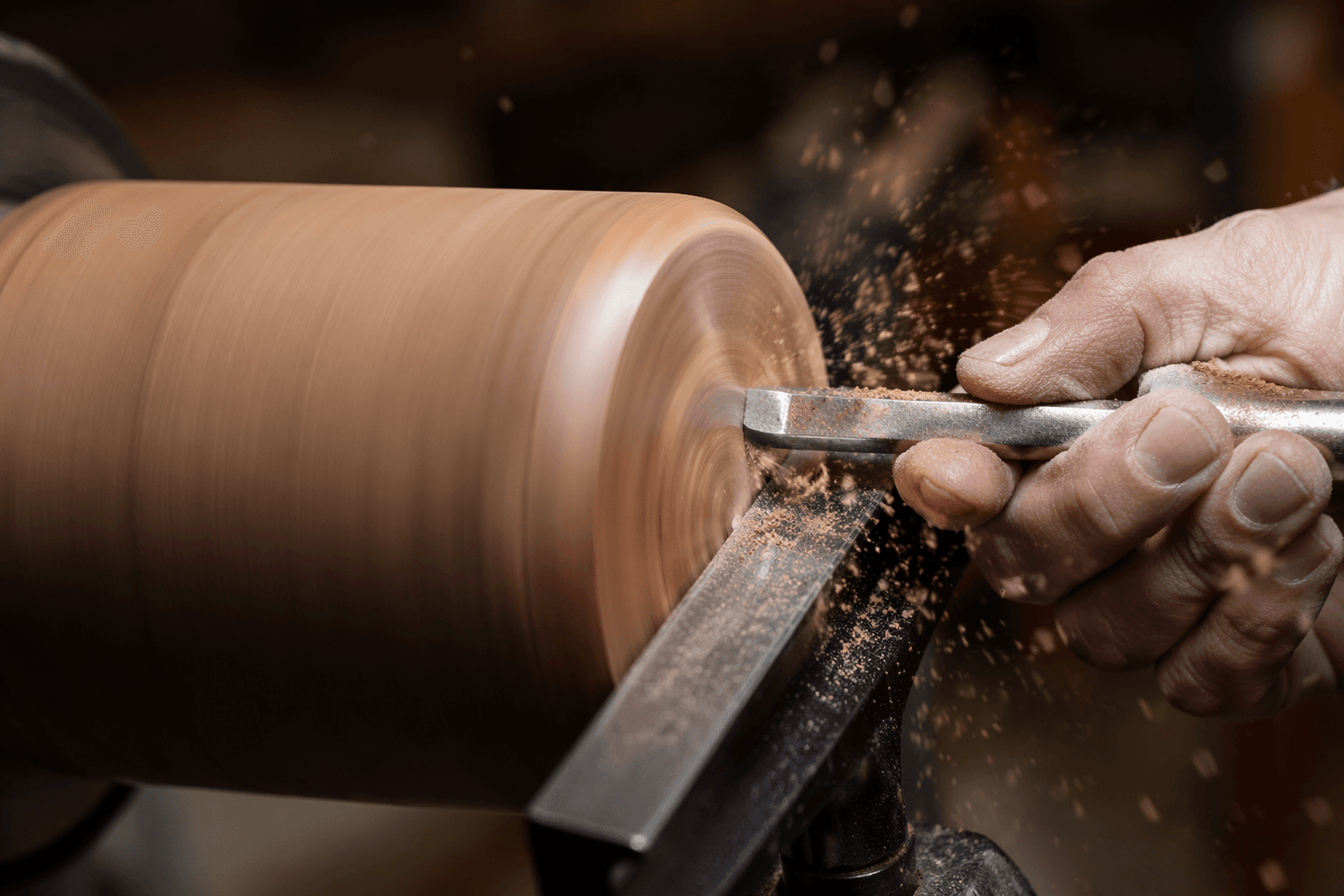
Negative rake scrapers are finishing tools, not roughing tools. They come in after the bowl gouge or spindle gouge has done the heavy shaping, when the goal is to blend ridges, tame torn grain, and reduce the amount of sanding you will need later. Richard Raffan has pointed out that, when used properly, scrapers can limit sanding and clean up ridges left by gouges.
Think of the sequence this way:
- The bowl gouge establishes form and removes stock quickly.
- The scraper, especially a negative rake scraper, tidies the surface and softens the last tool marks.
- Sanding becomes a refinement step, not a rescue operation.
That difference matters most on the parts of a bowl or hollow form where the grain fights back. On end grain and on difficult transitions, the negative rake scraper gives you a calmer cut than a standard scraper usually does.
Why the edge geometry matters
The geometry is what separates this tool from the older, nearly straight-on idea of a scraper. In Popular Woodworking’s terms, most turning tools are bevel-supported cutters, while scrapers are presented more directly to the wood, with little or no bevel support at the cut. A negative rake scraper keeps that scraper character, but the extra top bevel changes the attitude of the edge and reduces how aggressively it meets the wood.
Fine Woodworking uses a practical grind example: a 40-degree bottom bevel and a 20-degree top bevel, creating a 60-degree included angle. It helps the tool leave very fine shavings instead of choppy ones, and it gives the edge enough support to smooth small imperfections rather than dig them in deeper.
Woodturning Online ties the effect to a reduced impact angle and some of the impact energy, which is why the tool can be used more horizontally than a standard scraper without the same harshness.
The places it earns its keep
The negative rake scraper is at its best where the wood itself is asking for a gentler touch. By Spring 2006, the American Woodturner archive was discussing the idea as a finishing technique and linking it to hard woods and difficult materials such as ivory and blackwood.
In day-to-day work, that means it earns its keep on:
- torn grain that refuses to sand out cleanly
- end grain areas that fuzz or chip under a harsher edge
- shallow ridges left by a gouge that need blending before finish
- final cleanup cuts on dense, stubborn woods
A negative rake round nose scraper is especially useful here because it is similar to a regular round nose scraper but carries that extra top bevel.
How it compares with a standard scraper
A standard scraper still has a job, and it is not the same job. It can be useful for faster surface removal and for situations where you do not need the refined finish that a negative rake edge can deliver. But the more directly the edge meets the wood, the more likely the cut is to feel abrupt, especially if the grain is changing direction or the piece is already close to final size.
The negative rake scraper trades that aggression for control. In the AAW’s wording, it is easier to use because the edge is less likely to bite hard when it meets the wood. The result is a smoother surface and a better chance of going to finish with fewer abrasive steps.
What the surface looks like when it works
The surface-quality improvement is not about glossy miracle cuts or dramatic stock removal. It is about the small, practical gains that matter when a piece is near done. Fine shavings, fewer ridges, less torn grain, and sanding that starts from a better place all add up to a cleaner final result.
This article was produced by Prism’s automated news system from verified source data, official records, and press releases, then run through automated quality and moderation checks before publishing. The system is built and supervised by the people who set the standards it runs under. Read our full AI policy.
Did this article answer your question?