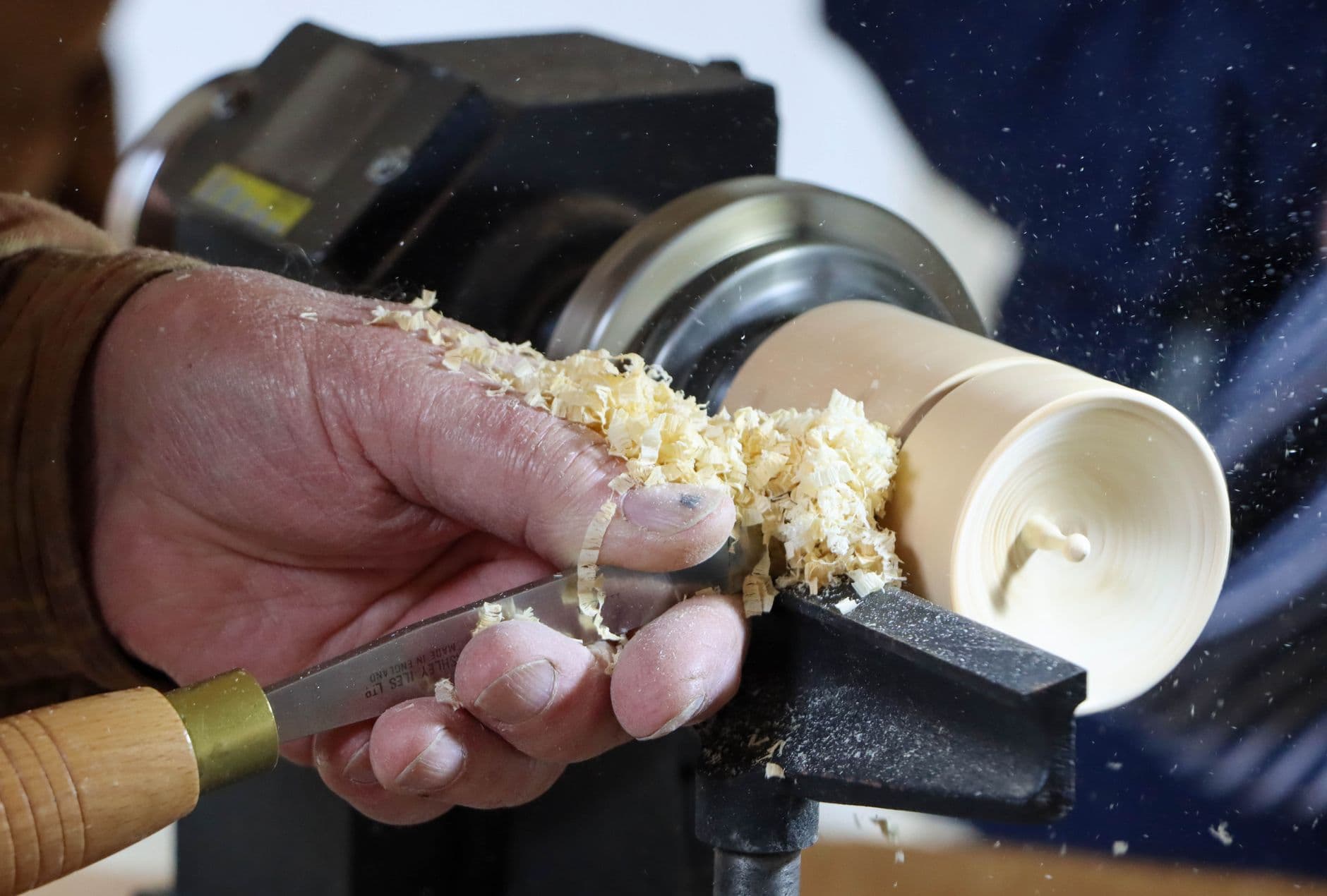
NOVA guide maps lathe thread compatibility for woodturners
The biggest compatibility trap in turning is assuming one chuck fits every lathe. Spindle threads, Morse tapers, and inserts decide what actually mounts.

A lathe accessory fits only when the headstock thread, the tailstock taper, and the chuck insert all line up. Lathe compatibility is a set of interfaces, not a universal standard.
Threads decide the headstock fit
Teknatool’s NOVA insert and adaptor system mounts a NOVA chuck to virtually any lathe, with more than 100 spindle thread sizes covered, and every genuine NOVA insert or adaptor carries a 2-year full replacement warranty. The insert screws into the back of the chuck first, then the chuck mounts to the lathe spindle.
Direct-thread chucks cannot be converted to an insert system. If you buy the wrong format, the replacement path starts over with the correct spindle size.
The thread chart includes 1 x 8 TPI right-hand threads common on North American lathes, 3/4 x 16 right-hand threads, M33 x 1.5 right-hand threads used on some UK and European machines, 1 x 10 TPI right-hand threads, and 3/4 x 14 right- and left-hand British Standard Pipe threads. Less common inserts may be made on demand, and an unthreaded blank up to 28 mm can be custom-threaded by a qualified machinist if the exact size is not available.
Two lathes that look nearly identical can still demand different chucks, faceplates, or adapters. Oneway’s spindle-adaptor catalog lists M33 x 3.5 conversions to 1 1/2-8 TPI, 1 1/8-8 TPI, 3/4-16 TPI, 7/8-12 LH 55 degree, 1-12 TPI, 1-3/8-8, and 2-1.5, with each adaptor priced at $88.49. Woodcraft also sells direct-thread chucks in exact spindle sizes such as 1 x 8 TPI.
Morse taper is a different language
The tailstock side uses Morse taper, not spindle threads. Oneway’s 1224 lathe manual lists both the spindle taper and the tailstock taper as number 2 Morse taper, while also listing a 1 inch by 8 TPI right-hand spindle thread and a 3/4-16 TPI right-hand backthread for vacuum attachments. Those are separate interfaces on the same machine, and each one has to be checked on its own.

The #2 Morse taper is common in lathes, but it still needs to be verified on each machine. Woodturner.org warns that the taper still needs to be verified on each machine. A live center or alignment tool that looks right can still refuse to seat properly.
Teknatool’s NOVA Acruline 2MT is a double-ended 2 Morse taper that can be fitted into both the headstock and tailstock spindles to check and correct alignment.
Woodcraft’s Oneway #2 Morse taper live center has a removable center point, and its bull-nose and full-point cones are threaded 3/4-10 TPI. The reversible bull-nose cone can self-center round or square spindles up to 3 inches. Woodcraft also sells a separate #1 Morse taper live center. #1 and #2 are not interchangeable.
What to verify before you buy
If you are buying a chuck, live center, faceplate, or adapter, work through the fit in the same order the hardware does.
1. Check the spindle thread first.
Find the headstock thread size and direction, such as 1 x 8 TPI right-hand, 3/4 x 16, or M33 x 1.5 right-hand. If your lathe uses a direct-thread accessory, match it exactly. If you want an insert-style chuck, confirm that the insert matches the spindle thread before the chuck leaves the box.
2. Confirm whether the chuck uses inserts or direct thread.
Insert systems, like NOVA’s, are built for flexibility across many lathes. Direct-thread chucks are not convertible into insert systems.
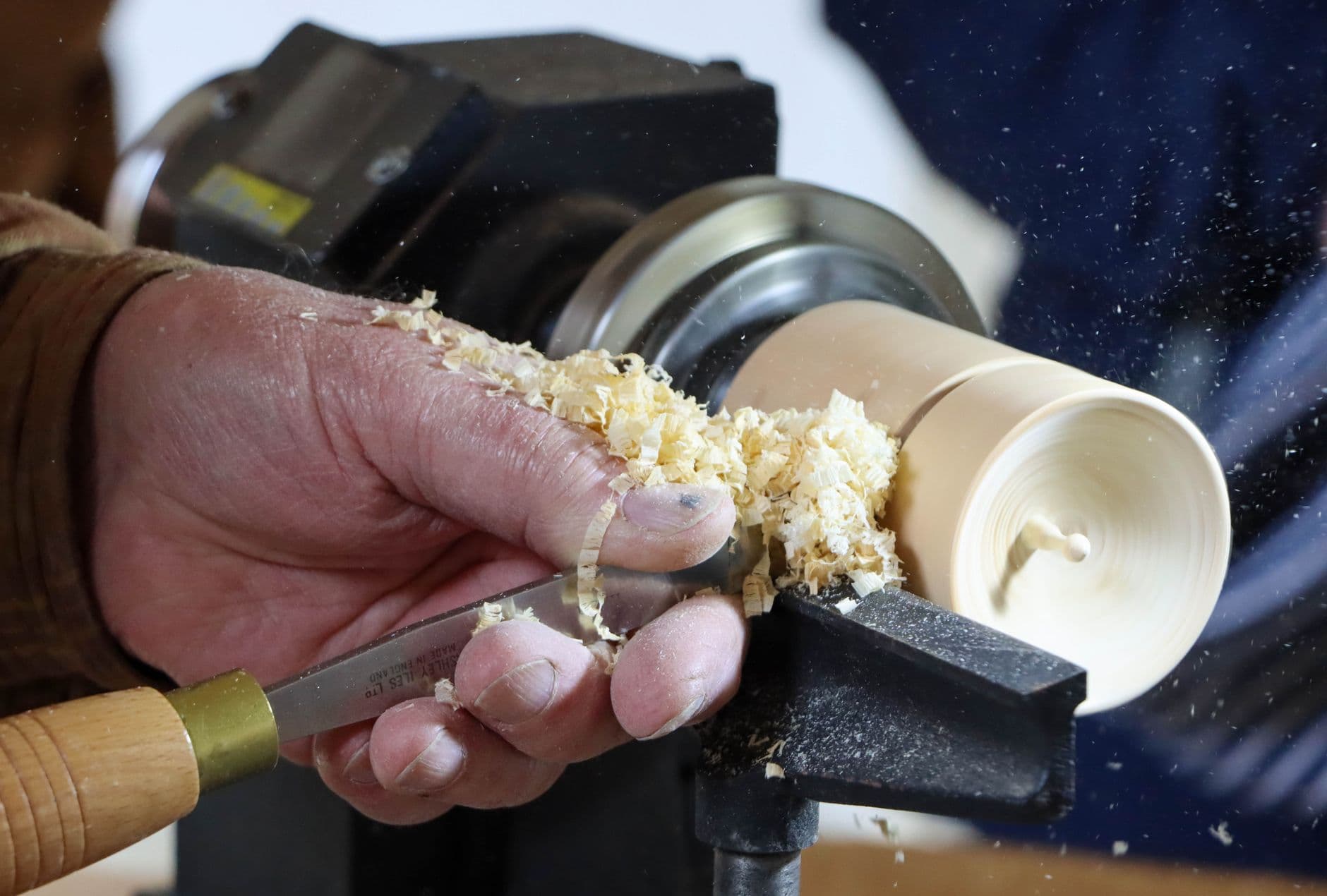
3. Verify the tailstock taper by number, not by feel.
A live center, drive center, or alignment accessory has to match the Morse taper size. #2 is common, but not universal, and #1, #2, and #3 are different interfaces.
4. Match the accessory to the job, not just the spindle.
A faceplate, a chuck, a live center, and a vacuum attachment may all use different attachment logic on the same lathe. Oneway’s 1224, for example, combines a 1 x 8 spindle thread with a 3/4-16 backthread for vacuum work, so the back of the spindle matters too.
5. Keep the unusual standards on your radar.
If you are working across North America, the United Kingdom, and Europe, expect to encounter 1 x 8, 3/4 x 16, M33 x 1.5, 1 x 10, and British Standard Pipe variants. If a size is rare, custom threading may still be possible, but only if you know exactly what blank or adaptor you need.
Modern lathes still sit inside an old hardware world
Oneway’s 1640 lists an M33 x 3.5 right-hand spindle thread, a #2 Morse taper spindle, a #3 Morse taper tailstock, 48-position indexing, and forward/reverse operation with two pre-programmed accel/decel settings. Laguna’s REVO 12/16 manual also uses a double-threaded 1 x 8 TPI spindle.
The American Association of Woodturners describes woodturning as an ancient craft. For many hundreds of years leading up to the Industrial Revolution, the foot-powered lathe was the only woodworking machine in common use. Turning between centers is fundamental to spindle work.
This article was produced by Prism’s automated news system from verified source data, official records, and press releases, then run through automated quality and moderation checks before publishing. The system is built and supervised by the people who set the standards it runs under. Read our full AI policy.
Did this article answer your question?