Wood dust hazards in the workshop, and how to reduce them
The worst dust in a turning shop hits at the lathe, not the broom. Roughing, sanding, and cleanup call for capture, filtration, and a respirator, in that order.

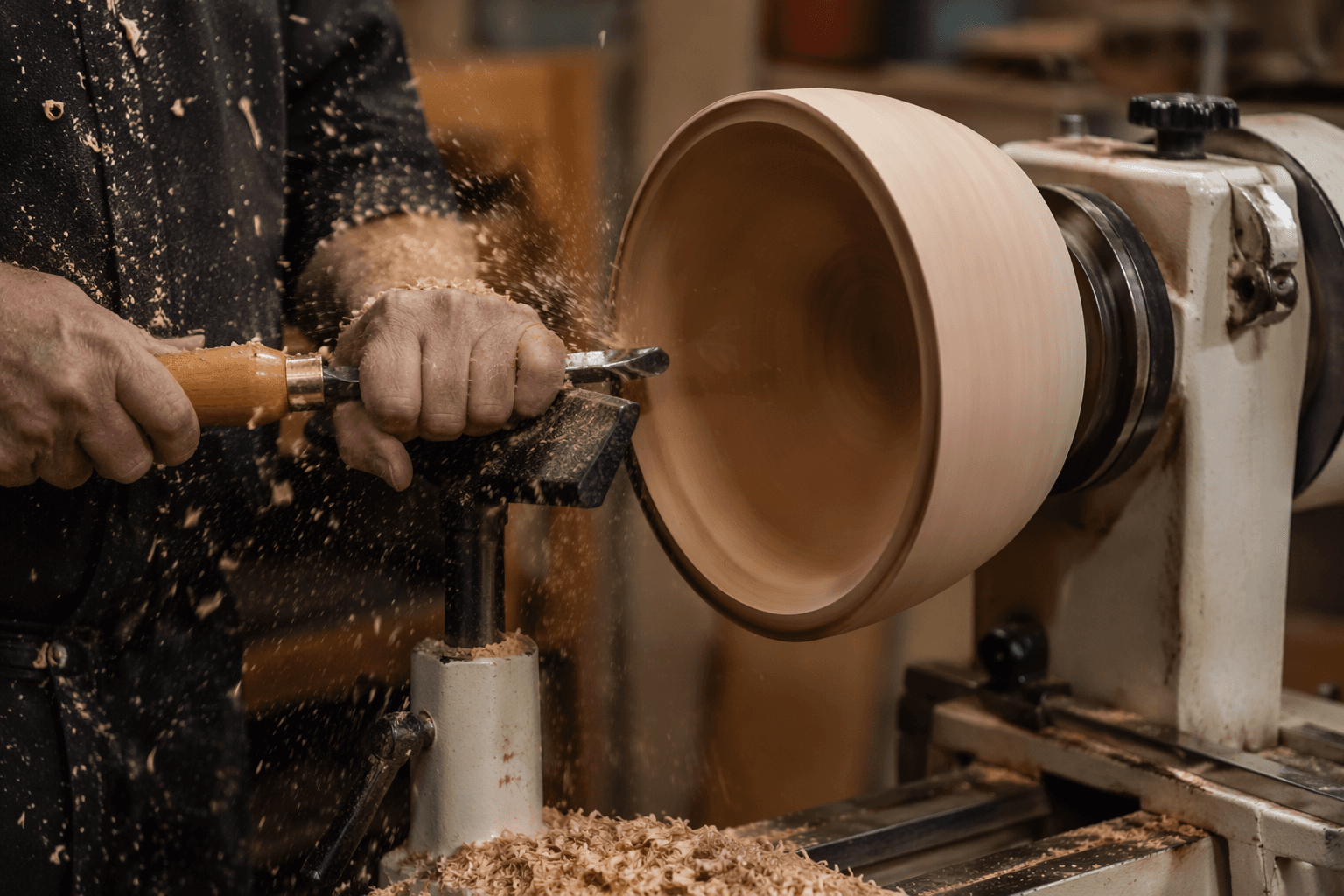
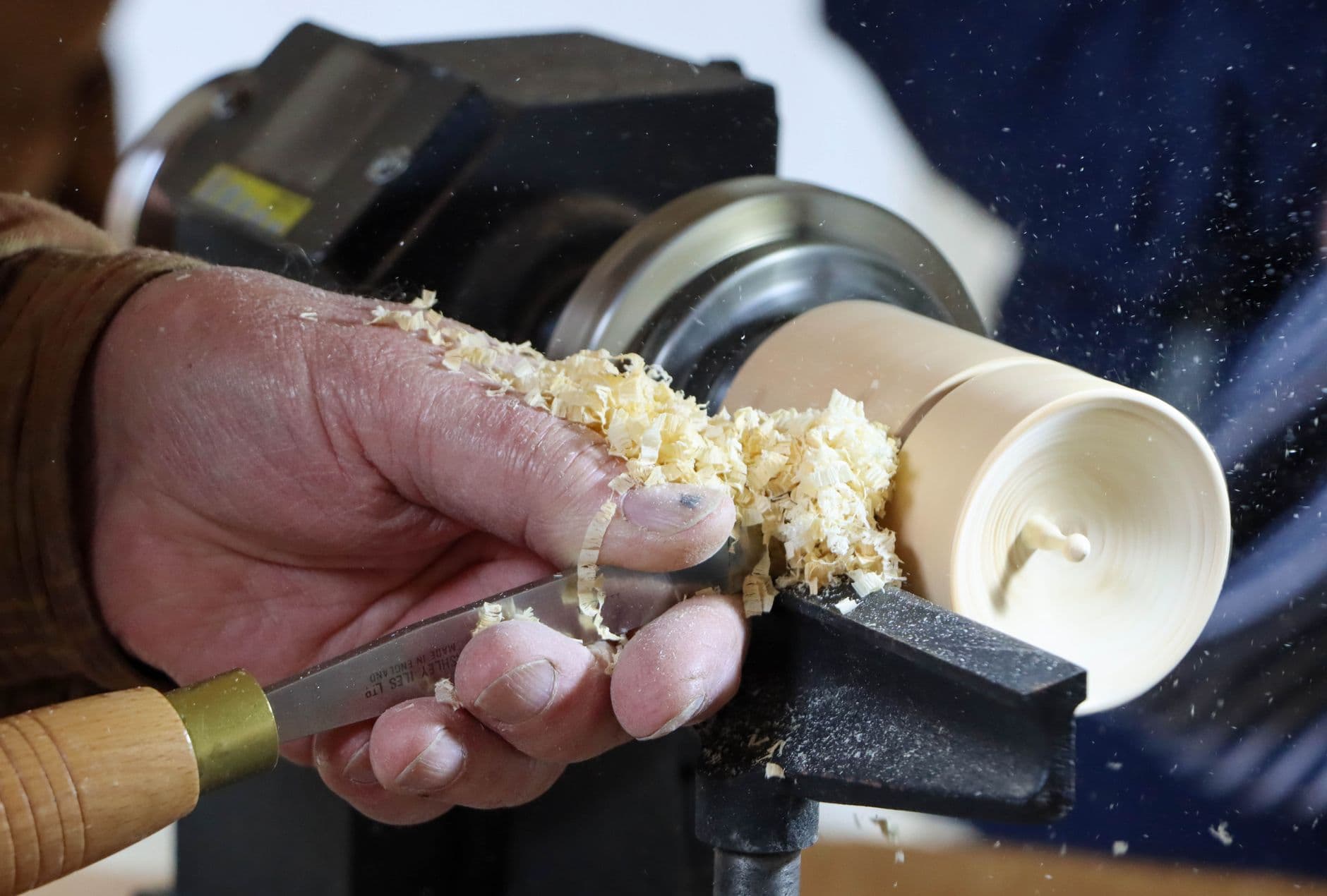
Roughing a green blank, sanding a bowl at speed, and sweeping or blowing out the shop at the end of a session are the moments when wood dust goes airborne. Those are the moments when wood is being turned, cut, and abraded into airborne particles, and they are the moments worth changing first.
Where the exposure spikes
Roughing green blanks throws a heavy mix of chips and fines, but sanding is where the fine stuff really hangs in the air. Cleanup is the third trap, because anything that has settled on the lathe bed, the floor, or your apron can go back into the breathing zone the moment you move it. OSHA treats airborne wood dust as a health problem, not just a housekeeping nuisance, and it also flags fine dust as a fire and explosion hazard when it accumulates.
Certain species raise the stakes. Western red cedar dust has been shown to cause asthma, and wood-dust exposure can irritate the eyes, nose, and throat. OSHA also links it to allergic respiratory symptoms, mucosal and non-allergic respiratory symptoms, dermatitis, and cancer.
The numbers worth remembering
NIOSH’s Pocket Guide sets a recommended exposure limit of 1 mg/m3 as an 8-hour time-weighted average for wood dust. The same guide lists OSHA limits of 15 mg/m3 for total dust or 5 mg/m3 for the respirable fraction.
NIOSH associates wood dust with nosebleeds, dermatitis, respiratory hypersensitivity, asthma, cough, wheezing, sinusitis, prolonged colds, and nasal cancer as a potential concern. The International Agency for Research on Cancer concluded in 1995 that occupational exposure to wood dust is causally related to adenocarcinoma of the nasal cavities and paranasal sinuses, and classified wood dust as carcinogenic to humans. The National Toxicology Program likewise found strong and consistent associations with cancers of the nasal cavity and paranasal sinuses, with risk highest for adenocarcinoma.
Dust collection is good. Respiratory protection is different.
A dust collector, a bench filter, and a respirator are not interchangeable. OSHA says engineering controls are the preferred way to control wood dust exposure, and that usually means exhaust ventilation placed where the dust is being made. That is source capture: pulling dust away at the lathe, at the sander, or at the point of generation before it spreads through the shop.
Ambient air filtration is the cleanup layer, not the first defense. It helps clear the fines left after source capture has done its job, but it does not stop dust from entering your breathing zone during roughing or sanding. That is where a respirator comes in, and OSHA treats it as a supplemental or short-term solution, not the main control. In practical shop terms, source capture keeps the load down, ambient filtration scrubs what is left, and the respirator protects you when the dust is still in front of your face.
For higher exposures, NIOSH’s Pocket Guide lists an air-purifying full-facepiece respirator with N100, R100, or P100 filters as an escape option. At concentrations above the NIOSH recommended limit, or where there is no limit, more protective supplied-air or self-contained options may be needed.
What the respirator has to do right
A filtering facepiece respirator is disposable, protects only against particles, and still requires fit testing. OSHA requires fit testing before first use, whenever the facepiece changes, and at least annually after that. NIOSH-approved respirators can be checked through the Certified Equipment List, and they carry a TC approval number.
If you are sanding at the lathe, roughing dusty stock, or turning a species that throws irritating dust, wear the respirator. If you are only collecting chips after the lathe is off, the respirator is still useful during cleanup, because a shop vac blast or a swept floor can put fine particles back in the air fast.
A small-shop setup that actually works
The American Association of Woodturners recommends powered dust extraction to remove air-suspended particles while sanding or generating dust, and the Association of Woodturners of Great Britain has published dust-protection guidance for lathe work.
If you are tightening up a small shop this week, build the setup in layers:
- Put source capture where the dust is made, especially at sanding speed and during roughing cuts.
- Use an ambient air filter to clean what escapes source capture and hangs in the room.
- Wear a properly fitted respirator whenever the dust is airborne and in your breathing zone.
- Check the respirator’s TC approval number and verify it as NIOSH-approved.
- Treat sweeping, compressed-air blowoff, and dry cleanup as dust-making tasks, not afterthoughts.
- Keep an eye on the species you turn, especially western red cedar and other irritating or resinous woods.
A 2022 furniture-worker study found mean respirable dust at 1.51 mg/m3 and non-respirable dust at 1.23 mg/m3, with respiratory effects still showing up. A worksite intervention in 48 small woodworking businesses combined written recommendations, technical assistance, and worker training, aiming to cut dust by about 26 percent. A ventilation-design study on woodturning operators found turning tasks produce particularly high exposure levels, and a 2023 preprint on Japanese woodturners measured exposure during a typical session while noting how little research exists for that population.
This article was produced by Prism’s automated news system from verified source data, official records, and press releases, then run through automated quality and moderation checks before publishing. The system is built and supervised by the people who set the standards it runs under. Read our full AI policy.
Did this article answer your question?