Obituary recalls John David Leonard’s woodturning, teaching, and biscuit cutters
John David Leonard’s obituary reads like a club-room tribute: a Navy veteran turned woodturner whose demos, biscuit cutters, and teaching left a wide circle.
A shop legacy built around sharing
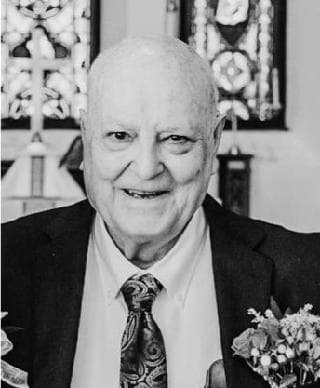
John David Leonard’s obituary lands with the kind of detail woodturners notice right away: after retirement and a move to Tyler, Texas, he became an avid woodturner, and he did not keep the craft to himself. The remembrance says he enjoyed teaching through demonstrations to his woodturning club, the sort of role that often defines a turning life just as much as the bowls, boxes, and specialty pieces that come off the lathe.
He died at 87 after a battle with bladder cancer, and the obituary published by the Tyler Morning Telegraph on May 24, 2026 gives his life a wide frame, from Navy service to more than 30 years as a civilian human resources specialist for the Navy. But the woodturning thread is the part that makes the notice feel especially familiar to anyone who has spent time in a club room, a church hall, or a workshop where knowledge gets passed hand to hand.
Why club demos matter in woodturning
Leonard’s habit of demonstrating to his club says a lot about how the craft sustains itself. In woodturning, a good demo is never only about the object on the lathe. It is about posture, tool control, grain direction, safety, finishes, and the small confidence boosts that make someone willing to try the next cut instead of backing away from the blank.
That social side is not incidental. The American Association of Woodturners says it exists to advance the art and craft of woodturning worldwide by providing opportunities for education, information, and organization. Its network includes more than 360 chapters around the world, which helps explain why Leonard’s teaching role resonates so strongly: he was part of a larger culture built on showing, telling, and encouraging rather than guarding techniques.
In Tyler, that same spirit is visible in East Texas Woodturners, which meets at First Christian Church at 4202 S Broadway Ave. The chapter says it shares woodturning ideas and techniques and also performs community services and demonstrations. That is the kind of club environment where a turner like Leonard would have found his place, and where his demonstrations would have been useful to newer members as well as long-timers refining their own work.
More than a club turner
The obituary makes clear that Leonard’s work reached well beyond the local club scene. His turnings are said to be in collections around the country, which suggests a maker whose pieces traveled farther than his own lathe room and found their way into homes and private collections well past East Texas.
That matters because it shifts the picture of his craft from pastime to legacy. A woodturner’s impact is often measured in the visible objects left behind, but Leonard’s notice suggests another measure too: the people who learned from him, watched him demo, and took that confidence back to their own benches. In a community built on shared technique and repeated practice, that kind of influence lasts as long as the objects do.
The biscuit cutter as a turning classic
The most memorable detail in the obituary may be the simplest one: Leonard’s biscuit cutters were treasured by southern bakers. That line captures one of woodturning’s quiet truths, that the most valued piece is not always the largest, most elaborate, or most technically showy. Sometimes it is the tool that lands on the kitchen counter, gets used again and again, and becomes part of a family’s habits.
Woodworker’s Journal highlighted a turned biscuit cutter as a simple and useful project in a feature tied to American Association of Woodturners material, underscoring how natural that form is for the lathe. Joe Larese of the AAW offered the idea for the project, and the appeal is easy to understand: a turned biscuit cutter is practical, attractive, and rooted in use. In the South, where biscuit making remains deeply tied to home cooking and family tables, a handmade cutter can carry both usefulness and memory.
That is likely why Leonard’s cutters held such appeal. A biscuit cutter made well is not just a novelty. It is a working object that lives in flour, dough, and routine, and when it is turned with care, it becomes the sort of thing people keep because they reach for it constantly and because it feels connected to the hand that made it.
A maker remembered as a teacher
Leonard’s obituary also shows how often teaching reaches beyond the lathe. The remembrance says he coached youth soccer, served as a Dale Carnegie instructor, and was often called on by his daughters and niece to help with schoolwork. Those details make the woodturning story feel less like a hobby note and more like a continuation of a lifelong pattern.
He was, in other words, a natural explainer. The same patience that helped with schoolwork and coaching likely served him well at the bench and in front of a club audience, where a good demonstration depends on clarity, timing, and the ability to make a difficult move look possible. In that way, his shop identity fits neatly inside a bigger legacy of guidance.
What remains from that legacy is not only the turnings in collections around the country, or the biscuit cutters in southern kitchens, but the example of a maker who treated the craft as something to hand forward. In a room full of turners, that is often the mark that lasts longest: not just what was made, but who was helped to make the next thing.
This article was produced by Prism’s automated news system from verified source data, official records, and press releases, then run through automated quality and moderation checks before publishing. The system is built and supervised by the people who set the standards it runs under. Read our full AI policy.
Did this article answer your question?