scrap wood becomes a stunning segmented vase
Scrap wood stops looking like leftovers when every ring, angle, and glue joint is planned to the millimeter. This vase turns offcuts into a polished center of attention, not a patched-up save.
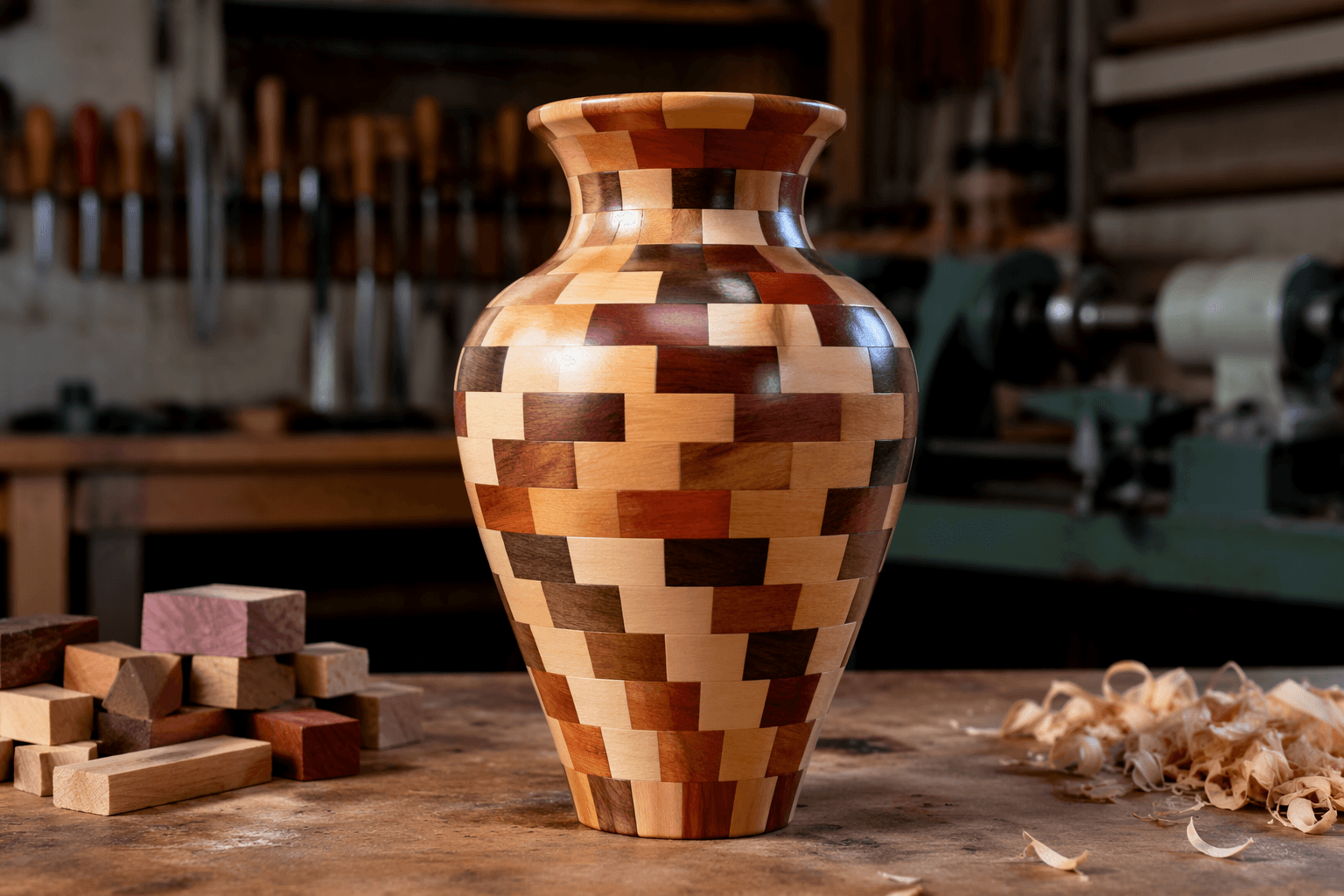
Why this scrap-wood vase works
A pile of offcuts does not stay humble for long when the geometry is right. MSN’s May 24, 2026 woodturning video turns scrap wood into a segmented vase by treating leftovers as a design system, not a last-minute rescue, and that is the real trick here. The result is compelling because the visual payoff comes from repetition, rhythm, and contrast, not from expensive stock.
That matters in segmented turning because the form has to read as intentional from the first glued ring to the final shoulder. Different woods can be combined to sharpen the pattern, but the design only works if the segments line up cleanly and the proportions feel deliberate. This is the kind of project that makes scrap look chosen.
Segmentation is the point, not the workaround
Woodturning Online puts it plainly: segmented turnings “add an entire new dimension” to the craft. That is exactly why this style keeps pulling turners back in, whether the vessel is built by hollowing, segmented construction, or inside-outside turning. The technique is not just about saving wood, it is about making a more engineered object than a plain blank would allow.
A segmented vase rewards the same mindset you see in the best work from turners such as Neil Scobie, Olivier Gomis, and Vince: pattern logic first, spinning second. If the ring layout is weak, the whole vessel feels loose. If the layout is disciplined, even modest scraps can look expensive.
Plan every dimension before the glue comes out
Segmented work starts long before the lathe. You need the finished height in mind, the ring counts settled, the angles chosen, and the glue-up order mapped out before anything gets cut. That planning is not optional, because every small error stacks as the vase grows taller.
Woodturning Online’s vase guidance gets to the heart of it: the shape has to be right if the vessel is going to look right. A segmented vase can be beautifully made and still feel wrong if the profile is clumsy, too straight, or overbuilt. In practice, that means you design the silhouette and the ring rhythm together, not one after the other.
A useful way to think about the process is this:
- Decide the overall profile first, then build the ring pattern to support it.
- Keep the segment angles and ring sequence consistent so the form does not drift.
- Leave yourself enough material to true the surface without destroying thin features.
That last point is where a lot of ambitious segmented work goes sideways. Woodturning Online warns that if glued-up rings are off-center, the design can be ruined, especially when feature rings are thin and there is not enough material to turn away the mistake.
Glue-up discipline separates design from guesswork
The glue-up stage is where careful planning either pays off or falls apart. A segmented-ring tutorial from As Wood Turns describes a self-correcting gluing method learned from a pattern maker in Oregon, and that detail makes perfect sense once you have fought a ring that wants to wander under clamp pressure. The whole point is to let the ring settle into alignment instead of forcing later correction at the lathe.
That caution becomes even more important with slanted layouts. An As Wood Turns segmented vase project notes that rings cut at a 20-degree angle are hard to manage because they want to slide past each other during glue-up. If you have ever watched a carefully arranged stack creep out of line while the glue is still wet, you already know why that warning matters.
The practical lesson is simple: segmented turning is as much about assembly discipline as it is about spindle control. The lathe can refine a good build, but it cannot rescue a sloppy one without taking away the crispness that makes the vase worth making in the first place.
Leftovers become better when the stack is deliberate
MSN has already shown another version of the same idea in a separate project: a segmented vase built from 13 layers of various hardwoods and leftover segmented rings from earlier work. That example makes the reuse story even stronger, because it shows how offcuts from one project can become the building blocks for the next. Once you start saving decent scraps, you are not just collecting odds and ends, you are building a future segmented palette.
That is also why scrap from a backyard tree or even storm-fallen wood can be worth milling into usable stock. Woodturning Online’s blank-making guidance points out that material like that can be turned into stock for the lathe, which is exactly the kind of mindset segmented turning rewards. If a piece has color, figure, or stability, it may not need to become a bowl blank to earn its keep.
The best segmented vases do not hide their variety. They use alternating species, repeated rings, and careful proportion to make the differences feel rhythmic instead of random. That is where scrap stops being a compromise and starts acting like a design language.
Finish the form so the pattern stays sharp
Once the shape is turned, finishing has to preserve the geometry instead of softening it. Sanding should clean the surface without rounding over the crisp transitions between rings, because those lines are what give a segmented vase its authority. The finish then has to pull color and grain forward without burying the pattern under shine.
This is the last place where discipline shows. A good finish does not distract from the joinery, it makes the joinery look intentional, which is exactly what a scrap-built vase needs. When the wood choices are balanced and the rings are true, the finish can make mixed leftovers read like a cohesive decorative object rather than a clever salvage job.
The appeal of this MSN vase is that it never asks scrap wood to pretend it is something else. It asks for planning, accurate rings, smart centering, and a clean finish, then lets the geometry do the selling. That is how leftover wood becomes a centerpiece instead of a pile of excuses.
This article was produced by Prism’s automated news system from verified source data, official records, and press releases, then run through automated quality and moderation checks before publishing. The system is built and supervised by the people who set the standards it runs under. Read our full AI policy.
Know something we missed? Have a correction or additional information?
Submit a Tip

