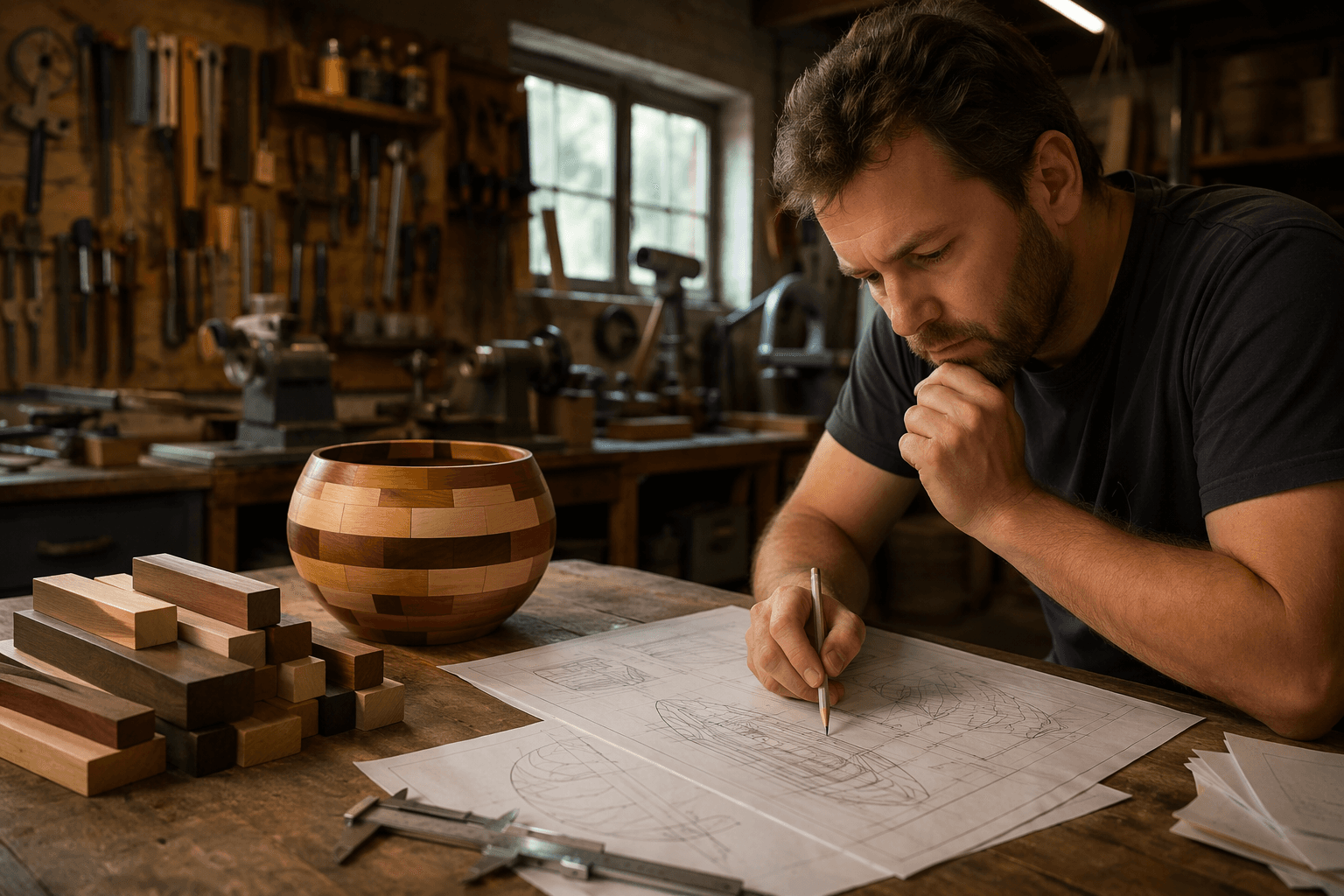
Segmented Bowls and Epoxy Accents Drive Woodturning's Visual Appeal
The pieces people photograph first are the ones with a clear idea: segmented geometry, resin accents, or a lacquer finish that pushes the form into gallery territory.
What makes a turned piece stop people in their tracks
The woodturning pieces that linger in memory usually do more than show clean toolwork. They give the eye something immediate to read: a segmented bowl with hard-edged precision, an epoxy accent that turns a defect into a feature, or a lacquered vase that catches the light like it belongs behind glass. That is the common thread in the projects people photograph, share, and talk about most, because the design idea is visible the moment the lathe stops spinning.
The appeal is not just decoration for decoration’s sake. In the strongest pieces, color, grain, contrast, and finish are part of the turning decision from the start, not an afterthought at the bench. That is why these objects stand apart from routine functional work: they are technically sound, but they also read as deliberate, memorable, and easy for a non-turner to appreciate at a glance.
Segmented work turns precision into the story
Segmented bowls, hollow forms, and ring-built vases keep showing up in club demonstrations and showcase galleries for a reason. Each ring, angle, and glue joint has to be accurate, but the finished form can look far more complex than a solid-wood blank ever could. The precision is not hidden; it becomes part of the visual punch.
This is where segmented work earns its reputation as a showcase technique. Contrasting species can create a bold rhythm, alternating grain directions can add tension, and repeated geometric patterns can make the object look engineered rather than merely carved. That engineered look is what makes a segmented piece read as intentional from across the room, especially when the silhouette is clean and the pattern is disciplined.
The trade-off is just as important as the payoff. Segmentation rewards patience and planning, but it does not forgive sloppy execution, because every small mismatch is visible in the final geometry. When the joints are crisp and the pattern resolves cleanly, the result feels exacting and elegant. When the layout is crowded or the angles drift, the form loses the authority that makes segmented work so compelling in the first place.
When segmentation adds the most value
Segmentation works best when the structure itself can carry the design. A bowl or vase with repeated rings, sharp transitions, and contrasting woods gives the viewer a sense that the object was built as much as it was turned. That is why segmented forms are so effective in showcase settings: they turn precision into a feature instead of a hidden requirement.
The strongest segmented pieces do not need extra effects to hold attention. Their appeal comes from the visible logic of the build, the confidence of the proportions, and the way the pattern supports the form. In other words, the design already has enough strength that the turning only has to make it speak clearly.
Epoxy accents can rescue a flaw or create the whole idea
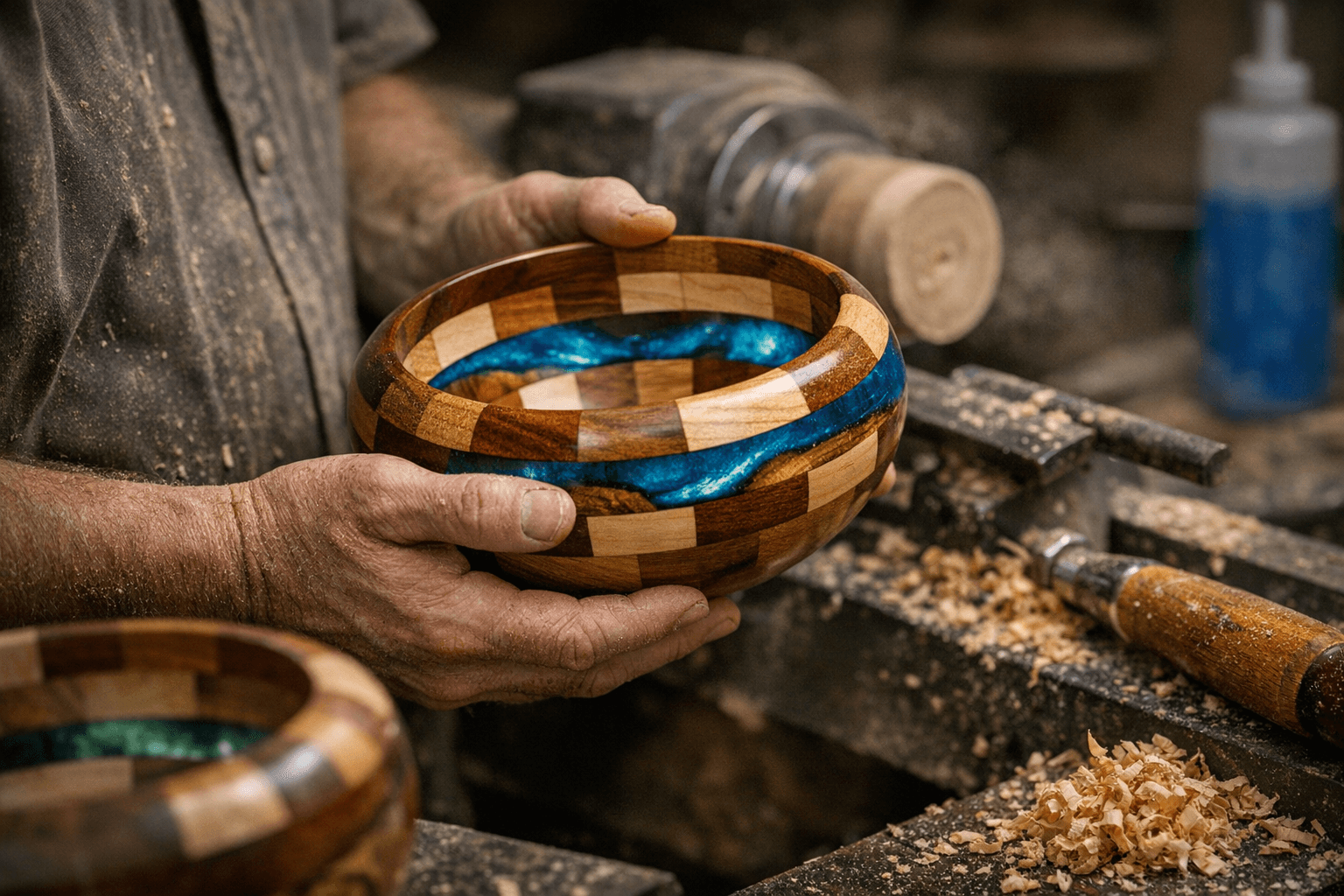
Epoxy-inlaid vessels and natural-edge hybrids have become popular because they can solve a problem and add style at the same time. A crack becomes a feature, an irregular edge becomes intentional, and a rough blank becomes a one-of-a-kind form. That is a powerful shift in woodturning, because the piece no longer has to hide the wood’s imperfections to be considered successful.
Resin is especially effective when it stabilizes voids, mimics eyes or kernels, or creates dramatic color transitions that solid wood simply cannot produce on its own. Used well, it gives the turning a sense of surprise without erasing the material’s identity. The wood still matters, but the resin expands what the form can say.
The line between striking and gimmicky is thin. Epoxy works best when it is doing real visual or structural work, not when it is the only idea in the piece. If the color is louder than the form, the turner may end up with a resin object that happens to include wood, rather than a woodturned piece with a clear design purpose.
Where epoxy earns trust
The most convincing epoxy accents still depend on disciplined turning. Accurate mounting, careful tool presentation, and good sanding are not optional, because the resin only looks intentional when it is integrated cleanly into the shape. That is what separates a thoughtful hybrid from a flashy one.
The best hybrid pieces do not apologize for their material mix. They use the resin to sharpen the story already present in the blank, whether that means framing a natural edge, highlighting a void, or introducing a color break that would be impossible in solid wood alone. When the effect supports the form, the piece feels fresh rather than forced.
Lacquer is the finishing move that changes the reading of a piece
Finishing is where the object decides what kind of presence it wants to have. A lacquered surface can emphasize crisp curves and give a vessel a polished, gallery-ready look, while other finishes preserve a softer, more natural feel. The same bowl can read as art, utility, or display piece depending on how the final surface handles light.
That is why lacquer can elevate a turned form so effectively. On a cleanly turned vase or bowl, sheen sharpens the silhouette and makes the edges look deliberate. It can make the object feel finished in the strongest sense of the word, with the surface as controlled as the turning beneath it.
But lacquer can also overpower wood if the finish starts to dominate the piece instead of serving it. When the gloss becomes the first thing people notice, the grain and form can recede behind the shine. The most successful lacquered pieces keep the finish in balance with the turning, so the surface enhances the object rather than taking over the conversation.
Why these are the pieces people remember
What ties segmented forms, epoxy accents, and lacquer sheen together is not technique alone. Each one gives the viewer an immediate visual idea, and each one asks the turner to make that idea convincing in the final object. That combination of clarity and craft is what makes these pieces easy to photograph, easy to discuss, and hard to forget.
A lathe can produce bowls, spindle parts, and plenty of useful workshop work, but it can also produce objects with real presence. The pieces that stop people in their tracks are the ones where the design is visible at a glance, the execution holds up under a close look, and the finish makes the whole thing feel worthy of the shelf, the gift box, or the gallery wall.
This article was produced by Prism’s automated news system from verified source data, official records, and press releases, then run through automated quality and moderation checks before publishing. The system is built and supervised by the people who set the standards it runs under. Read our full AI policy.
Did this article answer your question?