Wedding Goblets Unite Woodturners and Couples in Cherished Tradition
Turning a wedding goblet isn't just a project — it's a rite of passage that bonds woodturners to one of the craft's most emotionally loaded traditions.

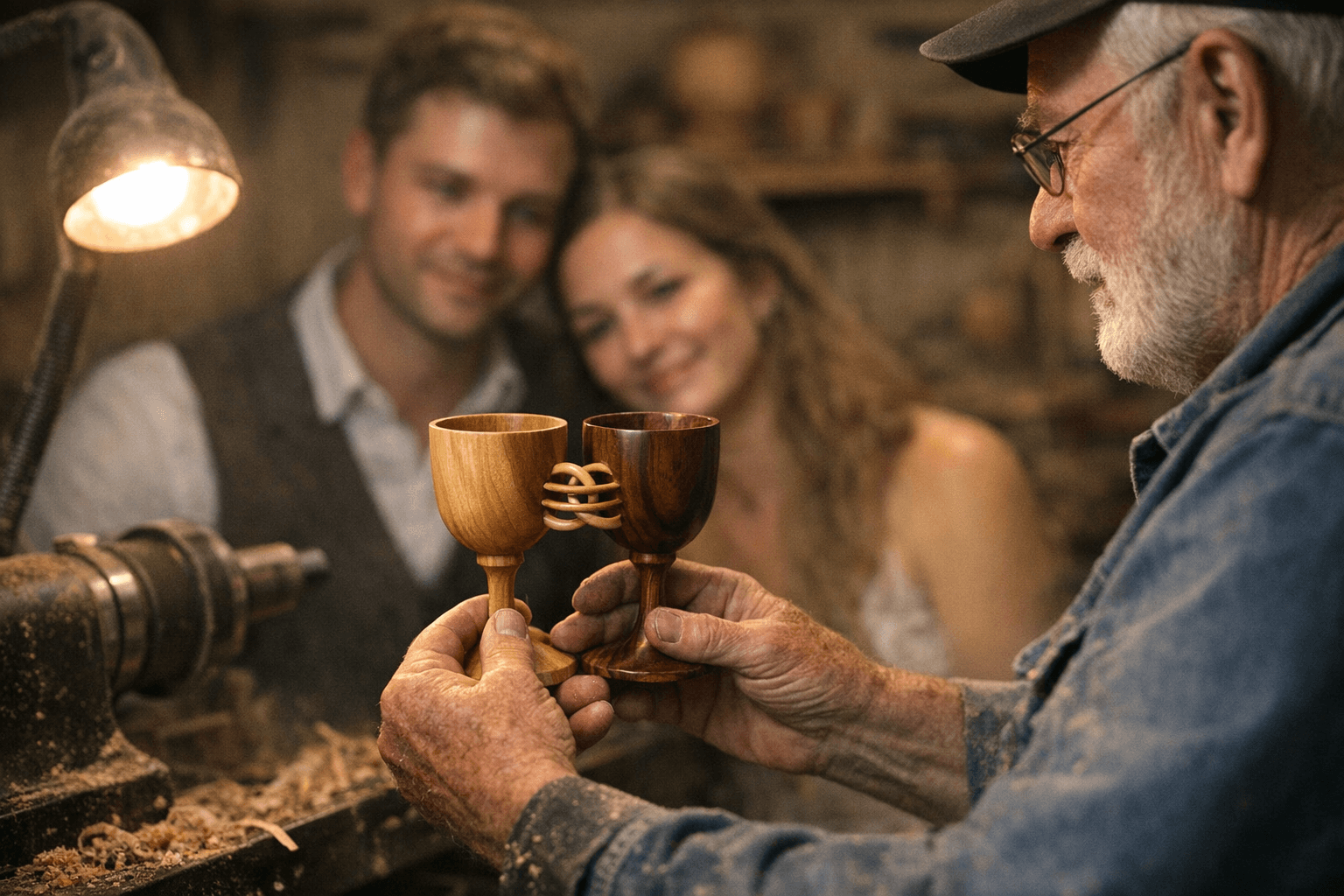
There's a moment every woodturner knows: you've parted off the stem, sanded through the grits, applied the finish, and you're holding something that didn't exist an hour ago. When that object is a wedding goblet, the moment carries extra weight. You're not just holding turned wood — you're holding something a couple will drink from on their wedding day, pass around a reception table, and likely keep for the rest of their lives. That intersection of craft and ceremony is exactly what makes the wedding goblet one of the most meaningful projects a turner can take on.
Why the Wedding Goblet Endures
Most decorative woodturning sits on a shelf and gets admired. A wedding goblet gets used — at least once, at the most important event in two people's lives. That singular moment of use is what separates it from bowls, pens, or ornamental pieces. Couples prize these objects not because they're perfect but because they're handmade, specific, and tied to a day they'll never forget. For the turner who makes them, the stakes are different than any other commission. You know exactly when and where this piece will be held, and by whom.
The tradition of drinking from a shared wooden cup at weddings stretches back centuries across European and Celtic cultures. Modern woodturners have inherited that symbolism and translated it into a contemporary craft challenge that tests form, proportion, and finishing skills all at once. A goblet that's beautiful but too heavy to drink from comfortably has missed the point entirely. One that's light and elegant but poorly sealed will ruin the moment. Getting both right is the real test.
The Design Decisions That Matter
Before you touch a skew or a spindle gouge, you need to think through the design. A wedding goblet isn't a freeform project where you let the wood decide — there's a functional brief to honor.
Wall thickness is the first consideration. Too thick and the goblet feels crude; too thin and you're gambling with structural integrity, especially at the junction of bowl and stem. Most experienced turners aim for walls in the 3 to 4 millimeter range on a goblet that will actually be used for drinking. The stem is where beginner turners get into trouble — it's where catches happen, where vibration builds up as you cut further from the headstock, and where a momentary lapse in technique can mean starting over entirely.
Proportion matters as much as any individual measurement. The bowl should feel generous without being top-heavy. The foot needs a wide enough base to sit stable on a table without looking clunky. Many turners develop a preferred ratio over time and sketch it out before they ever mount the blank, treating the goblet the same way a production turner would approach any repeatable form.
Wood selection for a wedding goblet is worth careful thought. You want something with visual appeal — figure, color, or grain character that photographs well and ages gracefully. Fruitwoods like cherry and apple have long been popular for this reason, along with exotics like purpleheart or padauk when the couple wants something more dramatic. Avoid woods with unpredictable grain that might check after finishing, particularly if the goblet will be used with liquid. Stability matters here in a way it doesn't for a purely decorative piece.
The Turning Process
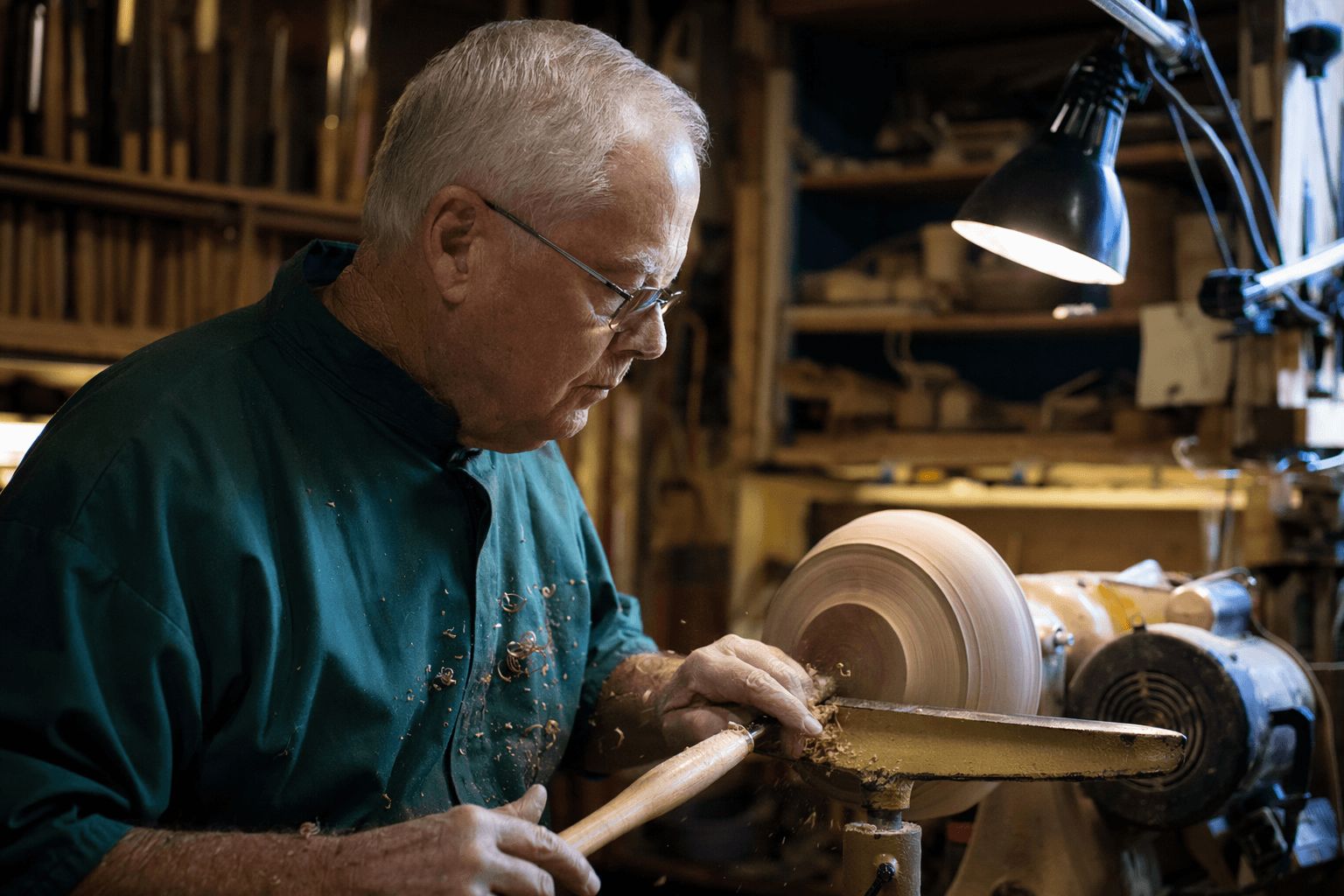
Turning a goblet is typically done between centers or with the blank held in a chuck, depending on your preferred workflow. The bowl is usually turned first, hollowed, and refined before the turner works down the stem and forms the foot. This sequence keeps maximum wood in place while you're removing material from the most demanding section.
Hollowing the bowl requires a steady hand and a well-sharpened tool. A small spindle gouge or a bowl gouge with a fingernail grind both work; the choice often comes down to what you're comfortable with. The key is to work in controlled cuts, check your wall thickness frequently with calipers, and resist the temptation to cut deeper than your tool control allows. The transition from bowl interior to stem is a stress point both structurally and aesthetically — it needs to flow without abrupt angles.
Sanding a goblet presents the classic woodturner's challenge: you need to get into tight curves and coves without rounding over crisp detail lines. Folded sandpaper and thin strips work better than backing pads in most areas. Work through the grits methodically, and don't skip grits thinking you'll fix scratches at the finishing stage. On a piece this visible and this ceremonial, surface prep is everything.
Finishing for Food and Drink Safety
A goblet that will hold wine or any other liquid needs a finish that's food-safe once fully cured. This rules out many standard woodturning finishes applied wet off the lathe. Hardwax oils, properly cured shellac, and several water-based finishes are commonly used for this application. Check manufacturer curing specifications carefully — "food-safe when dry" and "food-safe when fully cured" are not the same thing, and full cure can take days or even weeks depending on the product.
Many turners also offer couples the option of a purely decorative goblet with no food-safe finish, understanding that the piece will be kept as an heirloom rather than used for drinking. In that case, a lacquer or oil/wax combination can give you a richer visual result. Either way, be upfront with your client about what they're getting and what the intended use should be.
Making It Personal
The details that transform a goblet from a nice turned piece into a genuine heirloom are usually small. Incorporating wood from a meaningful source — a tree from the couple's property, reclaimed timber from a family home, or a species tied to their heritage — elevates the object beyond what any store-bought alternative could offer. Some turners add carved or laser-engraved detail to the foot or stem after turning; others keep the form clean and let the wood speak entirely on its own.
Presentation is part of the gift. A wedding goblet delivered in a plain plastic bag lands differently than one nestled in a handmade wooden box or a velvet-lined case. The couple is going to show this to people. The way it arrives shapes how the story gets told.
Wedding goblets also make compelling demonstration pieces at club meetings and woodturning shows. The combination of technical challenge and emotional resonance tends to hold an audience in a way that a bowl or spindle demonstration simply doesn't. When you can explain the story behind the object while showing the process, the craft becomes legible to people who've never held a turning tool in their lives. That's not a small thing for a community that's always looking for its next generation of turners.
Know something we missed? Have a correction or additional information?
Submit a Tip