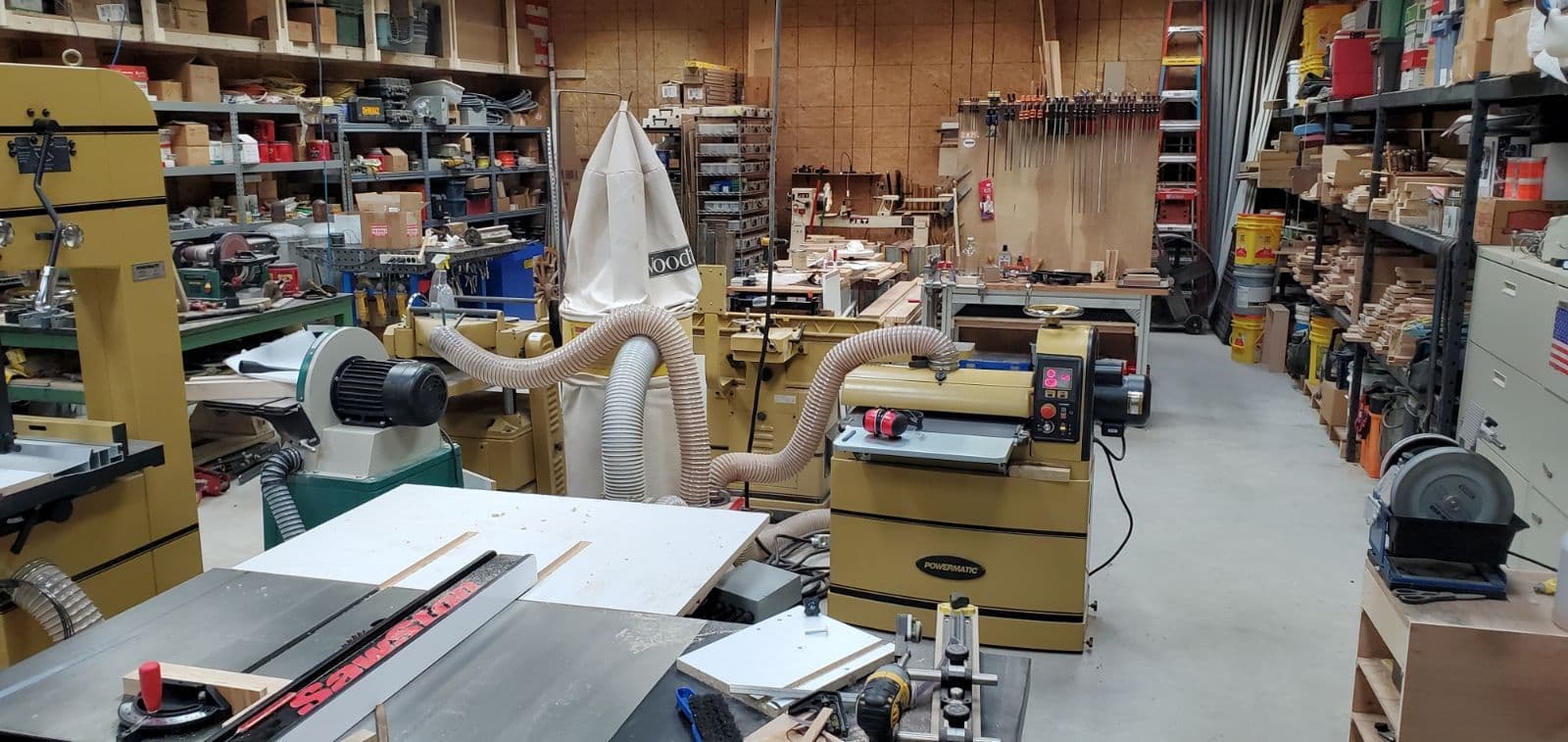
Wilmington woodturners pack spring calendar with women’s turning and basic courses
Wilmington Area Woodturners is giving turners three clear ways in: women’s shop time, a seven-week beginner course, and a meeting in a new Rocky Point location.
A spring calendar built for getting in the door
Wilmington Area Woodturners Association is doing something smart with its spring week view: it is not just filling dates, it is creating different on-ramps for different turners. Women who want dedicated shop time have a place. Absolute beginners have a structured course. Regular members have a monthly meeting that now lands in a new location, which matters more than it sounds when your shop time depends on showing up at the right building with the right gear.
The week of April 12 to April 19, 2026 makes that approach obvious. The calendar is crowded, but it is not random. It points straight at access, and in woodturning that is often the difference between keeping momentum and letting another season slip by.
Women’s turning gets real shop access, not just a slogan
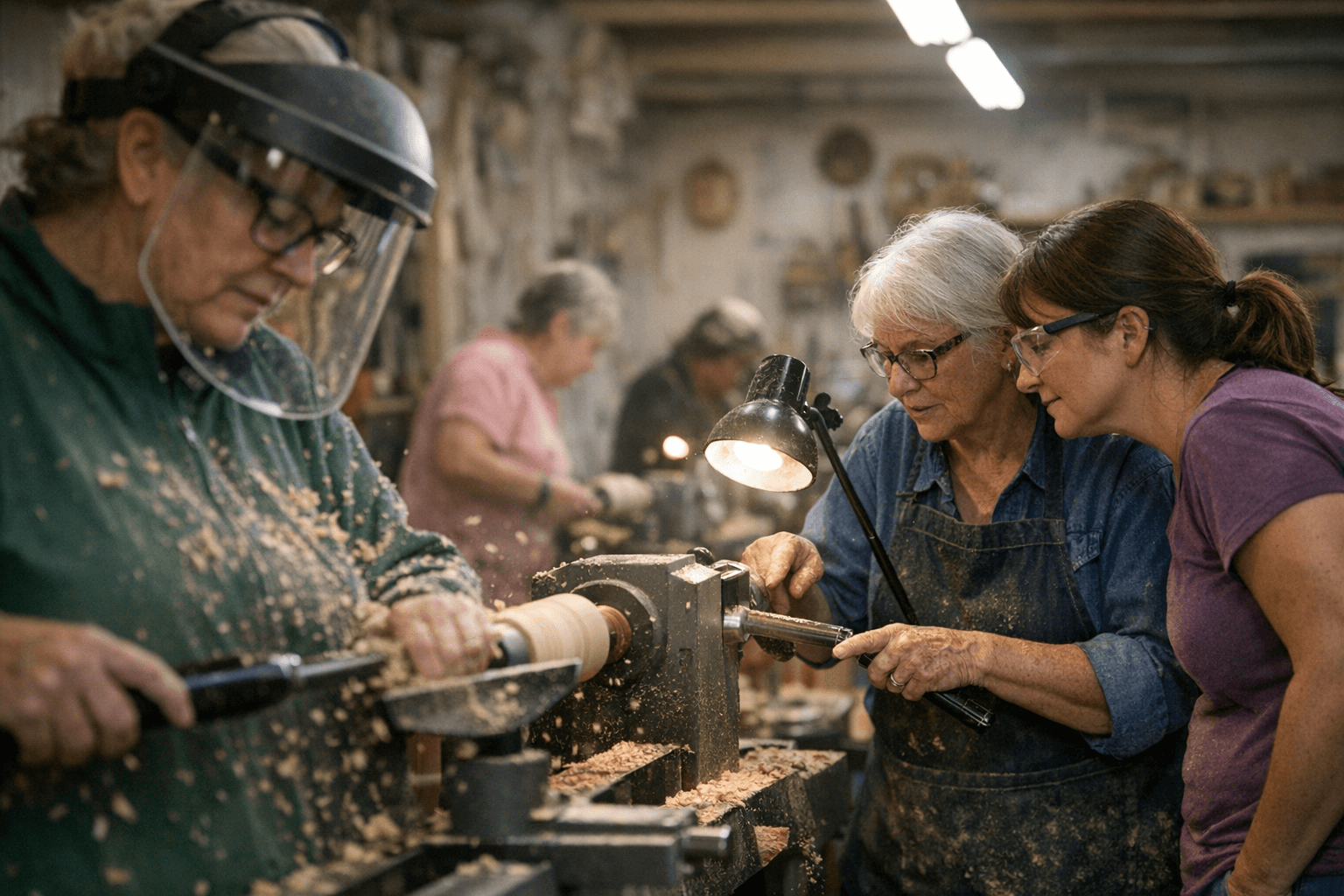
The clearest invitation on the calendar is WAWA Women In Turning on Wednesday, April 15 at the classroom behind Harbor Church. The description is exactly the sort of practical pitch that gets used in a real turning room: women woodturners of all skill levels gather for a few hours of turning, sharing, social fun, and support in the craft. If you want to work light and simple, you can bring your own materials or projects and use the classroom’s 12 lathes and tools. If you already have favorite gouges, you can bring those instead.
That access is bigger than one local session. Women in Turning is the Association of American Woodturners program built to connect and support women woodturners worldwide, with a stated focus on inclusion and skill-building. The roots of that network go back to the 2014 AAW symposium in Phoenix, where about 20 women met to talk about women’s issues in the organization and about making the community feel more welcoming. That history still shapes the tone now: this is not a token event. It is a working shop gathering with a larger support system behind it.
The beginner course is the real pipeline
If women’s turning is the social entry point, WAWA’s basic woodturning course is the technical one. The club lists both the WAWA Basic Woodturning Course and a wait-list version of the same class for Thursday, April 16, which tells you two things at once: the class is in demand, and the club is managing capacity carefully.
The course itself is unusually concrete, which is exactly what a new turner needs. WAWA says the adult introduction runs for seven Thursday evenings from 6 to 10 p.m. at its training facility at 4853 Masonboro Loop Road, behind Harbor Church in Wilmington’s Monkey Junction area. Each week has a different WAWA instructor, so students are not locked into one teaching style for the whole run. That matters in a craft where tool presentation, body position, and how a teacher talks about grain direction can change how fast something clicks.
The project list is a proper progression, not a one-night novelty class. Students work through pieces such as a honey dipper, candlestick, bowl, platter, goblet, and lidded box. By the final session, the emphasis moves to tool sharpening, which is where a lot of beginners either level up or stall out. The course is built to keep moving from simple spindle work into faceplate and hollow-ish forms, then finish with the maintenance skill that keeps the tools cutting cleanly.
WAWA also offers an Orientation/Safety Course for members new to woodturning. That session runs 4 to 5 hours and covers lathe terminology, nomenclature, tool types, and safe turning. In other words, the club is not assuming anyone arrives knowing the difference between the jargon on the lathe and the practical reality at the tool rest. It gives new members a way to get their footing before they commit to a longer course.
One canceled session is still useful information
The week-view calendar also lists an open turning session at Harbor Shop, but it is marked canceled. That kind of detail saves a wasted drive and keeps a shop schedule from unraveling. For turners who juggle work, family, and an already full bench of unfinished projects, a canceled slot is not trivia. It is the difference between planning a rough-out session and arriving to an empty room.
It also says something about the way the club is presenting its calendar. This is not just a promotional flyer. It is meant to be used. If a member is tracking lathe time, the canceled entry is as important as the live ones.
The monthly meeting has a new home, and that is the kind of change people miss
The biggest location change on the page is Saturday, April 18, when WAWA holds its monthly meeting at Lighthouse Worship Center in a new location. The gathering is set up as an in-person meeting with social time, coffee and donuts, plus a demo and program still to be announced. That is classic club rhythm: a little talk, a little food, then a program that usually sends everyone home with one thing they want to try at the lathe.
WAWA’s chapter profile with the American Association of Woodturners lists the monthly meeting site as Lighthouse Worship Center, 98 S. Trade Way, Rocky Point, North Carolina. The club itself was founded on August 18, 2004, and the scale behind it is bigger than many local clubs. The AAW says it has more than 13,000 members and more than 365 chapters worldwide, while WAWA says it is one of more than 360 local chapters and draws active members from as far away as Myrtle Beach and Jacksonville. That radius tells you the club’s pull is not just Wilmington proper. It reaches well into the Cape Fear region and beyond.
What this spring calendar says about the club
WAWA’s mission puts the pattern into words: teach members, broaden public awareness of woodturning, and support continuing education. The spring schedule backs that up with three separate access points that cover very different needs. Women who want time around other women at the lathe get a dedicated session. Beginners get a seven-week course with multiple instructors and project-based instruction. Regular members get a monthly meeting that is now anchored in a new place with clear directions, social time, and a program format they already know.
That is why this calendar matters. It is not just full. It is organized around getting more people turning, keeping the ones already turning connected, and making sure nobody has to guess where to show up. In a craft where momentum is everything, that kind of structure is worth more than a crowded calendar.
This article was produced by Prism’s automated news system from verified source data, official records, and press releases, then run through automated quality and moderation checks before publishing. The system is built and supervised by the people who set the standards it runs under. Read our full AI policy.
Did this article answer your question?