Woodturner combines elm burl and epoxy in captive ring goblet
A kiln-dried elm burl goblet with two captive rings turns hybrid turning into a stress test for color, wall control, and nerve.
The hybrid blank is the real challenge
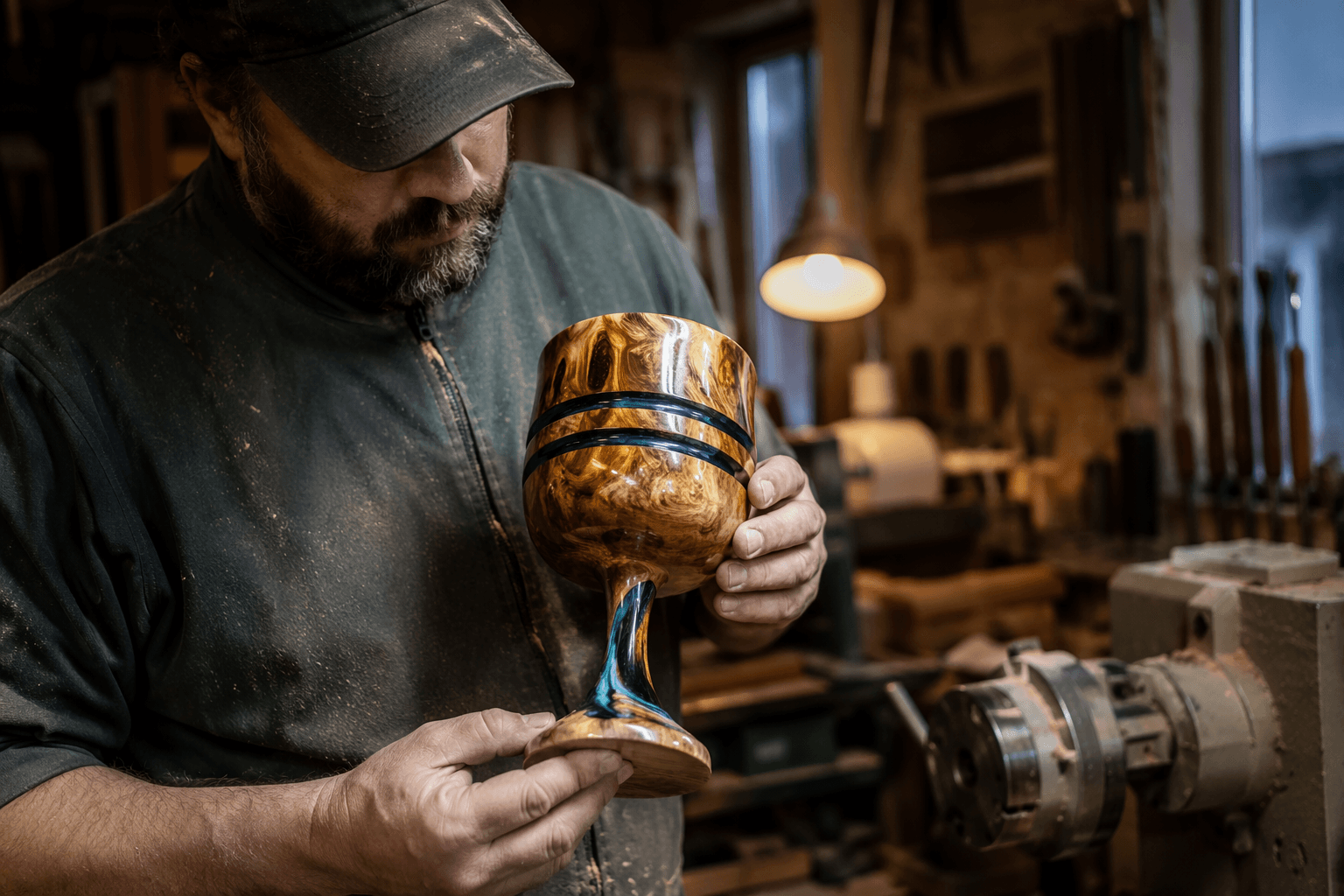
An MSN woodturning video from May 28 takes a goblet shape and loads it with almost every difficult decision in the shop: kiln-dried elm burl, multicolor epoxy, and two captive rings. That mix is the whole appeal. It is not just decorative; it is a controlled collision between unstable burl, poured resin, and one of the trickiest ornamental cuts in turning.
The visual strategy is clear from the start. The epoxy begins in dark green pigments and gradually lightens as the pour builds upward, so the color is carrying structure, not just filling voids. That kind of transition can suggest depth, motion, or a mineral-to-organic shift inside the blank, but it also raises the stakes for every later cut. Once the blank is cast, turned, and sanded, any mistake in the layout shows up as a break in the whole composition.
What makes this such a difficult hybrid is that each material asks for something different. Elm burl brings irregular grain and visual drama, but also unpredictable behavior. Epoxy can deliver translucence and saturated color, but it does not forgive sloppy prep or weak tool control. Put them together in a goblet form, and the maker has to keep the wood stable, the resin clean, and the silhouette elegant enough that the object reads as intentional rather than merely elaborate.
Why the captive rings raise the difficulty
The captive rings are where the project stops being a clever hybrid and becomes a genuine technical test. A captive ring has to be freed from the surrounding material without snapping, binding, or leaving the form distorted. That means wall thickness has to be judged carefully, measurements have to stay honest, and the cutting tools have to stay narrow, precise, and under full control.
That control becomes even more important in a goblet, where the profile is already slender and the visual balance depends on refinement rather than bulk. Two rings increase the pressure on the turner because each one adds another delicate area that can fail if the cuts drift or the surrounding walls are taken too thin. In a plain vessel, a small correction can disappear into the design. In a piece like this, it can ruin the symmetry or leave the ring work looking forced.
This is also why the project matters as a guide to current hybrid turning. The rings are not separate from the burl and resin, they sharpen the risk of both. A standard turning can survive a little roughness in the finish or a modest shift in proportion. A captive-ring goblet made from elm burl and epoxy has to be right in the blank, right in the sequence, and right in the hand.
The turning order decides whether the piece survives
The most important decision in a build like this is the order of operations. The blank has to be treated as a system, not a stack of unrelated features. The resin pour, the burl selection, and the ring layout all influence where the turner can safely remove material and where material must be left in reserve for later detail work.
That is why hybrid pieces reward patience and punish impatience. The green-to-light epoxy transition only works if the pour remains readable after turning, which means the maker has to think ahead about where the final surfaces will land. The same is true of the captive rings: if the surrounding wall is reduced too aggressively too early, the ring work loses the thickness it needs to move cleanly and release cleanly.
Sanding and polishing matter just as much as the cuts. Hybrid turning lives or dies on whether the resin and wood read as one composition. If the finish leaves the epoxy looking plastic or the burl looking dull, the design loses the tension that makes it compelling in the first place. The goal is not to celebrate the materials separately. It is to make the transition between them feel inevitable.
Why this kind of project keeps showing up in woodturning
The broader craft context helps explain why this style of piece gets attention. AAW-linked and woodworking sources describe resin casting in woodturning as a popular recent trend, especially for making hybrid blanks that combine resin with wood, burl, and other embedded materials. That trend has helped push showpiece work toward more sculptural forms, where visual surprise matters as much as utility.
Captive-ring turning has its own history inside the craft. American Woodturner has carried instruction and feature coverage on the technique, including a 2017 piece titled *Captive Rings on a Goblet Box*. John Lucas’s *Turning Captured Rings* article appeared in American Woodturner in 2022 and was republished in 2024 by Woodworker’s Journal and the American Association of Woodturners, which is a good reminder that the technique remains a live challenge, not a solved one.
That long teaching tradition matters because American Woodturner itself has been published since 1986, and the AAW says its annual International Woodturning Symposium is the biggest woodturning event in the world. The 2026 symposium is scheduled for June 4-7 in Raleigh, North Carolina. In other words, a video like this is not an isolated stunt. It sits inside a large, well-developed culture of instruction, demonstration, and technical escalation.
The appeal is the risk, not the shortcut
Elm burl, epoxy, and captive rings are each demanding on their own. Combined in one goblet, they turn the blank into a test of judgment: how to stabilize the material, how to stage the color, how to preserve enough wall for the ring work, and how to finish the whole piece so the materials feel fused instead of competing. That is why the project reads as more than spectacle.
The final impression comes from tension held under control. The green epoxy climbs lighter as the pour rises, the burl keeps its irregular character, and the captive rings sit there like proof that the turner stayed precise all the way through. That is the hook of the piece from the first cut to the last polish: it looks impossible because the risk is real, and the beauty depends on keeping every part of the system intact.
This article was produced by Prism’s automated news system from verified source data, official records, and press releases, then run through automated quality and moderation checks before publishing. The system is built and supervised by the people who set the standards it runs under. Read our full AI policy.
Did this article answer your question?