10-Minute Yoga Sequence Targets Mood With Breath and Grounding Moves
Yoga Journal's 10-minute good mood sequence proves you don't need an hour on the mat — just breath, grounding, and Child's Pose — to genuinely shift your emotional state.
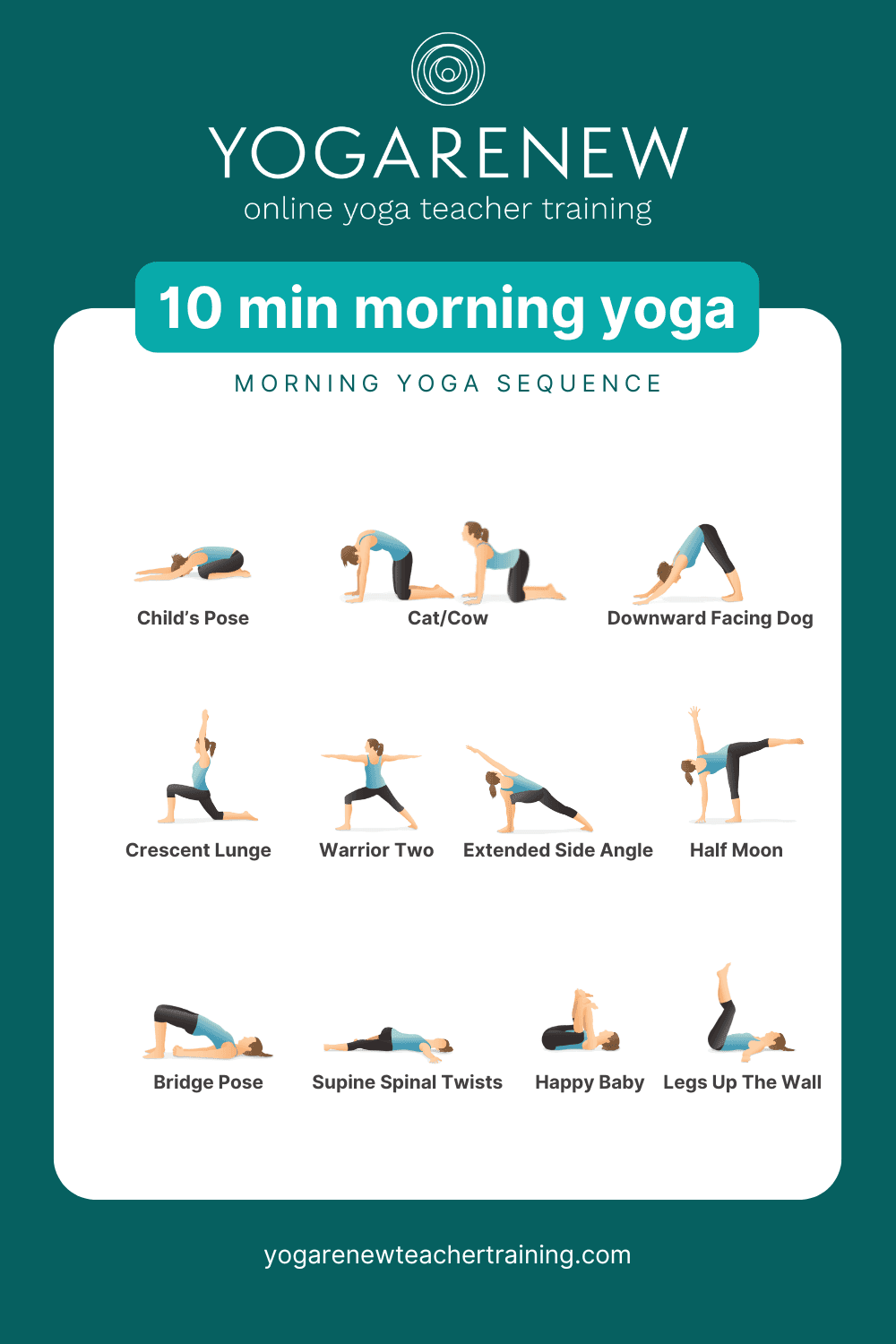
Most of us have been there: the day is already sideways before 9 a.m., the mat is right there, but a full 60-minute practice feels impossible. Sometimes cultivating a good mood is as simple as syncing your breath with your movement, and a well-designed flow relies on grounding movements and purposeful pacing to help shift negative energy. That's the entire premise behind Yoga Journal's "10-Minute Yoga Practice for a Good Mood" — a short-form sequence built specifically for busy practitioners who need a real reset, not just a stretch.
It's designed to be fast enough to create change but slow enough to maintain presence, allowing you to reset your mood with intention. Ten minutes. No excuses. Here's what makes it work, and how to get the most out of every breath.
Why Breath-Movement Coordination Changes Your Mood
The mood-shifting power of this kind of sequence isn't mystical — it's physiological. Deep and controlled breathing induces the parasympathetic nervous system, bringing about a relaxation response that can mitigate the stress response, help lower anxiety, and alleviate depression. When you consciously sync an inhale to a movement and an exhale to a release, you're essentially pulling the nervous system's emergency brake on fight-or-flight mode.
Prolonged exhalation in particular stimulates the vagus nerve, causing greater relaxation and the release of neurotransmitters such as serotonin and endorphins, which elevate mood and combat symptoms of depression. This is why the Yoga Journal sequence isn't just a list of shapes — it's a breath-first protocol. The poses are the vehicle; the breath is the engine.
Across the empirical literature, slow and deep breathing have been associated with several significant psychological improvements, including anxiety reduction, perceived stress, positive affect, and mood regulation. Even a single short session counts: increases in parasympathetic tone have been replicated in single 2-minute and 5-minute breathing sessions. A 10-minute practice isn't a compromise — it's a scientifically defensible minimum.
Starting on the Ground: Child's Pose Sets the Tone
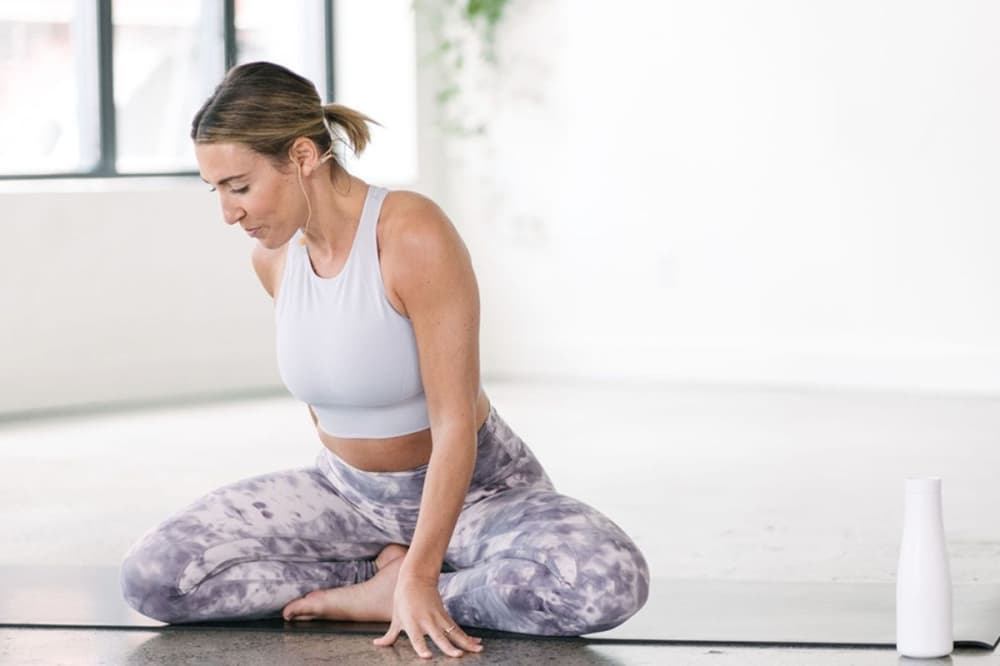
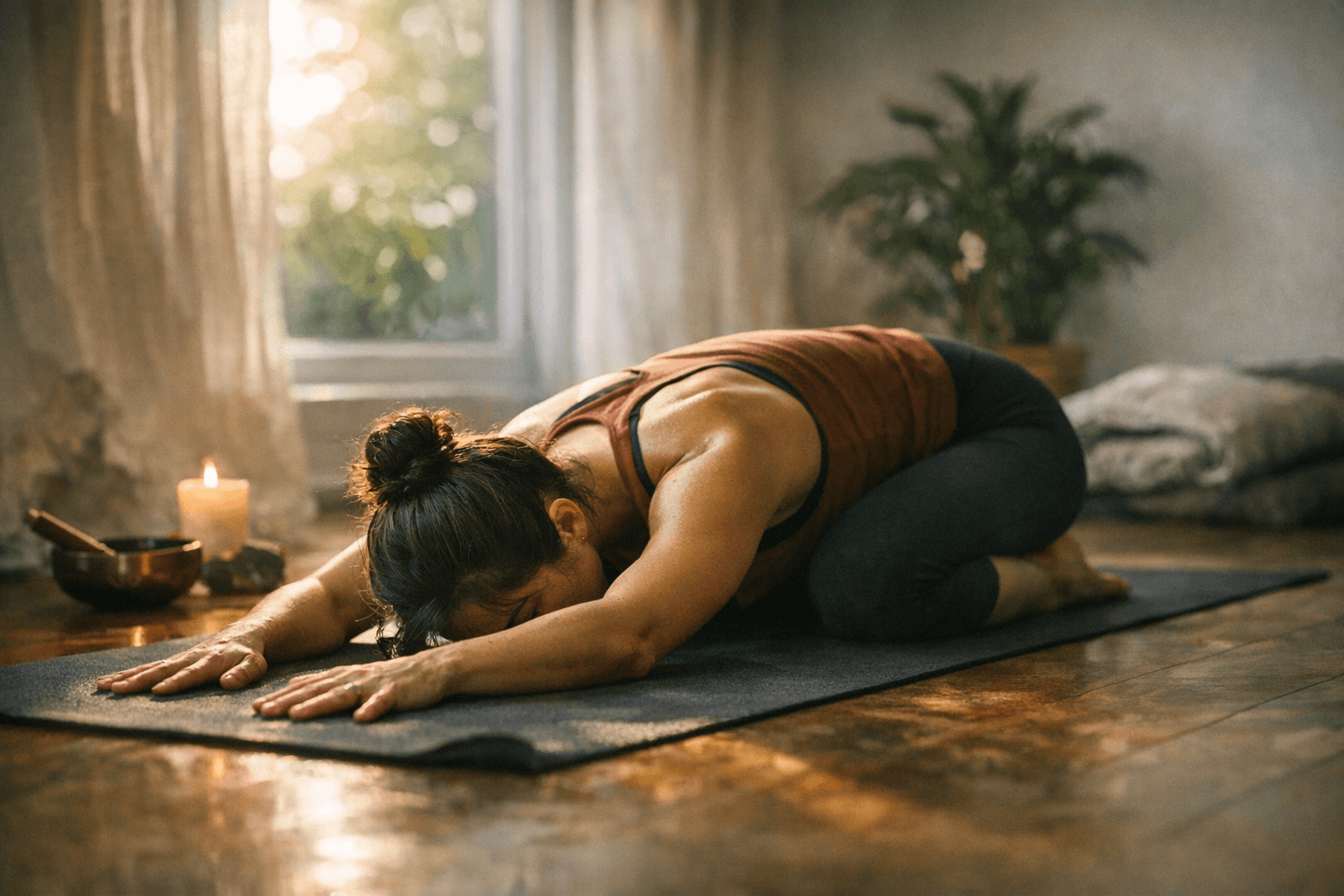
The sequence begins in Child's Pose: bring your knees wide toward the edges of your mat, extend your arms long in front of you, and send your sit bones toward your heels. If that doesn't feel comfortable, sit back on your heels with your shoulders stacked over your hips.
This isn't just a warm-up position — it's an intentional grounding anchor. Lowering your head beneath your heart signals to the nervous system that it's time to slow down and relax, making Child's Pose a very restorative posture. Child's Pose helps you tune into your breath while gently stretching the back and hips, and stimulates the vagus nerve, encouraging the body to relax and unwind.
Starting low and floor-bound is a deliberate structural choice. Yoga assists with grounding in part through postures that involve various parts of the body touching the earth. These poses help create the physical connection necessary for feeling grounded. Before you move into anything dynamic, you need to know where you are — and Child's Pose makes that unavoidable.
The Role of Grounding Moves in Mood Work
Not every yoga sequence targeting mood goes the same route. Some pump you up with Sun Salutations; others slow you into Yin holds. This 10-minute approach threads a specific needle: the flow relies on grounding movements and purposeful pacing to help shift negative energy, fast enough to create change but slow enough to maintain presence.
Grounding postures work on two levels simultaneously. Physically, they require body parts to press into the mat, creating proprioceptive feedback that anchors attention in the present moment. The act of grounding reestablishes our connection to the earth so that we feel supported, encourages us to stop overthinking, and helps us fully inhabit our bodies — grounding is about being rather than thinking.
Emotionally, the payoff compounds quickly. Even stressors that aren't life-threatening can switch on fight-or-flight mode, and we stay in this heightened stress state because we can't physically run away from things like deadlines or everyday pressures. The result is that we become reactive rather than responsive, and our overall mental and physical health takes a hit. Grounding movements interrupt exactly that cycle.
Props: Optional, Not Required
One of the sequence's most accessible design features is its prop policy. While no props are needed for this practice, you are welcome to keep a block or block-like prop nearby for support if needed. That means a thick book, a folded blanket, or a firm pillow can all substitute if your range of motion calls for a little lift. Nothing about this sequence should require a full studio setup.
This matters more than it sounds. A practice you can roll out anywhere — your bedroom floor, a hotel room, a quiet office corner — is a practice you'll actually use on the days you need it most.
Pacing: The Underrated Variable
Most practitioners focus on which poses they're doing. This sequence asks you to pay equal attention to how fast you're moving through them. Purposeful pacing is named explicitly as one of the sequence's three core tools, alongside grounding and breath coordination. That's intentional.
Slow breathing increases delta, theta, alpha, and beta EEG power, suggesting a uniquely induced globally integrative dual brain state that is both calm but awake — implying decreased overactivation, stress reduction, calm focus, relaxation, and enhanced parasympathetic tone. Rush through the poses and you strip the sequence of its primary mechanism. The pacing isn't filler — it's the dose.
Think of it like this: breath coordination sets the rhythm, grounding moves give the nervous system something concrete to land on, and pacing ensures the whole thing unfolds slowly enough that your body actually registers the shift.
Carrying the Mood Off the Mat
No matter how you arrive on your mat, know that you have the ability to decide how you would like to move and breathe during your practice — and how you would like to carry that new mood into the rest of your day. That closing framing from the sequence is worth sitting with. The practice isn't just about the 10 minutes — it's about what emotional state you walk away carrying.
Yoga and breathing exercises cultivate mindfulness, which involves the practice of being present in the moment without judgment. This state of mindfulness has been associated with decreased rumination and an enhanced ability to manage stress effectively. A short practice done consistently builds that skill over time more reliably than a long practice done occasionally.
The 10-minute format removes the last remaining excuse. Bad mood, tight schedule, no studio nearby — none of it holds up against a sequence that asks only for a mat, a block if you want one, and the willingness to breathe on purpose for ten minutes. That's a remarkably low bar for something that actually works.
Know something we missed? Have a correction or additional information?
Submit a Tip