15-Minute Yoga Sequence Builds Core Strength and Stability With Breath
Yoga Journal's 15-minute core sequence proves you don't need a gym or endless crunches — just breath, a blanket, and 15 minutes to build real stability from the inside out.
Building core strength is about more than crunches. This kind of yoga flow builds stability through dynamic postures and long holds — and Yoga Journal's 15-minute teacher-led practice is a precise, purposeful answer to a question the community keeps asking: how do you build a functional core without losing the breath-centered soul of yoga?
Core work isn't just about targeting your abs. It's about using every muscle from your shoulders down to your hips to stabilize your body on the mat, and make off-the-mat movements easier. That framing sits at the heart of this sequence, which is designed to develop functional core control and integrate breath mechanics as a structural tool, not just a calming afterthought.
Why Breath Is the Foundation
Before a single plank or Boat Pose appears in this sequence, breath gets its moment. To tap into your core, breath is the place to start. Connecting with the breath can clarify the mind, helping you relax and ungrip from habitual thought processes. When the mind is clear, you can experience greater depths of inner and outer stability.
Conscious breathing activates the diaphragm and pelvic floor, which are key components of the core. These muscles help create intra-abdominal pressure, which stabilizes the spine and pelvis during movement. Over time, this conscious engagement of the core muscles through breathing leads to better posture and reduced strain on the lower back.
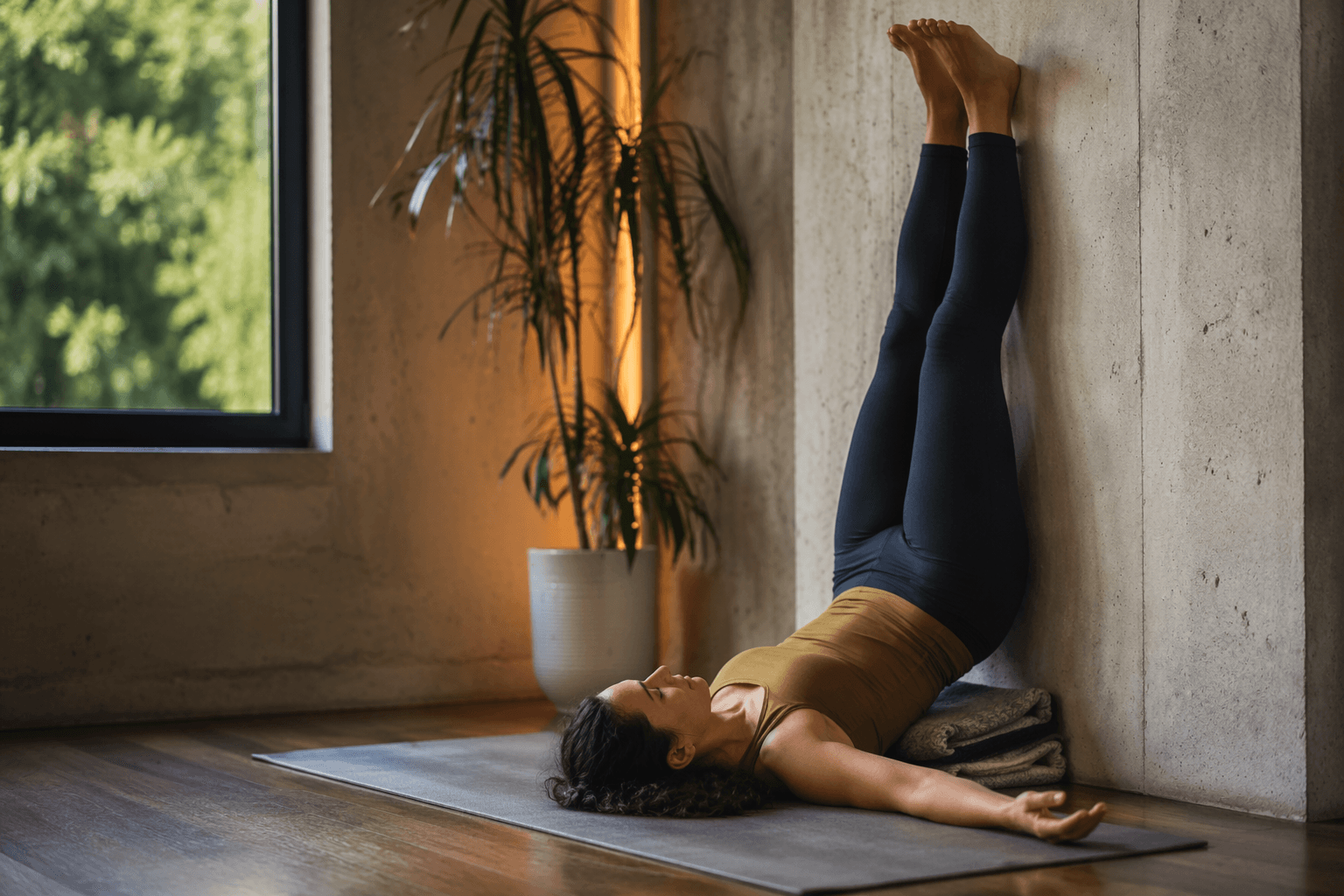
The sequence opens in a reclined position, hands on the ribs. After 5 cycles of breath, you heel-toe your feet a little wider than your hips, keeping them flat on the floor and turning your toes in slightly for Constructive Rest. Place your hands on your ribs and breathe into the heels of your hands. Stay here for 5 cycles of breath. It's a deliberate, unhurried beginning — one that reminds you the core is already working before you lift a single limb.
The Warm-Up: Waking the Deep Stabilizers
Most traditional core workouts, like crunches and sit-ups, overemphasize the superficial front-body muscles, mainly the rectus abdominis, and ignore the deeper stabilizers. That can lead to imbalance, strain, and even injury over time. Yoga takes a different approach. Poses like Dolphin, Revolved Chair, and even simple seated twists engage the deep core muscles like the transverse abdominis and multifidus through slow, controlled movement and balance. Instead of isolating muscle groups, yoga integrates them, helping your core work as a unified system.
While there are four main muscle groups that form the abdominals, the transversus abdominis (TVA) is the deepest layer that stabilizes the entire trunk of the body. Activating it is the difference between surface-level effort and lasting stability. Belly breathing is a foundational pranayama practice in yoga, providing the groundwork for all other poses. Sit comfortably with your spine aligned. Place one hand on your belly and the other on your chest. Inhale deeply into your belly, letting it rise like a balloon. Exhale slowly, drawing the belly inward. This simple practice strengthens the core and reduces stress.
The Sequence: Dynamic Postures and Long Holds
From the floor, the practice flows through a progression that layers challenge progressively. You actively press the soles of your feet together and let your knees fall open in Reclined Butterfly, shifting your hands to your lower belly and breathing into your hands for 4 cycles of breath.
Then comes the moment many practitioners know well: bring your knees back to your chest, grab the backs of your thighs, and begin to rock back and forth. Use the momentum to propel you into Boat Pose. Stay here for 2 cycles of breath. As you inhale, slowly lower into Low Boat Pose by straightening and lowering your legs until they and your back are hovering parallel to the floor. Exhale as you squeeze back up into Boat Pose. Repeat 5 times as you move with the pace of your breath.
With your final inhalation, return to Low Boat and hold here. Your arms can reach forward or overhead. Stay here for a slow count of 5 before lowering fully onto your back. This cycling between Boat and Low Boat is where the sequence really earns its reputation: breath dictates pace, and the core has no choice but to follow.
Bend your knees, place your feet flat on your mat, and bring your knees hip-distance apart. Press into your heels to lift your hips into Bridge Pose. Stay here for 6 cycles of breath. Bridge activates the posterior chain, the muscles of the back body, after a lot of focus on the front body — a critical counter-balance that keeps the practice honest.
Forearm Plank: The Stability Test
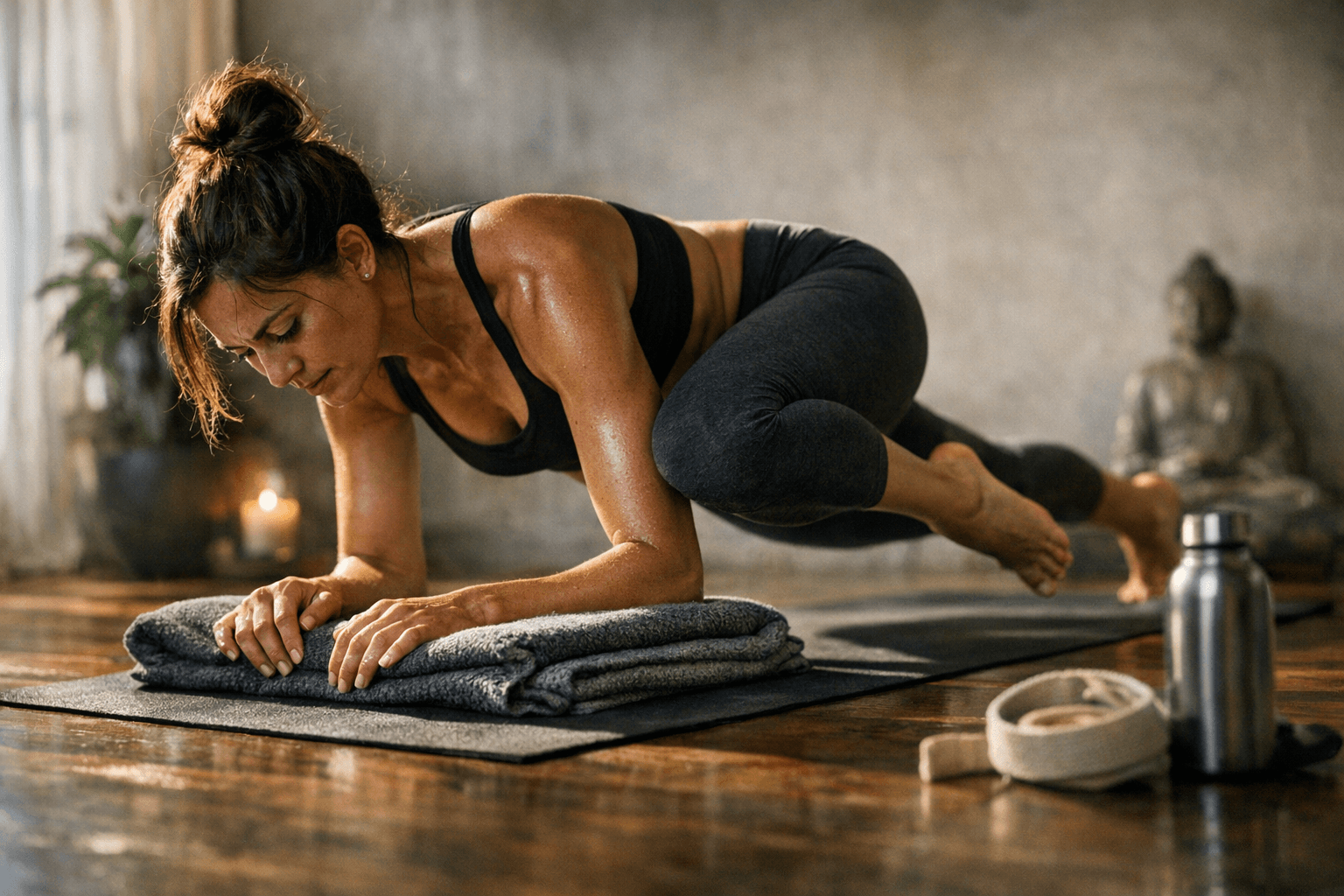
Slowly lower your hips down, hug your knees toward your chest, and rock up and over into Tabletop. If you have sensitive knees, grab your blanket, fold it in half, and slide it beneath your knees for extra cushioning. From there, the sequence steps back into Forearm Plank.
Once complete, lower to your knees and rest for 1 breath before stepping back into Forearm Plank Pose. Stay here for 30 seconds, lowering to your knees if necessary. The Side Forearm Plank variation follows: let your heels fall to your left, shift your weight into your left forearm, and bring your right arm toward the sky as you open your body in Side Forearm Plank. Stay here for 30 seconds before repeating on the opposite side. Once finished, return to Forearm Plank for 30 seconds.
This traditional core-strengthening position targets the obliques, shoulders, and back while encouraging proper stability and balance. You can also drop the knees to the mat as you start building more core strength.
The Close: Rest as Integration
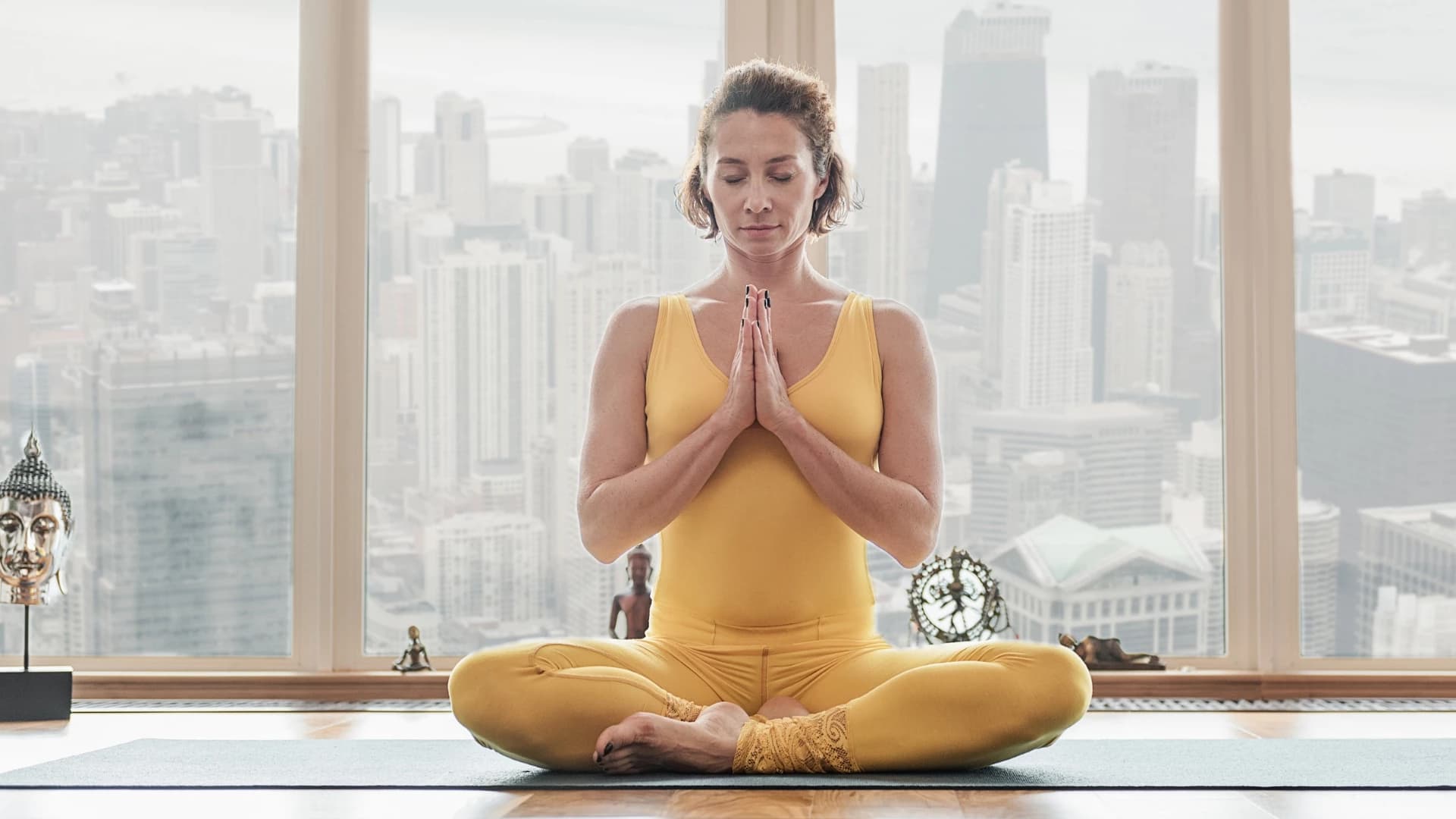
Lower your knees and press back into Thunderbolt Pose with the tops of your feet resting on the blanket and your hips on your heels to close. Bring your hands together at heart center, bow your head, and thank yourself for making it to your mat today.
That closing gesture is not incidental. No core work would be complete without rest, which is integration time. There's a reason the parasympathetic response is referred to as the "rest and digest" response. When you are active, your body can't expend energy on assimilating nutrients. When you rest, your body can integrate what you've taken in, whether food or asana, and transform it into sustenance.
Making It Work Off the Mat
A strong core ensures stability, balance, and control during movement. Whether you're practicing yoga, surfing, lifting weights, running, or simply bending to tie your shoes, your core acts as the anchor for your body. A strong core also reduces the risk of injuries, particularly to the lower back, by helping to distribute force evenly.
Because breath and movement are linked in yoga, you learn to activate your core in a more natural, sustainable way. On each exhale, your body naturally engages the deeper abdominal muscles, especially when paired with cues like drawing your lower abdomen in. That's the skill this 15-minute sequence is really teaching: not just strength for the mat, but the kind of controlled, breath-driven stability that follows you into everything you do after you roll it up.
This article was produced by Prism’s automated news system from verified source data, official records, and press releases, then run through automated quality and moderation checks before publishing. The system is built and supervised by the people who set the standards it runs under. Read our full AI policy.
Did this article answer your question?