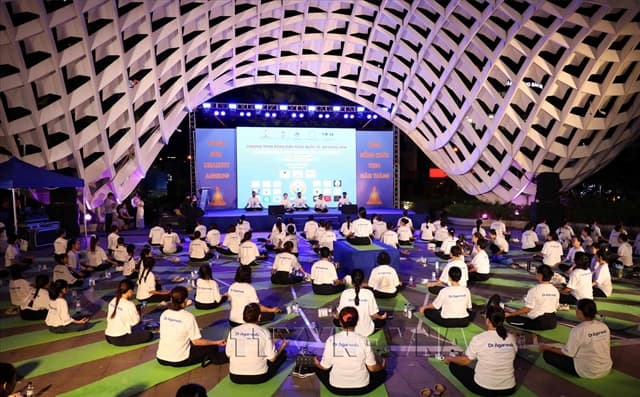
AIIMS yoga research deepens evidence base for mainstream medicine
AIIMS’s yoga centre put trial data, a tobacco-cessation meta-analysis and a sleep study on display, showing yoga research moving from the fringe into clinic-ready medicine.
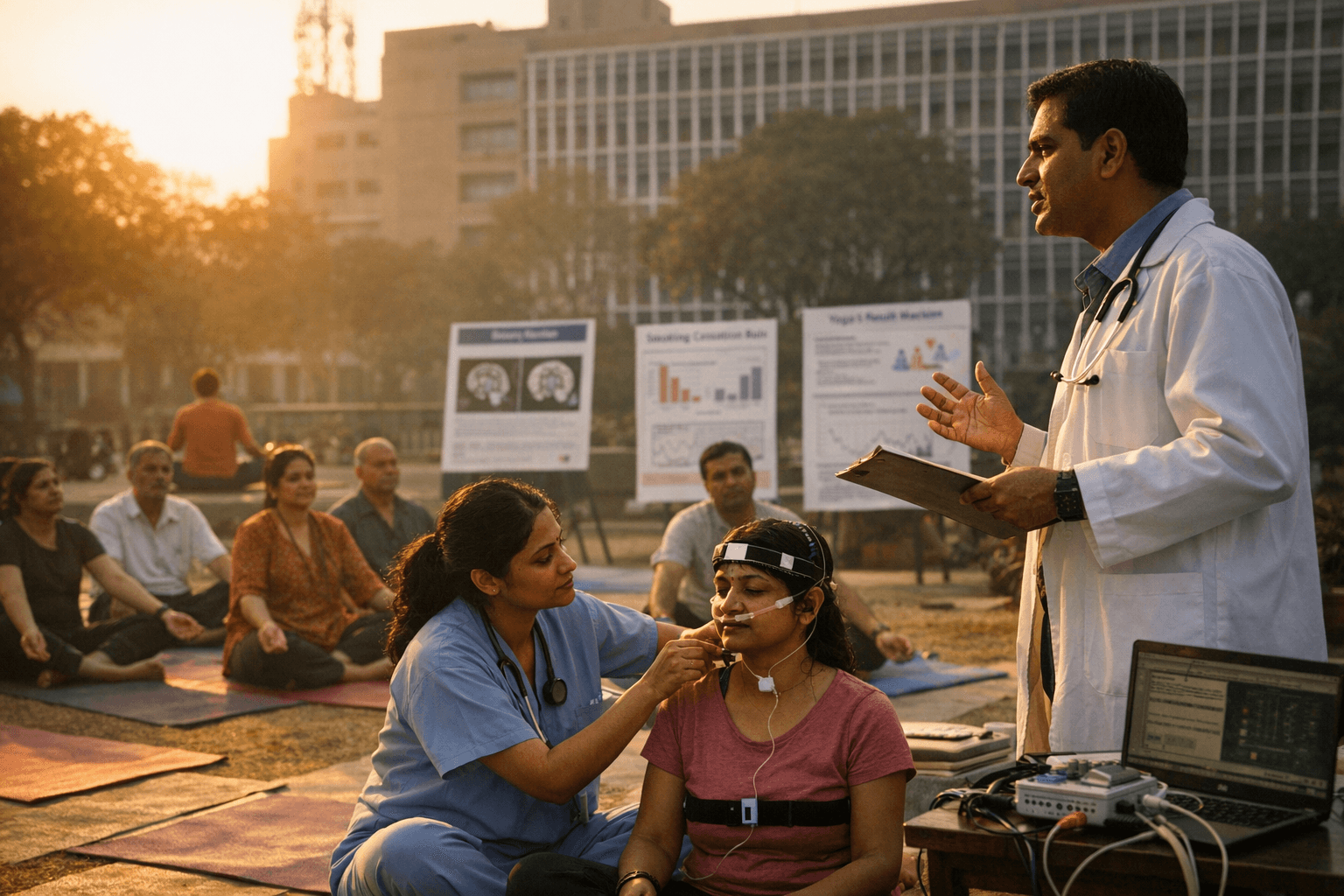
The Centre for Integrative Medicine and Research at AIIMS New Delhi is pushing yoga further into the evidence-based medical mainstream, and the latest proof came from a Delhi conclave where researchers laid out work that is now moving from pilot studies to published reviews and accepted papers.
The most substantial piece in that portfolio is a systematic review and meta-analysis on yoga for tobacco cessation, registered with PROSPERO as CRD42025643806 and built from randomized controlled trials in English published through September 2024. That matters because tobacco-cessation claims are often airy and wellness-heavy; this review is anchored in trial data, which gives it more weight than a single class-based study, even if the quality of the underlying trials still determines how far the conclusions can go.
CIMR, led by Dr Gautam Sharma, was inaugurated on June 22, 2016 by J.P. Nadda, in the presence of then-AIIMS director Prof. M.C. Mishra and Dr H.R. Nagendra. AIIMS says the centre’s mandate is to develop scientifically validated and customized integrative medicine solutions, make yoga a cost-effective mass healthcare modality, and generate acceptable scientific evidence for traditional medicine systems. The setup is built for that job: the centre sits on the 7th floor of the Convergence Block and includes a research area, clinics, therapy rooms, a yoga hall and conference space, with video conferencing for virtual yoga therapy and counselling.
The evidence stream is not limited to one topic. AIIMS’s research directory lists a CIMR project led by Dr Gautam Sharma from September 1, 2023 to August 31, 2028, and a separate yoga-based lifestyle intervention study on polycystic ovarian syndrome led by Dr Rima Dada from October 8, 2023 to August 9, 2026. Earlier work from the centre has already reached randomized controlled trials on yoga for felt stigma in adults with epilepsy, integrated yoga as an add-on therapy in clinical depression, and structured yoga practices for quality of life in ulcerative colitis patients in remission.
That is why the newer insomnia work also stands out. A study on yoga nidra for sleep disturbances and insomnia has been accepted for publication in Sleep and Breathing, a sleep-medicine journal focused on sleep disorders and sleep-disordered breathing. Put beside the tobacco review, it shows a research pipeline that is active, not symbolic.
The broader institutional picture has also widened. AIIMS launched the Desh Ka Prakriti Parikshan Abhiyan on October 29, 2024, and in 2023 said CIMR already had more than 40 projects running and about 20 papers published. That same year, the centre said its researchers had collaborated with doctors and scientists from 19 AIIMS departments and had been invited by the American Heart Rhythm Society and the European Society of Cardiology to present yoga work. At the April 18 AYUSH conclave, inaugurated by Union Minister of State for Ayush Prataprao Jadhav, the presence of the heads of the central councils for Ayurveda, Unani, Siddha, Homoeopathy and Sowa Rigpa, plus the director of the Morarji Desai National Institute of Yoga, underlined the policy bet behind it all: yoga is being treated less like a slogan and more like a testable part of modern care.
This article was produced by Prism’s automated news system from verified source data, official records, and press releases, then run through automated quality and moderation checks before publishing. The system is built and supervised by the people who set the standards it runs under. Read our full AI policy.
Did this article answer your question?