Child’s Pose eases stress, lowers cortisol, and restores calm
Child’s Pose is going viral because it offers instant, low-effort relief, and research suggests slow breathing in Balasana can ease stress and lower cortisol.
Why Child’s Pose is suddenly everywhere
Child’s Pose has become the kind of reset people actually use in the middle of a workday, a tense commute, or an anxious stretch before bed. The reason is simple: Balasana asks very little of the body while offering a lot back, from a slower breath to a clearer nervous-system shift. That combination, plus how instantly recognizable the shape is, helps explain why it travels so well online when generic yoga advice usually does not.
The pose’s appeal is also practical. Cleveland Clinic describes Child’s Pose, also called Shishuasana, as a simple restorative full-body stretch that can positively affect the parasympathetic nervous system. In plain terms, it is one of yoga’s most efficient ways to cue the body toward recovery instead of reaction.
What the pose is doing inside the body
Child’s Pose works best when the breath leads. Mayo Clinic recommends inhaling and exhaling slowly and deeply for at least eight breaths, which gives the posture enough time to settle the breath pattern and create a genuine pause. That slower respiration is part of why the pose feels so different from a quick forward fold or a casual stretch at the desk.
That pause matters because breathing is not just a background detail, it is part of the regulation itself. A review of yoga asanas notes that practices including yoga postures appear associated with improved regulation of the sympathetic nervous system and the hypothalamic-pituitary-adrenal system. Harvard Health similarly says yoga and meditation may improve mood and lower levels of stress hormones, which fits the broader idea that Child’s Pose is not merely comfortable, it may help interrupt the body’s stress cascade.
Why this one pose resonates more than broad yoga advice
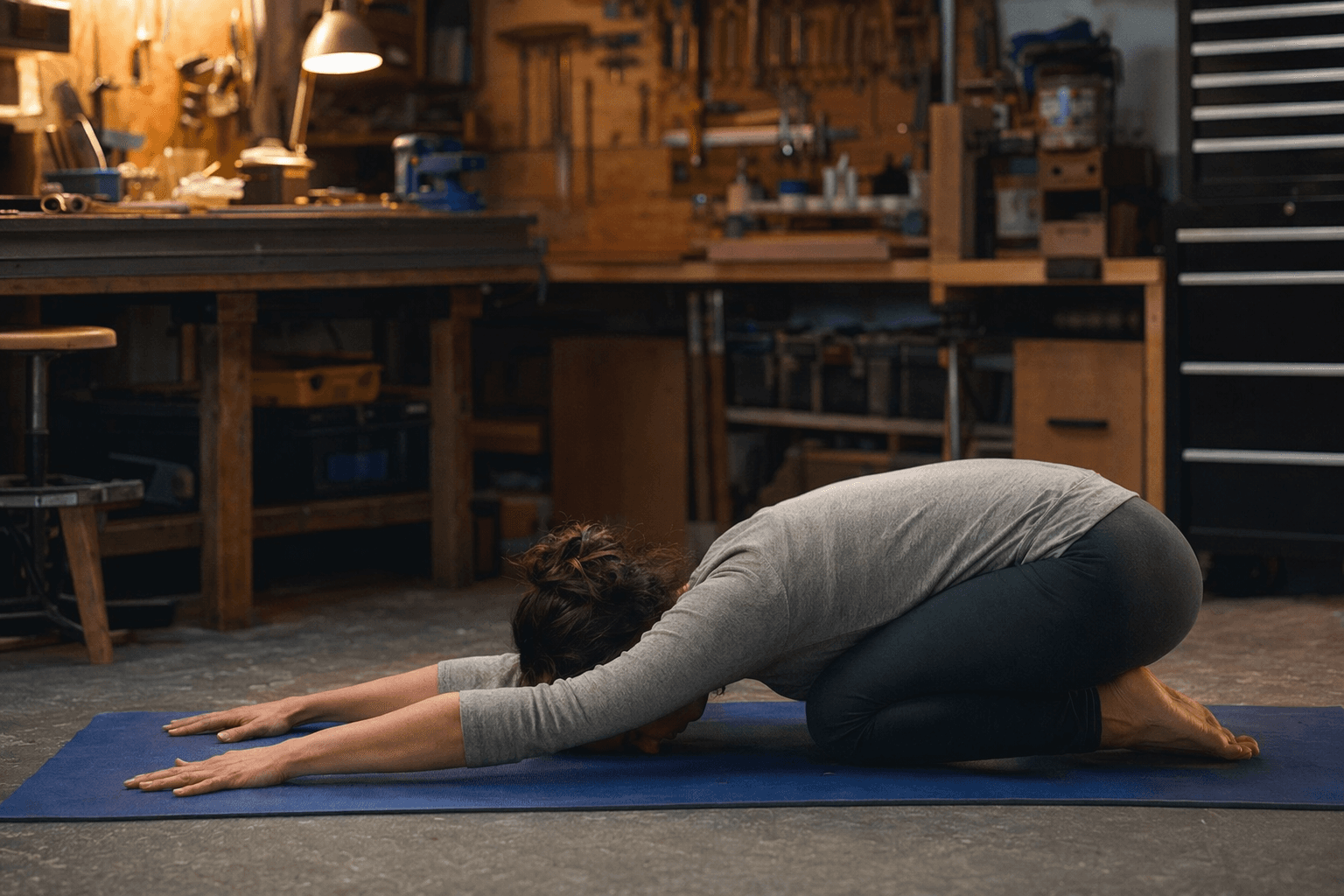
Child’s Pose has a built-in story people understand in a second. You do not need a long class, a polished studio, or even a full mat sequence to know what to do with it: knees down, hips back, forehead resting, breath slowing. That immediate readability is part of the reason the pose is more shareable than a general recommendation to “do yoga for stress.”
Yoga Journal calls Balasana a foundational pose, but it also notes that it can be physically and emotionally challenging for some people. That tension is important, because the pose is not just about folding in, it is about yielding. Yoga Journal also points out that there are multiple variations that can help different bodies relax into it, which makes Child’s Pose more inclusive than a one-size-fits-all wellness slogan.
How to practice it so it actually feels restorative
The shape is straightforward, but the experience improves when you treat it like a reset rather than a stretch you rush through. Start by lowering yourself slowly, then let the exhale lengthen without forcing the ribs or shoulders. Hold the posture for at least eight slow breaths, as Mayo Clinic suggests, and let the forehead rest as comfortably as possible so the neck and jaw can soften too.
A few simple adjustments can make a big difference:
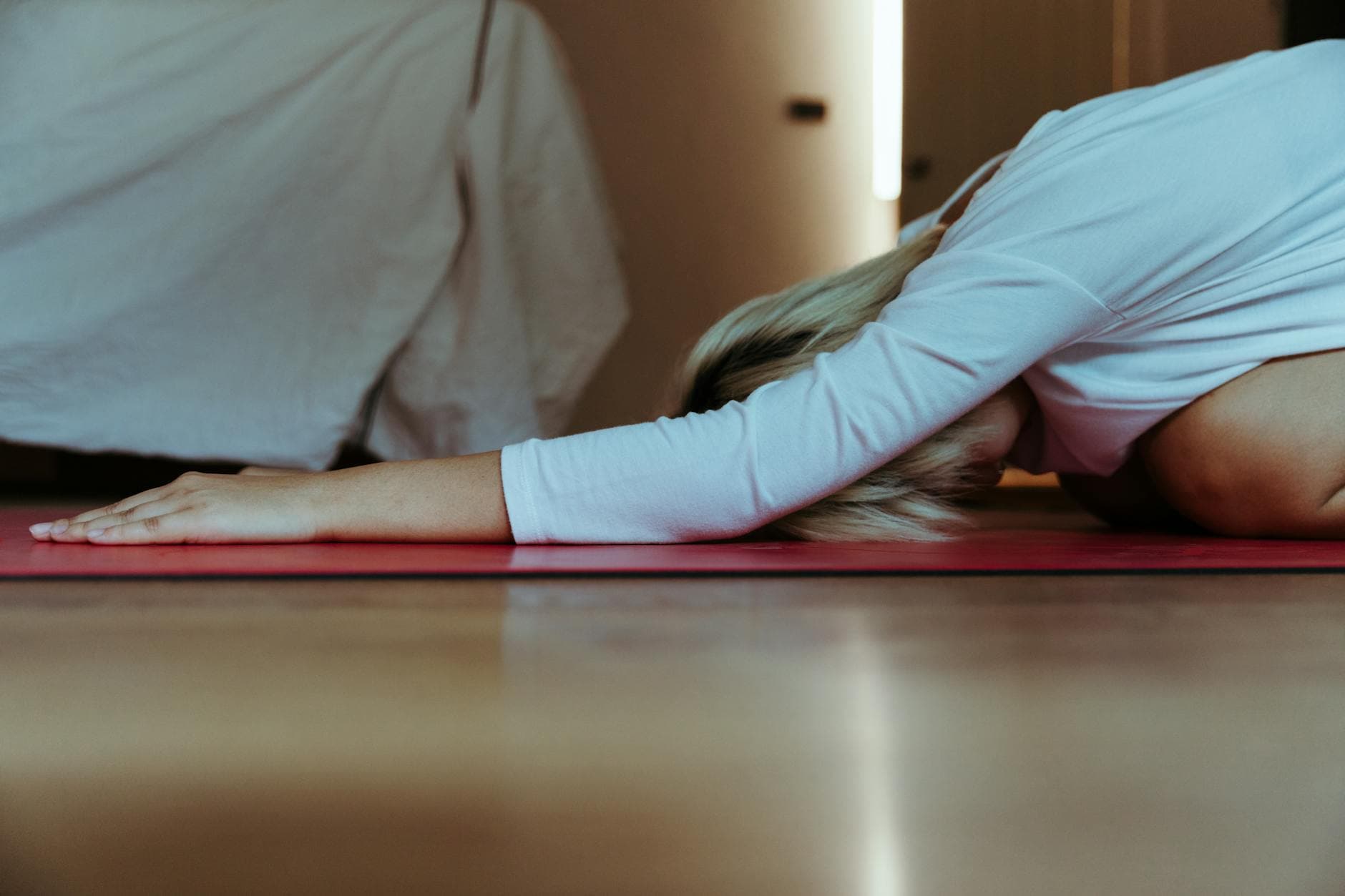
- Keep the knees wider if the belly or chest needs more room.
- Place a folded blanket under the hips if sitting back is uncomfortable.
- Support the torso with a bolster or pillows if the floor feels too far away.
- Turn the head to one side for a few breaths, then switch, if resting the forehead straight down is not accessible.
Those variations line up with Yoga Journal’s point that different bodies need different versions of the pose. In practice, that is what makes Balasana durable: it can be tailored without losing its core effect as a moment of rest where the body can be still.
Why the science around stress and cortisol matters
The social-media appeal of Child’s Pose would not land as hard if the research behind yoga’s stress effects were thin. A 10-week classroom-based yoga intervention found that second graders showed a significant decrease in baseline cortisol after the program, which matters because cortisol is one of the body’s main stress-related hormones. That result does not prove Child’s Pose alone caused the change, but it does reinforce the broader link between yoga-based practices and stress regulation.
A separate review of yoga for children and young people says yoga may help build emotional balance and self-regulation. That is a useful lens for adults too, especially for anyone reaching for a fast reset in the middle of a packed day. The same tools that help children settle a nervous system, breath, posture, repetition, and attention, are the ones making Child’s Pose feel so relevant now.
From ancient practice to modern recovery tool
Child’s Pose may be trending on screens, but its roots run much deeper than a viral post. Britannica traces yoga to Indian philosophy and notes that Patanjali’s Yoga Sutras, the basic text of the tradition, date roughly to the 2nd century BCE or 5th century CE. Yoga later became popular in the West in the early 20th century, and modern hatha yoga brought posture and breathing into a form that fits today’s studio culture.
That history matters because it shows why the pose can feel both ancient and immediate. It belongs to a tradition that has always linked body, breath, and mind, yet it also solves a very modern problem: how to find relief fast, without equipment, money, or much planning. Cleveland Clinic, Mayo Clinic, Harvard Health, and Yoga Journal all point in the same direction, even if they describe it differently: Child’s Pose is a low-barrier way to shift out of strain and into recovery.
Why it keeps spreading now
The popularity of Child’s Pose says something bigger about where wellness culture is headed. People are not only looking for ambitious routines or aesthetic flows, they are reaching for something they can use immediately when stress spikes. Balasana fits that need better than most poses because it is easy to recognize, easy to try, and backed by a body of research that connects yoga with calmer breathing, lower stress hormones, and better self-regulation.
That is why this pose keeps showing up in feeds, studios, and everyday recovery habits. It delivers the kind of calm people can feel right away, and in a crowded wellness landscape, that kind of simple reliability is exactly what travels.
This article was produced by Prism’s automated news system from verified source data, official records, and press releases, then run through automated quality and moderation checks before publishing. The system is built and supervised by the people who set the standards it runs under. Read our full AI policy.
Did this article answer your question?