ClassPass Debuts First Industry Impact Report Measuring Fitness and Wellness Partner Growth
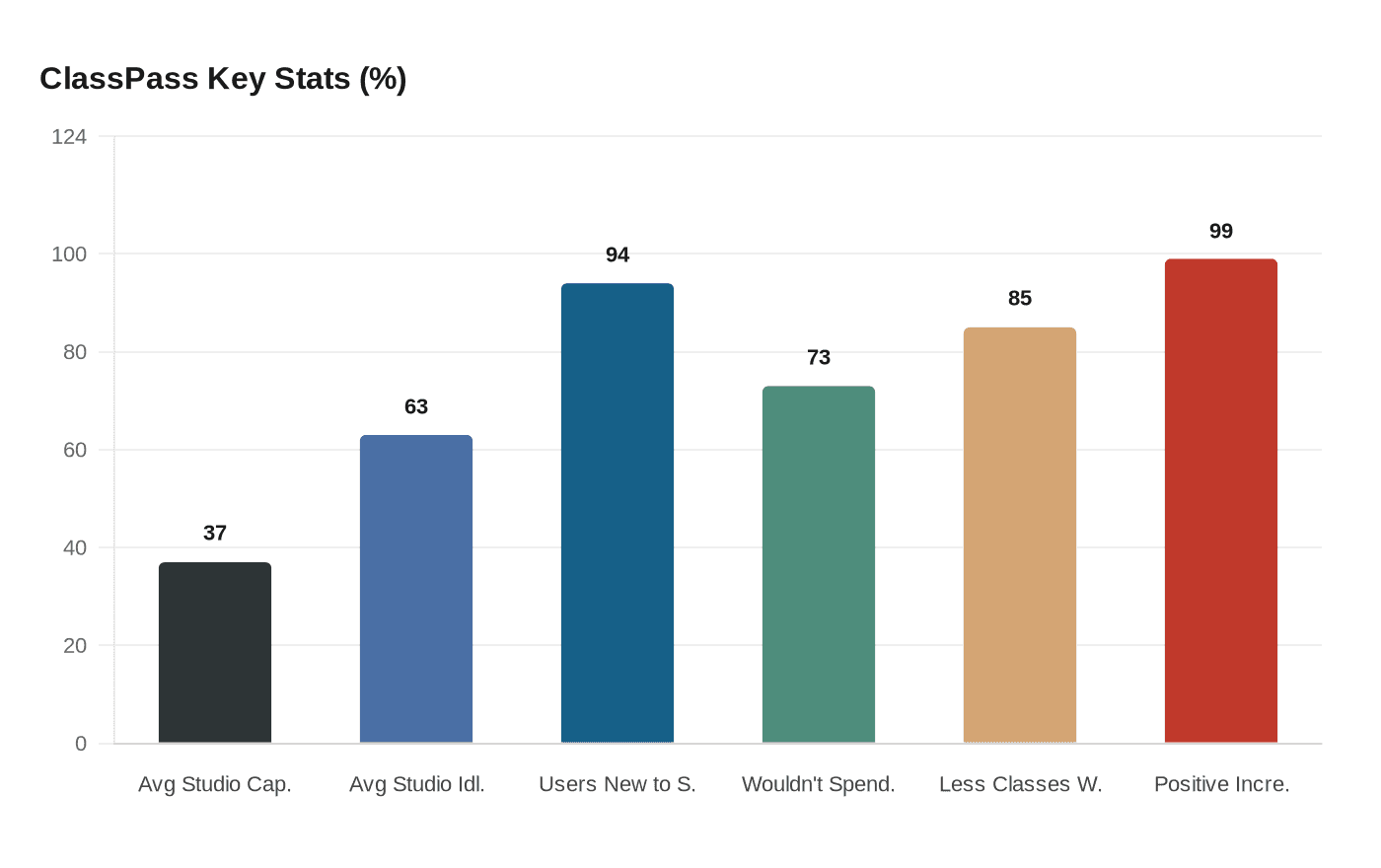
ClassPass released its first Industry Impact Report, revealing that the average fitness studio runs at just 37% capacity — and that partners making $1M+ on the platform jumped 28% year over year.

ClassPass, the app that provides access to thousands of fitness and wellness experiences worldwide, released its first Industry Impact Report on March 24, 2026. The inaugural report puts hard numbers on a question yoga studio owners have been asking for years: does the platform actually move the needle for partners, or does it just fill mats at a discount?
The headline finding is stark. "ClassPass only wins when our partners win," said Fritz Lanman, CEO of Playlist, ClassPass's parent brand. "In the fitness industry, the average studio operates at just 37% of total capacity. That represents a massive untapped growth opportunity. These results show how our model helps partners fill that excess inventory, attract high-intent consumers, and build stronger, more resilient businesses, while contributing to a healthier fitness and wellness economy."
That 63% idle capacity figure is the share-worthy gut-punch buried in the report. If your Thursday evening vinyasa flow class is running with six students in a room that holds 20, you're not an outlier. You're the industry average.
Drawing from proprietary platform data and partner and user surveys, the findings assess the contribution of the ClassPass model across the industry. The report goes beyond the capacity problem to make a case for ClassPass as a discovery engine. 94% of users are new to the studios they book through ClassPass, and 73% of surveyed users say they would not have spent money on those experiences without ClassPass pricing.
The financial results for top partners are notable. The number of partners who made over $1 million on ClassPass increased by 28% from 2024 to 2025, and 99% of businesses using both Mindbody and ClassPass between December 2024 and December 2025 achieved positive incremental revenue during that period. 85% of users agreed they would attend group fitness classes less often without ClassPass.
Fitness and wellness businesses operate with high fixed costs and perishable inventory. When a class spot goes unfilled, that opportunity to earn disappears. ClassPass helps partners convert excess capacity into revenue by introducing new customers, stimulating incremental demand, and driving bookings that may not have occurred otherwise.
The platform's scale gives those findings some weight. Founded in 2013, ClassPass connects members to millions of workouts and lifestyle offerings across 31 countries while working directly with businesses to merchandise their excess inventory, bring more clients in the door, and generate new streams of revenue. With tens of thousands of fitness studios, gyms, salons, and spas in the ClassPass network, members can choose from options including yoga, Pilates, strength training, and boxing, alongside wellness services like massage, acupuncture, and more.
The report arrives against a backdrop of ongoing industry tension. While ClassPass can pressure individual studio margins, it also broadens the funnel of people trying boutique classes. Studios have a love-hate relationship with aggregators but generally acknowledge them as part of the landscape now. The 28% jump in million-dollar partners is the kind of concrete, partner-side outcome ClassPass has historically struggled to quantify publicly, which makes this report, whatever its limitations, a meaningful step toward an honest accounting of how the marketplace model works in practice.
This article was produced by Prism’s automated news system from verified source data, official records, and press releases, then run through automated quality and moderation checks before publishing. The system is built and supervised by the people who set the standards it runs under. Read our full AI policy.
Did this article answer your question?