YogiTimes refreshes 2026 yoga app roundup for every budget and practice
YogiTimes’ refreshed app roundup cuts through the clutter: Omstars is the all-purpose pick, while Bryan Kest’s Power Yoga wins on lineage and focus.
Why this refreshed roundup matters
YogiTimes has updated its yoga-app guide with a clear consumer question at the center: which app actually fits your practice, your schedule, and your wallet. Katie Selph writes in a first-person review style and says she only recommends tools she has personally tested, which gives the roundup the feel of a trusted studio friend rather than a generic app dump.
That approach matters because yoga apps are not competing on class counts alone anymore. They are competing on curation, instructor credibility, interface quality, and whether they help you keep showing up when life gets messy. The strongest apps in this lane are the ones that solve a real problem, such as fitting practice into a packed day, keeping costs down, or replacing the accountability you used to get from a studio.
What the roundup is really measuring
The piece opens from a practical truth every yogi recognizes: even yoga gets pushed to the bottom of the to-do list when life gets busy. Mobile apps are framed as a way to make practice more convenient, more affordable, and more portable, especially for beginners and seasoned students who do not want to be locked into a class schedule.
That framing lines up with the larger way yoga is used today. The National Center for Complementary and Integrative Health describes yoga as an ancient practice that began as a spiritual tradition and is now widely used for physical and mental well-being. The Centers for Disease Control and Prevention also notes that regular physical activity can reduce short-term feelings of anxiety in adults, which explains why yoga apps increasingly market themselves as stress-management tools, not just flexibility platforms.
There is also a safety angle baked into the selection logic. The American Academy of Orthopaedic Surgeons warns that yoga can cause injury if it is practiced incorrectly and tells beginners to start slowly, choose an appropriate class level, warm up, and know their limits. That is a useful filter for app shopping, because the best platform for a new student is not always the one with the biggest library, it is the one that helps you avoid overreaching on day one.
Omstars is built for people who want one app to do most of the work
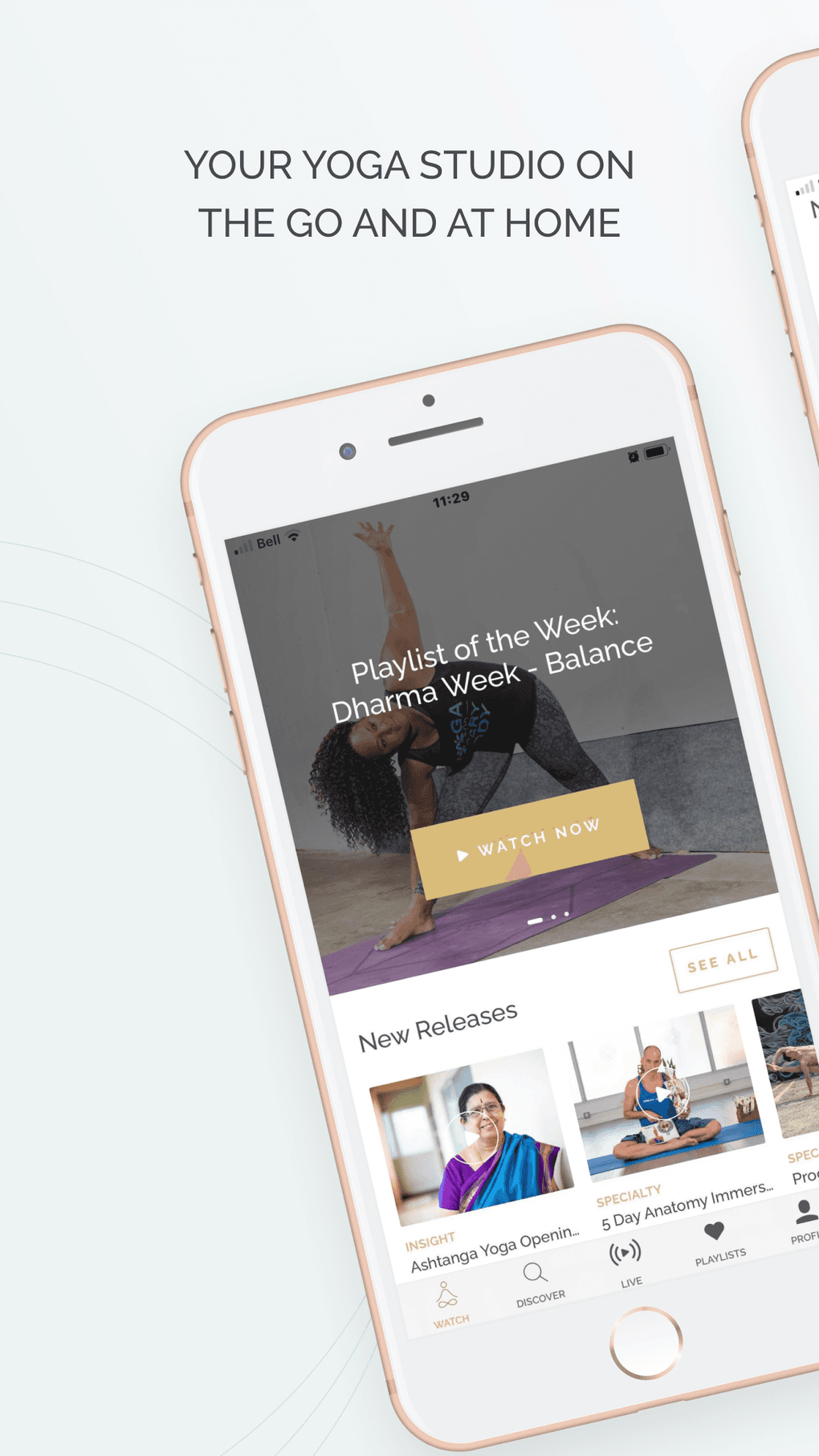
Omstars takes the top spot in the visible ranking, and it is easy to see why it stands out. The platform says it offers 5,000-plus yoga lessons across more than 20 styles, along with guided meditations, podcasts, talks, and unlimited daily live classes. It also gives users a seven-day free trial before the monthly or annual tiers begin, which makes it a low-risk way to test whether you will actually use it.
The app-store presence backs up that scale. Apple describes Omstars as offering more than 4,000 live and on-demand yoga, meditation, and wellness classes, while Google Play calls it “Netflix for Yogis” and says it is built for everyone from total beginners to advanced practitioners. That combination of breadth and accessibility makes Omstars the most obvious pick for anyone trying to replace studio attendance with a home practice.
What sells the platform is not just volume, though. Selph highlights the ability to browse by style or by goal, including stress reduction and flexibility, which is exactly the sort of feature that keeps a tired student from scrolling past their practice and giving up. If you travel often, work odd hours, or simply need a digital mat that is always open, this is the kind of app that can realistically anchor your week.
Power Yoga is for people who care about teaching voice, not just content volume
The roundup also points readers toward Power Yoga and Bryan Kest, and this is where the guide gets more interesting. Kest’s channel says he has practiced yoga since 1979 and taught since 1985, which gives the brand a lineage that many newer apps can’t fake. The emphasis here is not on a huge content library, but on a mind-body experience shaped by a long-teaching voice.
That matters for practitioners who have no patience for app clutter and just want a clearer relationship with the teacher. Power Yoga feels like the right fit for people who want their online practice to feel grounded, coached, and a little less algorithm-driven. In a market full of glossy wellness packaging, that kind of credibility is its own selling point.
Who each type of yogi gets the most out of these apps
Total beginners will usually get the most from Omstars. Google Play’s beginner-to-advanced positioning, the ability to browse by style or benefit, and the safety-minded reminder from the American Academy of Orthopaedic Surgeons to start slowly all point in the same direction: you want structure before intensity.
- Start with shorter sessions and a clear class level.
- Use the filtering tools instead of picking randomly.
- Treat the first week like a learning phase, not a performance test.
Budget-conscious users should pay close attention to the seven-day free trial on Omstars. The trial gives you time to see whether you will actually use live classes, meditations, or podcasts before monthly or annual pricing kicks in. For app shoppers, that is the difference between paying for a library and paying for something that becomes part of your routine.
Travelers and schedule-jugglers need portability above everything else. Apps with live and on-demand options, especially ones that let you filter by style, duration, and level, make it much easier to keep practice alive in a hotel room, between meetings, or after the day has already gone sideways. This is where a strong app beats a good YouTube rabbit hole, because the better platforms organize your next session instead of forcing you to hunt for it.
People replacing studio attendance with home practice need consistency, not novelty. That is why the roundup keeps circling back to curation, interface quality, and instructor credibility. The best digital substitute for the studio is the one that keeps you practicing three times a week instead of dazzling you once and disappearing from your life.
The practical takeaway
YogiTimes’ refreshed roundup is useful because it treats yoga apps like tools, not trophies. Omstars looks like the strongest all-around choice for breadth, live access, and beginner-friendly flexibility, while Power Yoga offers something different: a teacher-led, experience-driven practice with real lineage behind it.
If you want the short version, the new guide is less about which app has the biggest catalog and more about which one will still have you unrolling your mat next Tuesday.
This article was produced by Prism’s automated news system from verified source data, official records, and press releases, then run through automated quality and moderation checks before publishing. The system is built and supervised by the people who set the standards it runs under. Read our full AI policy.
Did this article answer your question?