Daily Yoga Practice Offers Women Stress Relief, Strength, and Hormonal Balance
The NIH confirms yoga cuts cortisol, but not every pose works for every woman. Here's what the science actually backs, and what to skip if you're pregnant or hypermobile.
The Evidence Is Real, But It Comes With Caveats
The National Institutes of Health has confirmed what millions of practitioners already suspect: yoga demonstrably supports stress management, mental health, quality sleep, and healthy weight regulation. Johns Hopkins Medicine cites that institutional backing directly in its public wellness guidance. But the mainstream conversation around yoga for women often glosses over a more useful truth: some of those benefits are well-documented, some are overstated, and a standard daily flow is simply wrong for certain bodies and life stages. Getting that distinction right is what separates a sustainable practice from one that causes harm.
The good news is that the evidence for stress reduction is unusually strong. A 2025 randomized controlled trial published in the International Journal of Human Movement and Sports Sciences tracked menopausal women over three months and found that the yoga group reduced their cortisol levels by 8.4%, while the control group saw cortisol spike by 22.3%. A separate meta-analysis found yoga consistently reduced cortisol, systolic blood pressure, resting heart rate, and heart rate variability across diverse sample groups. These are not soft "wellbeing" metrics. These are measurable physiological markers, and the data is reproducible enough that the U.S. military and major research institutions have integrated yoga into recovery and performance protocols.
What the Hormonal Balance Claims Actually Mean
The phrase "hormonal balance" gets applied so broadly in wellness content that it risks losing all meaning. What the research actually shows, according to a 2025 review published in the International Journal for Multidisciplinary Research, is compelling evidence that yoga improves hormonal regulation, particularly around cortisol and related stress hormones. Avant Gynecology notes that some studies and expert opinions suggest yoga can improve pelvic health alongside hormonal outcomes, while acknowledging the topic requires more research before sweeping claims can be made.
That measured framing matters. Yoga is not a substitute for hormone therapy, endocrinology consultation, or treatment for conditions like PCOS or thyroid dysfunction. Where the practice earns its claim is in reducing the chronic stress load that disrupts hormonal signaling in the first place: lower cortisol supports better sleep, which supports more stable mood regulation, which reduces the anxious-eating and fatigue cycles that worsen inflammatory conditions. The mechanism is real, even if the marketing overstates the directness of the effect.
The 10-Minute Minimum Effective Dose
One of the most practical shifts in evidence-based yoga guidance is the move away from demanding 60-minute sessions toward identifying what actually moves the needle in less time. A 10-to-20-minute daily practice, structured around specific goals, consistently outperforms irregular longer sessions for both stress resilience and mobility.
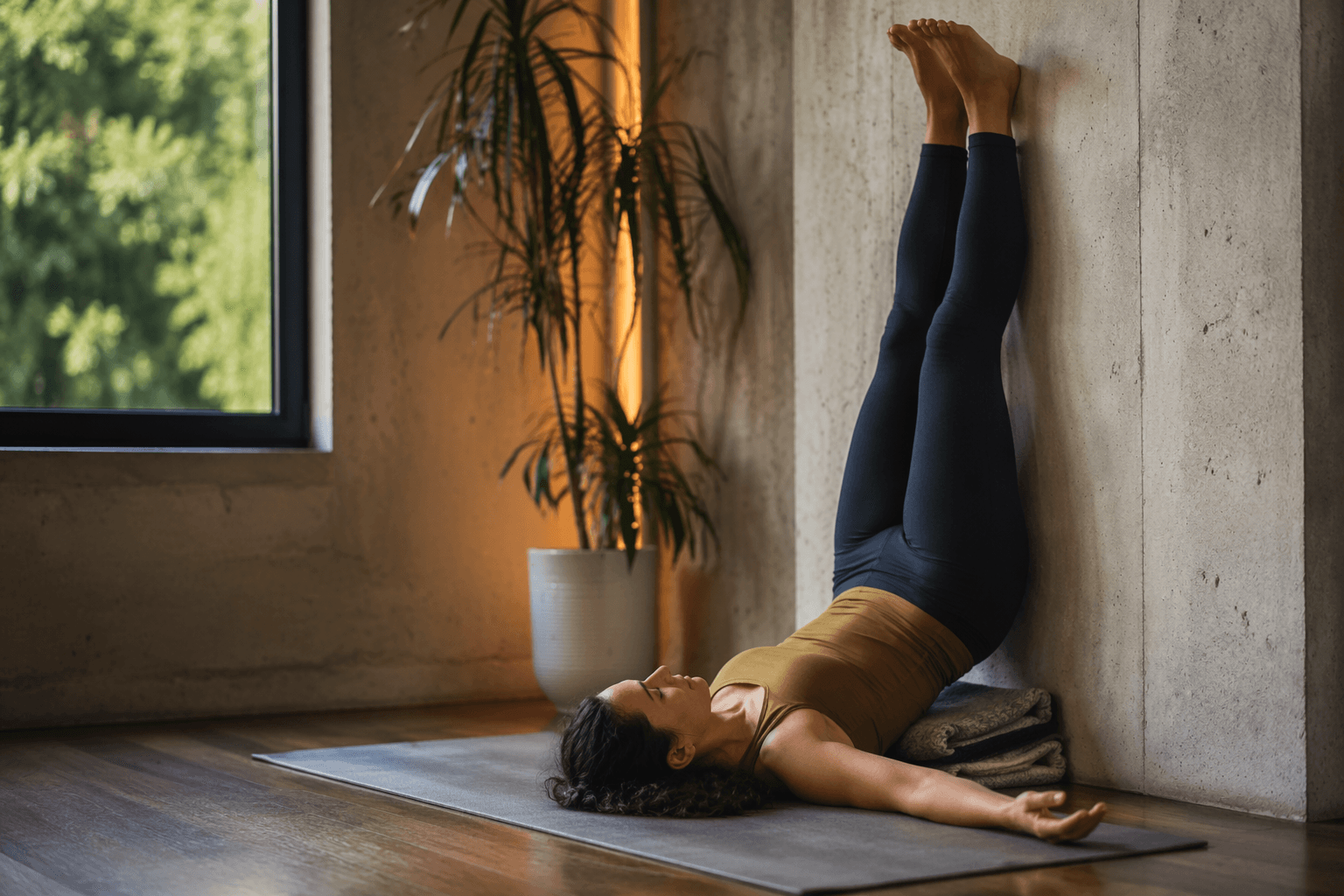
For sleep: A short evening sequence works by anchoring the parasympathetic nervous system before bed. Prioritize slow-breath supine poses (reclined bound angle, legs-up-the-wall) and close with a three-to-five minute breath-focused rest. The goal is a deliberate downshift in nervous system activation, not a workout.
For stress and anxiety: Breath-centered practice is the most evidence-supported intervention. Even five minutes of diaphragmatic breathing, nasal inhale with extended exhale, activates the vagus nerve and reduces the acute cortisol spike. Pair it with gentle seated spinal movement to release the muscular tension that accumulates in the shoulders and jaw during a stress response.
For menstrual cramps: Hip-opening sequences (pigeon, reclined figure-four, supported child's pose) target the psoas and piriformis, muscles that often hold chronic tension in the pelvis. Gentle spinal twists and forward folds can reduce prostaglandin-related cramping by improving circulation to the lower abdomen. Avoid deep backbends and strong inversions during heavy flow, as comfort and individual response vary significantly.
Who Needs to Modify, and Who Should Pause Entirely
This is the section that mainstream wellness features most frequently underserve, and it matters enormously.
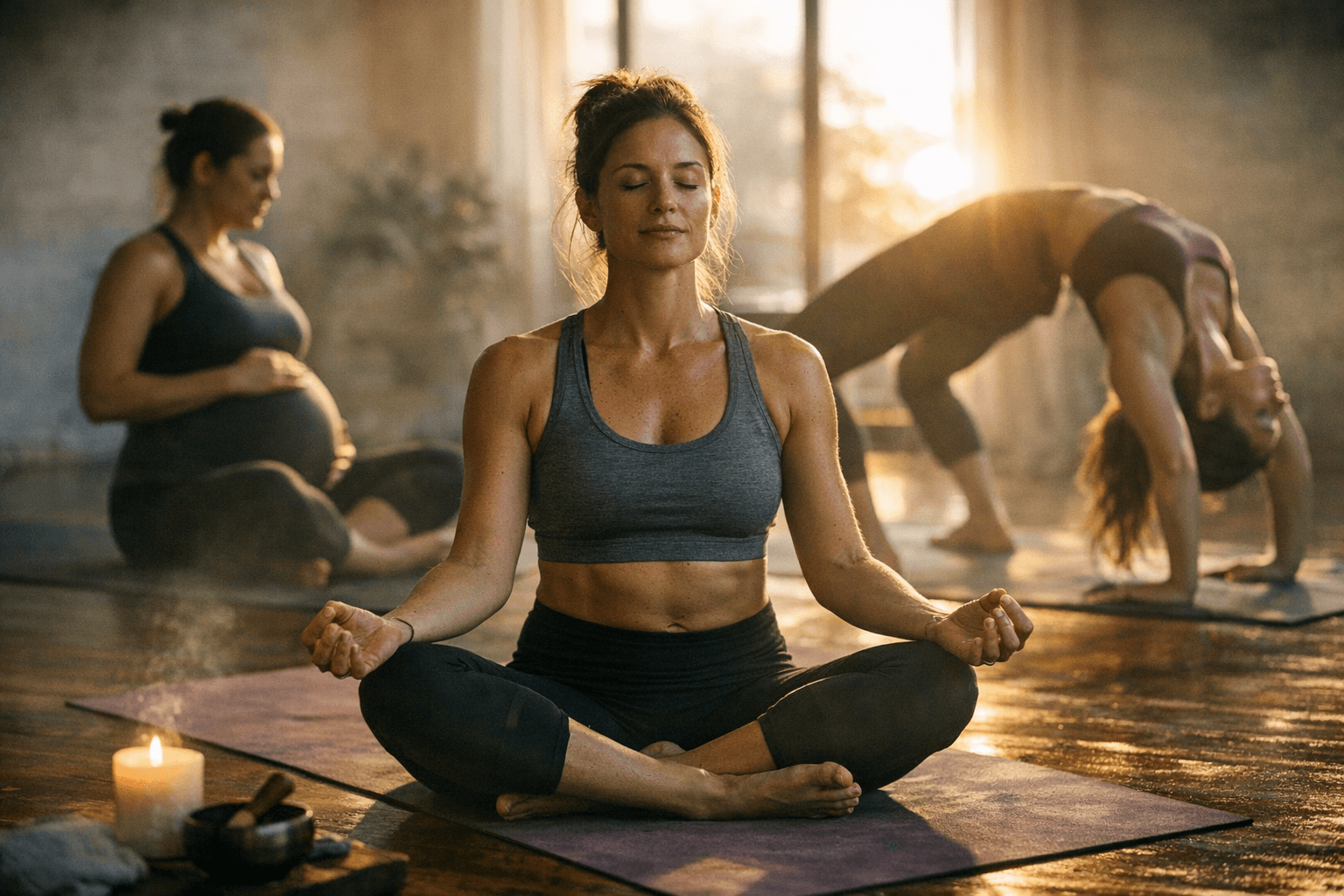
Pregnancy brings two simultaneous risks that standard yoga sequences do not account for. First, the hormone relaxin loosens ligaments throughout the entire body, not just the hips, which means the typical flexibility seen during pregnancy is "borrowed flexibility" that can easily tip into injury, particularly in standing balance poses, deep hip openers, and any pose that loads the sacroiliac joint. Libby Hinsley, a physical therapist and yoga therapist who specializes in prenatal bodies, has highlighted this directly: what looks like impressive range of motion during pregnancy is actually a warning sign for overstretching, not a reason to deepen poses. Second, certain pranayama practices, specifically breath-retention techniques like kumbhaka and rapid diaphragmatic pumping exercises like Kapalabhati, should be avoided during pregnancy entirely. Simple nasal inhale, slow oral exhale breathing is a safe alternative that still activates the parasympathetic response without oxygen disruption.
Hypermobility outside of pregnancy deserves equal attention. Women with Ehlers-Danlos Syndrome or generalized joint hypermobility often feel most comfortable in yoga classes because the poses feel "easy," but that sensation is the risk: loading hypermobile joints through their end range without adequate muscular support can accelerate joint damage. Hypermobile practitioners benefit most from strength-focused yoga and isometric holds rather than passive stretching.
Pelvic floor symptoms including leaking, prolapse pressure, or pelvic pain are a clear signal to work with a pelvic floor physiotherapist before continuing or beginning a yoga practice. High-load poses such as jump-throughs, boat pose, and standing balances with strong breath-holding are contraindicated for active pelvic floor dysfunction. Restorative and breath-coordinated practices are typically safe and often directly therapeutic, but the distinction requires professional assessment, not a generalised guide.
What a Structured Daily Practice Actually Looks Like
For women without the conditions above, a sustainable daily practice does not require a studio, elaborate props, or more than a mat and ten minutes. Structure it in three phases:
- Spinal warm-up (two to three minutes): cat-cow, gentle lateral bends, and a slow thoracic rotation. The spine is most rigid in the morning and benefits from progressive movement before any load is added.
- Targeted sequence (five to six minutes): choose hip-openers for mobility and cramp relief, a breath-focused seated or supine flow for stress, or legs-up-the-wall with diaphragmatic breathing for sleep preparation.
- Closing breath or rest (two to three minutes): this is non-negotiable for nervous system benefit. Ending without a deliberate rest phase leaves the cortisol reduction incomplete.
For peri-menopausal women and those managing desk-related stiffness, Hatha-based sequences with longer hold times and no power-vinyasa transitions are the most appropriate starting point. Restorative yoga, using bolsters and blocks to fully support the body in passive shapes, has the strongest evidence for sleep and recovery improvement in this group.
The Honest Bottom Line
Daily yoga practice for women is genuinely useful, but only when the practice fits the body doing it. The stress and cortisol data is solid. The sleep and mood data is consistent. The hormonal claims are real but require nuance. And the one-size approach that dominates mainstream coverage actively fails women who are pregnant, hypermobile, managing pelvic symptoms, or recovering from injury. The most shareable, and most responsible, version of this conversation names both sides: what yoga reliably delivers, and who needs a modified or medically guided path to get there.
This article was produced by Prism’s automated news system from verified source data, official records, and press releases, then run through automated quality and moderation checks before publishing. The system is built and supervised by the people who set the standards it runs under. Read our full AI policy.
Did this article answer your question?