Yin Yoga Newsletter Tackles Scar Tissue, Anatomy, and Teacher Training Resources
YinYoga.com's YINSIGHTS Vol. 128 warns that yoga can't break down scar tissue, with Bernie Clark and Diana Batts-led training offering teachers evidence-based do/don't guidance.
YinYoga.com's YINSIGHTS newsletter, Volume 128, opened its April 1 edition with a direct challenge to one of yoga's most repeated promises: that consistent practice will break apart scar tissue. "We do not break scar tissue," the lead article stated flatly, but confirmed that ways do exist "to help reduce its effects and, over time, remodel the fibers so that it becomes less of a problem."
That distinction, remodeling versus removal, is the practical hinge on which the entire piece turns. The newsletter framed it plainly: yoga can affect scar tissue, "but not by breaking it apart," and how and when to apply practice "requires careful consideration." For teachers who have been cueing students to push deeper into restriction hoping to dissolve adhesions, that framing is a course correction. Safe, repeated load and informed breathwork can improve functional mobility and reduce the adhesion's grip on movement; aggressive force into the tissue cannot, and risks triggering a protective response that compounds the problem. The structural logic of Yin practice, its longer, lower-intensity holds, aligns better with the biology of tissue remodeling than any effort to force range.
The do/don't framework that emerges from the article is direct: do approach scar tissue as something to remodel over time, do use sustained passive holds with breath awareness, do educate clients on realistic timelines. Don't promise elimination. Don't equate discomfort with productive loading. Don't compress the process for students eager for fast results.
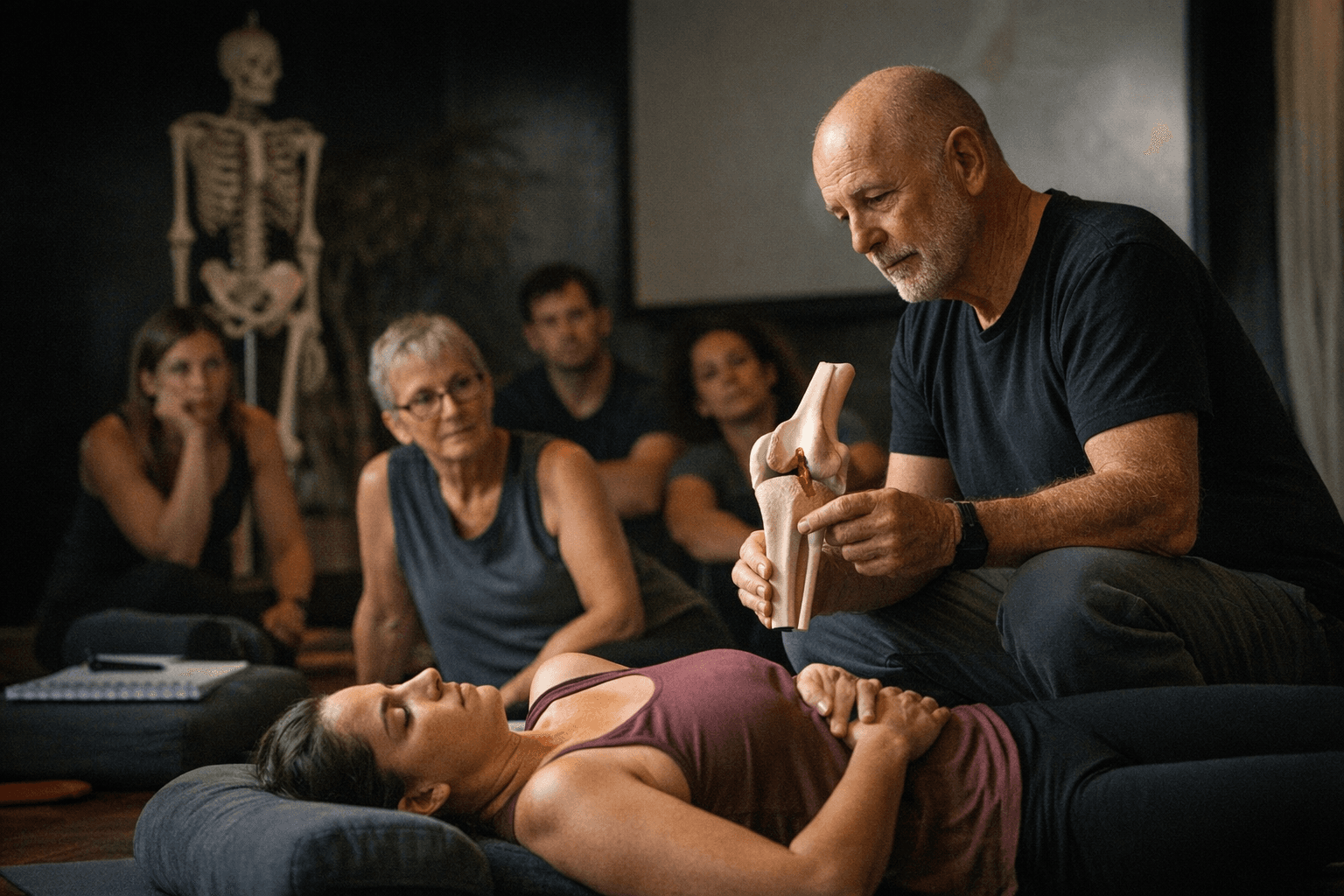
For teachers who want the anatomical language to back that guidance, the edition also highlighted a 30-hour Functional Anatomy for Yoga Teachers on-demand course, recorded from the live July 2025 offering. The course goes "beyond the basic information about anatomy and physiology offered in most Yoga Teacher Trainings," with its focus on what limits movement, when those limits can be safely extended, and when they should be accepted.
The edition also promoted a comprehensive on-demand Yin Yoga Teacher Training guided by Bernie Clark and Diana Batts, two of the most recognized educators in the field. That training covers longer holds, restorative sequencing, energetics, and safety protocols, and carries continuing education credits for teachers tracking CE hours.
Volume 128 lands at a moment when anatomy literacy is shifting from specialty credential toward baseline expectation. The scar tissue piece alone gives any working teacher a more defensible vocabulary for one of the questions that comes up most on the mat, and the answer it delivers is the one practitioners least expect: doing more will not get them there faster.
This article was produced by Prism’s automated news system from verified source data, official records, and press releases, then run through automated quality and moderation checks before publishing. The system is built and supervised by the people who set the standards it runs under. Read our full AI policy.
Did this article answer your question?