East Lansing yoga classes build a citywide mental-wellness network
Free yoga in East Lansing is doing more than filling a schedule. Across city buildings and the MSU library, it is becoming a low-cost stress buffer for people who need something steadier than a drop-in fitness class.
Yoga is starting to look like a public service here
If therapy is expensive, waitlists are long, or you just need a place to breathe without making an appointment, East Lansing’s public-access yoga classes are beginning to fill a real gap. The city’s recreation system and Michigan State University spaces are putting yoga where people already are, from the Hannah Community Center to the Michigan State University Library, and that matters because the appeal is no longer just flexibility or fitness.
What makes this model interesting is how ordinary it looks. It is not a boutique-studio pitch or a wellness retreat package. It is a city class, a campus break, a scholarship-supported drop-in, and a room with enough warmth and light to make showing up feel manageable.
Where the classes live matters as much as the poses
East Lansing has woven yoga into both municipal and campus life in a way that makes the classes hard to miss. Inner Fire Flow runs at the East Lansing Hannah Community Center, while Midday Moves Finals Flex is hosted at the Michigan State University Library, giving the practice a presence in the places people already use for errands, exercise, study, and stress relief.
That mix is the point. The East Lansing Parks, Recreation and Arts Department offers classes to community members of all ages each fall, winter/spring, and summer, so yoga is not treated as a one-off event or a niche add-on. It sits alongside aquatics, arts, dance, enrichment, and fitness programming, which gives it a civic feel instead of a luxury one.
The Hannah Community Center reinforces that same logic. It houses event and meeting spaces, a fitness center, a 25-yard swimming pool, two gymnasiums, and classes and programs. In other words, yoga is not isolated from the rest of city life there. It is embedded in a building built for regular use.
The people running it are talking about wellness in practical terms
Justin Drwencke, who was named permanent director of the City’s Parks, Recreation and Arts Department on March 23, 2026, is framing the work in terms that go beyond recreation. He says the department cares about the whole person, including the mental side of wellness, and he points to concentration on poses and breath work as ways yoga can help with stress relief and anxiety reduction.
That language lines up with how the National Center for Complementary and Integrative Health describes the practice. The agency says many people practice yoga for well-being and fitness, to help control stress, or to help manage or prevent a health problem. It also says yoga and other mind-body approaches may be useful for managing symptoms of stress and anxiety.
This is where the story stops being just about exercise. When a city department is describing yoga in terms of anxiety reduction and mental wellness, it is signaling that the class is doing the work of a light-touch support system, not just a workout block on a community calendar.
The setting is part of the treatment
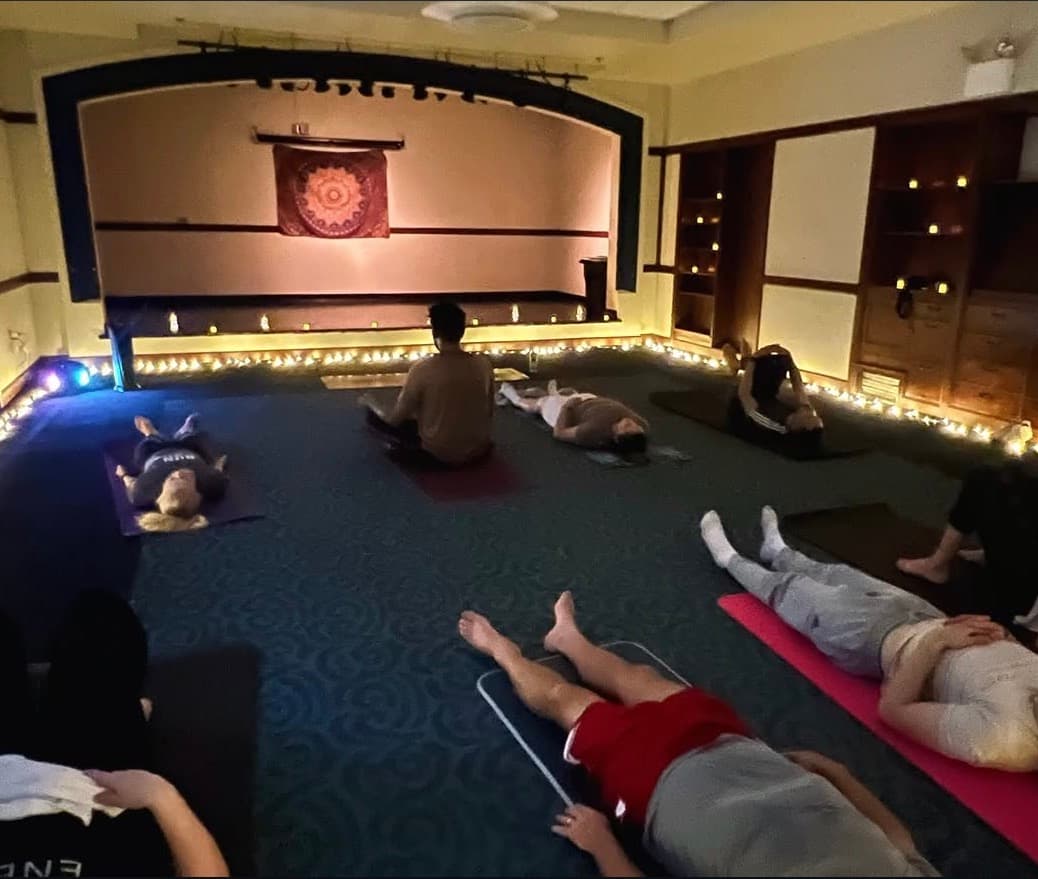
Rae Sherman, founder of Overflow Yoga, teaches Inner Fire Flow at the Hannah Community Center, and the details around the room tell you a lot about why people keep coming back. Sherman describes a cozy space with fairy lights and a welcoming atmosphere designed to help participants feel comfortable, especially when the weather is cold.
That kind of setup matters because yoga is not only about sequence and alignment. It is also about whether the room tells you, immediately, that you belong there. A cold night in East Lansing can make that difference feel even bigger. A warm, softly lit class can lower the barrier for someone who is already carrying stress from work, school, family obligations, or money.
The city’s scholarship policy adds another layer. East Lansing awards up to three scholarships each term for adult dance or yoga classes, which makes the practice more accessible for people who might otherwise skip it when budgets get tight. That is one of the clearest signs that the city is treating yoga as something closer to public infrastructure than private wellness.
Who this actually serves
This model seems built for a mixed crowd: city residents, students, and anyone in the overlap between the two. East Lansing says its history and growth have long paralleled Michigan State University, and the village of Collegeville and adjacent neighborhoods were chartered as East Lansing in 1907. That history still shapes the way people move through town, and these classes reflect it.
The campus side is especially useful during peak stress periods. Michigan State University Libraries describes Midday Moves Finals Flex as a break from end-of-semester stress with a stretch and mobility routine designed to leave participants feeling more relaxed. That is a very specific kind of usefulness: not a grand wellness promise, but a short intervention aimed at a predictable pressure point.
That predictability is part of the appeal. A finals-week yoga session in the library meets a need right where it shows up. A community-center class on a cold evening meets a different need, one tied to routine, comfort, and getting out of your own head for an hour.
Where yoga helps, and where it stops
It would be a mistake to turn this into a claim that yoga replaces counseling or clinical care. It does not. What these East Lansing classes seem to offer is something lower-friction and more available: a structured pause, a place to regulate your breathing, and a chance to feel less isolated without having to navigate the mental-health system first.
That is also the limit. A class can reduce stress and help people feel more relaxed, but it cannot sort out a full anxiety disorder, solve burnout on its own, or stand in for professional treatment when someone needs it. The value is in the layer underneath that, the layer that keeps people from spiraling quite as fast and gives them a habit they can actually sustain.
For a city built around a university, that may be the most practical version of wellness policy there is. East Lansing is not just offering yoga as a perk. It is using public space, scholarship support, and campus access to make mental-wellness habits easier to start and easier to keep.
This article was produced by Prism’s automated news system from verified source data, official records, and press releases, then run through automated quality and moderation checks before publishing. The system is built and supervised by the people who set the standards it runs under. Read our full AI policy.
Did this article answer your question?